
Trees
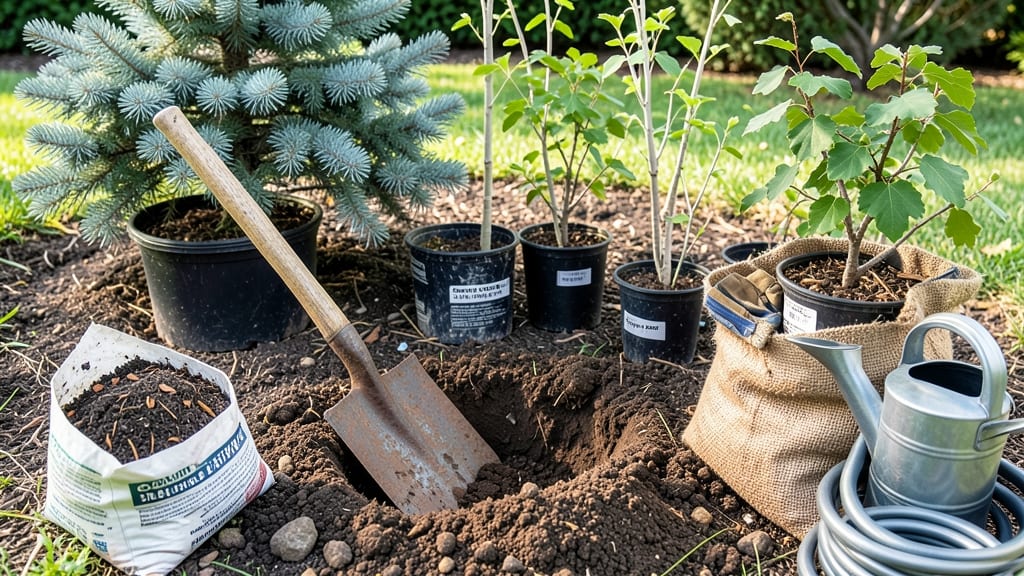
Planting a tree in Colorado isn't just about grabbing a shovel and digging—it's about timing your move to give that 🌳 its best shot at thriving through the state's wild temperature swings.
With frost dates that can shift by weeks depending on whether you're in Denver or the Western Slope, getting this wrong means your tree could struggle—or worse, not make it past its first winter.
But here's the good news: when you plant at the right moment, you're setting your tree up for stronger roots and healthier growth that'll last decades.
I've seen firsthand how a tree planted in early spring (March-April) or fall (September-October) can outperform one stuck in Colorado's unpredictable shoulder seasons. The key? Understanding your specific microclimate and avoiding those common mistakes that trip up even experienced gardeners.
Let me walk you through exactly when to plant in your part of Colorado, what signs to watch for, and how to adapt when Mother Nature throws you a curveball. Your future shade tree will thank you.
Colorado’s planting windows by elevation: when to plant for maximum survival
Colorado’s elevation changes dramatically from valley to mountaintop, creating three distinct planting zones with unique frost patterns. At 5,000–7,000 feet (Front Range foothills), you’ll find longer growing seasons, while 9,000+ feet alpine zones demand early spring planting to avoid late frosts.
Understanding these zones is critical—planting a Colorado blue spruce too late in Denver’s Zone 5 can mean winter dieback, while aspen trees in Crested Butte need soil temps above 45°F before emerging.
Your best window for planting depends on frost-free dates, which shift 1–2 weeks earlier every 1,000 feet in elevation. For example, Fort Collins (5,500 ft) averages 130 frost-free days, while Leadville (10,000 ft) has just 60–80 days.
This means fall planting in September works in Denver but risks early snow in the Rockies. Let’s break down the ideal months for each zone to ensure your tree’s roots establish before winter stress sets in.
📌 Key Rule: Always plant when soil temps stay above 45°F for 10+ days—this prevents root shock. Use a soil thermometer to check, especially in microclimates like south-facing slopes where warmth lingers longer.
| Elevation Zone | Avg. Frost-Free Dates | Best Planting Months | Soil Temp Threshold | Microclimate Adjustments |
|---|---|---|---|---|
| Front Range Foothills (5,000–7,000 ft) | Last Frost: April 15 First Frost: October 15 |
March–April (spring) September–October (fall) |
45–50°F for 10+ days | South-facing slopes: plant 2 weeks earlier North-facing: delay until May 1 |
| Mid-Mountain (7,000–9,000 ft) | Last Frost: May 1 First Frost: September 30 |
April–May (spring) August–September (fall) |
50–55°F for 7–10 days | High winds: use windbreaks or container-grown trees Dry soil: water 3x weekly after planting |
| Alpine (9,000+ ft) | Last Frost: June 1 First Frost: September 1 |
May–June (spring only) Fall planting not recommended |
55–60°F for 5+ days | Short season: choose fast-growing species (e.g., quaking aspen) Mulch heavily (4–6 inches) to retain heat |
For Front Range foothills (5,000–7,000 ft), like Boulder or Colorado Springs, aim for early April planting. This gives roots 6–8 weeks to establish before summer drought hits. Fall planting in September is ideal too—cool temps reduce transplant shock.
Use bare-root trees in spring for faster root growth, or container-grown in fall to avoid soil disturbance.
At mid-mountain elevations (7,000–9,000 ft), such as Estes Park or Salida, shift your timing to late April–early May. Here, late frosts in May can damage tender new growth, so avoid planting ornamental cherries until after Mother’s Day.
For evergreens like ponderosa pine, fall planting is riskier—opt for spring only to prevent winter desiccation.
In alpine zones (9,000+ ft), like Leadville or Keystone, your window shrinks to May–June. The short growing season demands fast-rooting species like mountain mahogany or subalpine fir.
Skip fall planting entirely—snowmelt in June can wash away mulch, exposing roots to freezing temps. Always amend soil with compost to improve drainage in these high-altitude areas.
Pro Tip: Check the National Weather Service’s Colorado Climate Center for local frost forecasts. In 2023, Denver’s last frost shifted from April 15 to May 1—a trend likely due to climate change.
Adjust your planting dates 2 weeks later if your area follows this pattern. For container-grown trees, you can plant
Signs your tree planting timing is perfect (or terrible) in Colorado’s climate
Colorado’s climate can be unforgiving for new trees, but knowing the right signs ensures your tree thrives. The soil temperature is your first clue—ideal planting occurs when it hovers between 40°F and 60°F at a 6-inch depth.
This typically aligns with late March to early April or mid-September to October, depending on your elevation. Check with a soil thermometer or dig a small hole to test.
Moisture levels also play a critical role. Well-drained soil with consistent moisture (not soggy) signals readiness.
If the ground feels dry beyond a few inches down, wait for rainfall or water deeply a few days before planting. Sandy soils dry out faster, while clay soils stay damp longer—adjust your timing accordingly.
⚠️ callout-warning ⚠️
⚠️ Red Flags: When to Pause Planting
- Premature leafing: If buds swell or leaves sprout before last frost, roots won’t establish—delay planting.
- Frozen or waterlogged soil: Avoid planting when ground is frozen or saturated, as roots suffocate.
- Dormant trees in summer: Planting in June-August stresses trees, especially deciduous varieties.
Colorado’s unpredictable frost dates can trick even experienced gardeners. Always check your local USDA zone and microclimate (e.g., urban heat islands vs. mountain slopes).
Root zone preparation is another critical sign. Loosen the soil to a depth of 12–18 inches and mix in compost or organic matter to improve drainage.
If the soil resists digging or feels compacted, aerate further or plant in a raised bed for better root penetration. Evergreens like Colorado blue spruce benefit from slightly acidic soil, while deciduous trees like serviceberry tolerate neutral pH.
Timing also depends on tree type. Bare-root trees should be planted in early spring (March-April) when roots are dormant but ready to grow. Container-grown trees, however, can handle fall planting (September-October) as long as they’re watered well before the first frost.
Avoid planting ball-and-burlap trees in extreme heat—the roots can bake.
Watch for winter stress signals if planting late in the season. Yellowing needles on evergreens or wilted leaves on deciduous trees indicate the tree is struggling to adapt.
In high-elevation areas (7,000+ ft), delay planting until after May 15 to avoid late frosts. Use mulch (3–4 inches) to insulate roots and retain moisture.
Finally, trust your tree’s natural cues. If the soil is workable, the weather forecast shows stable temperatures for a week, and the tree’s roots look healthy (white or light tan, not brown or mushy), you’re golden.
Planting at the right time in Colorado isn’t just about the calendar—it’s about reading the land. 🌳