
Plants
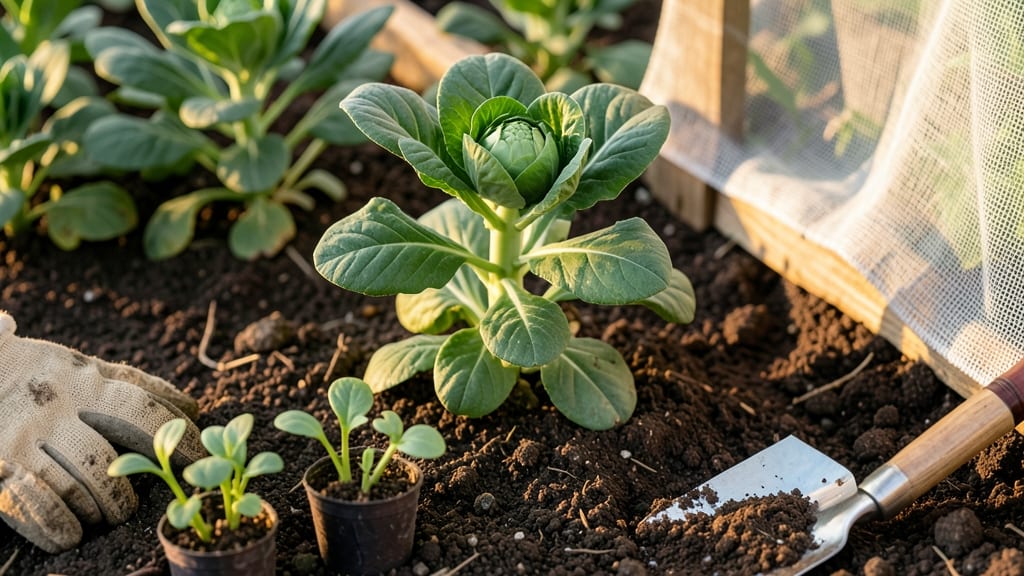
Planting Brussel sprouts 🥦 in Maryland isn’t just about dropping seeds in the dirt—it’s about nailing the 60-day window between last frost and summer’s sweltering heat. Get it wrong, and you’ll either lose your crop to early freezes or watch it bolt in the humidity.
But with Maryland’s Zone 7b climate, there’s a sweet spot for two harvests a year if you time it right.
Most gardeners in Baltimore or Frederick swear by mid-April to mid-May for spring plantings, but the real secret lies in fall—late July to early August—when cooler temps bring out those sweet, flavor-packed sprouts by October.
The key? Start seeds indoors 8-10 weeks before your target planting date to give them a head start against Maryland’s unpredictable spring showers.
Here’s the game-changer: even within Maryland, microclimates matter. Coastal areas like Annapolis stay milder longer, while inland spots near Hagerstown might need to push plantings back by a week.
We’ll break down exactly how to adjust for your corner of the state—plus, which cold-hardy varieties thrive when temperatures dip below 32°F without throwing a fit.
Ready to go from “maybe next year” to a bountiful harvest this fall? Let’s dive into the exact frost-free timeline, soil prep tricks, and companion plants that’ll have your Brussel sprouts 🥦 outshining your neighbors’ by Thanksgiving.
Maryland’s ideal planting windows for Brussels sprouts by USDA Zone
Brussels sprouts thrive in Maryland’s USDA Zones 7b-8a, but getting the timing right means the difference between a bountiful harvest and a failed crop.
These cool-season vegetables need 80-100 days to mature, so planting too early risks frost damage, while late planting can lead to stunted growth from summer heat. Maryland’s microclimates—like Baltimore’s coastal influence and Frederick’s inland temperatures—add another layer of complexity to your planting strategy.
For most of Maryland, the last spring frost typically occurs around April 15, while the first fall frost arrives near November 15.
This gives you two prime planting windows: spring (mid-April to mid-May) for a fall harvest and late summer (late July to early August) for a winter harvest.
However, soil temperature and local frost patterns can shift these dates by 1-2 weeks, especially in Zone 8a areas like the Western Shore.
| Zone & Location | Spring Planting Window | Fall Planting Window | Soil Temp Requirement | Key Notes |
|---|---|---|---|---|
| Zone 7b (Baltimore, Annapolis) | April 15–May 15 | July 20–August 10 | 45–50°F (for germination) | Coastal areas may have 1-2 week delays due to slower soil warming. |
| Zone 7b (Frederick, Hagerstown) | April 10–May 10 | July 15–July 31 | 40–45°F (earlier planting possible) | Inland areas can plant earlier due to faster soil warming. |
| Zone 8a (Western Shore, Calvert County) | April 20–May 20 | August 1–August 15 | 50–55°F (warmer soil needed) | Warmer microclimates may need row covers for early spring plantings. |
If you’re direct-sowing Brussels sprouts, aim to plant when soil temperatures reach 45–50°F. Use a soil thermometer to check—cool soil slows germination. For transplants, wait until soil is at least 50°F and nighttime temperatures stay above 40°F to avoid shock.
In Zone 8a, like the Western Shore, soil warms faster, so you can plant 1-2 weeks later than inland areas.
For a fall harvest, plant 80-90 days before the first frost (typically by August 10). This ensures sprouts mature before cold sets in.
In Zone 7b, like Frederick, you can push it to September 1 for a late harvest, but use row covers to extend the season. For winter harvests, plant by July 20—these sprouts will develop slowly over fall and be ready in January-February.
Maryland’s Western Shore (e.g., Calvert County) often experiences warmer microclimates due to its proximity to the Chesapeake Bay. Here, soil warms 5–7 days earlier than inland areas, so adjust your planting by shifting windows 1 week later.
Conversely, Baltimore’s urban heat islands can create pockets where soil warms faster, but coastal breezes may delay frost slightly—monitor local forecasts closely.
Pro tip: Start transplants indoors 4–6 weeks before your target outdoor planting date. This gives you a head start and helps avoid late spring frosts. Use biodegradable pots to minimize transplant shock when moving seedlings outdoors.
For direct sowing, space seeds 1–2 inches apart and thin to 18–24 inches between plants—this prevents overcrowding and improves air circulation.
One common mistake is planting too early and risking frost damage. If you’re unsure about frost dates, use the 50°F soil temperature rule as your guide. For Zone 7b, this usually aligns with mid-April, while Zone 8a may wait until late April. Always have
How to adjust planting for Maryland’s unpredictable spring/fall weather
Maryland’s spring and fall weather can be a gardener’s biggest challenge—one day it’s 60°F, the next it dips back to 32°F. For Brussels sprouts, these swings mean the difference between a thriving harvest and a lost crop.
The key is flexibility: knowing when to protect seedlings, when to succession plant, and which cold-hardy varieties will survive the rollercoaster.
I’ve learned the hard way that late frosts in May and unexpected heatwaves in September can derail even the most careful plans. But with the right tactics—like using row covers or choosing early-maturing varieties—you can turn Maryland’s unpredictable weather into an advantage.
Here’s how to adapt your planting schedule for maximum success.
Even after your last frost date (April 15), temperatures can drop unexpectedly. If planting Brussels sprouts in spring, wait until soil temps reach 45°F and use floating row covers for the first 2 weeks. For fall plantings, aim for 90 days before first frost (Nov 15)—but monitor forecasts! A single 28°F night can kill seedlings.
One of my go-to strategies is succession planting. Instead of betting everything on one planting, I stagger seeds every 2 weeks in spring and 3 weeks in fall. This way, if one batch gets nipped by frost, the others keep growing.
For example, I’ll plant 'Ruby Ball' (a compact variety) in early May, then follow up with 'Long Island Improved' in late May—giving me a 6-week harvest window instead of one risky batch.
For extra protection, I swear by lightweight row covers (like Agribon) during cool snaps. They trap 5-10°F of heat and shield seedlings from windburn. Just remove them on warm days (above 70°F) to prevent overheating.
I also mulch heavily with straw or leaves to insulate roots—this keeps soil temps stable and reduces stress on young plants.
Don’t overlook microclimates in Maryland. Gardens near Chesapeake Bay or in mountainous areas (like Frederick County) can have 1-2 weeks earlier frost-free windows. If you’re in a warmer microclimate, you might push spring plantings to early April or extend fall plantings to mid-August.
Always check your local CoCoRaHS station for real-time data!
Finally, choose cold-tolerant varieties like 'Long Island Improved' (90 days) or 'Ruby Ball' (85 days). These handle light frosts better than longer-maturing types. I’ve had success with 'Tasty Purple' too—its purple sprouts add color to my fall table, and it matures in just 80 days.
Pair these with companion plants like lettuce or radishes to maximize space and confuse pests.