
Plants
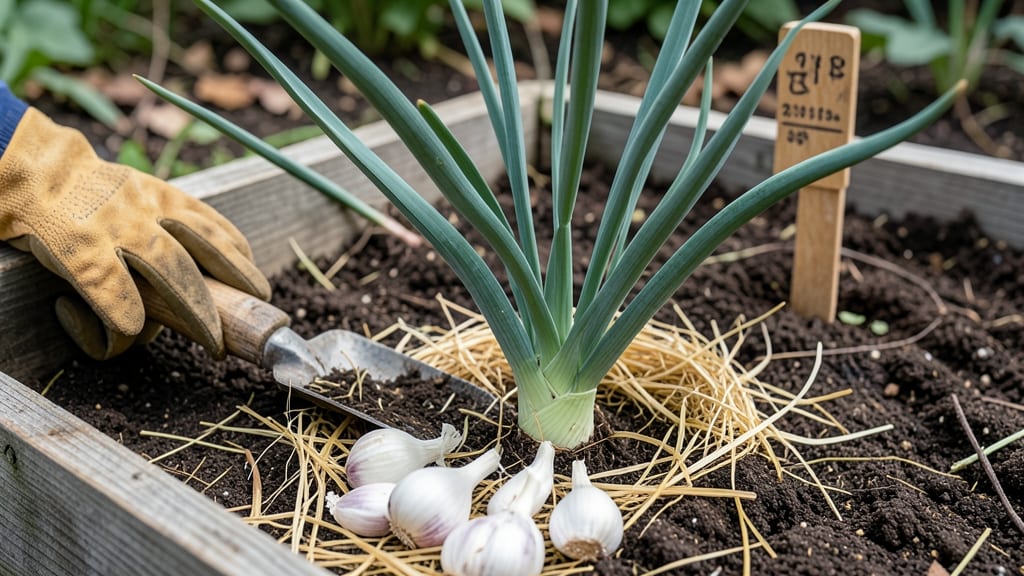
Planting garlic in Upstate New York isn't just about timing—it's about unlocking bold, flavorful bulbs that thrive in your 5b-6b climate.
The secret lies in those crisp fall days when the soil cools but hasn't frozen yet, creating the perfect window for hardneck varieties to establish roots before winter's chill sets in.
If you've ever wondered why some gardeners swear by October planting while others insist on September, the answer lies in your local frost patterns and the specific needs of your garlic type.
Hardnecks, like the classic 🧄 varieties, demand that mid-to-late fall timing to develop properly, while softnecks have a slightly wider margin. Getting this right means the difference between a meager harvest and a pantry full of plump, pungent cloves.
I've spent years perfecting this in Upstate New York, and what I'm about to share will help you avoid common mistakes that sabotage even the most eager gardeners.
From soil prep to spacing and overwintering protection, these critical steps ensure your garlic survives our cold winters and emerges stronger next spring.
Ready to grow garlic that rivals the best at farmers' markets? Let's dive into the exact timing, climate considerations, and care tips that will give you the best yields in your zone—no guesswork required.
Best planting windows for Upstate NY garlic: hardneck vs softneck timing guide
Upstate New York's USDA Zones 4-6 create a unique challenge for garlic growers. The key to success lies in planting at the right time—too early, and your cloves rot; too late, and they freeze.
For hardneck varieties like Rocambole or Purple Stripe, aim for mid-October to early November, while softneck varieties like Silverskin can handle a slightly earlier window of late September to October. This timing ensures roots establish before winter sets in.
Why does timing matter so much? Garlic needs 4-6 weeks of cool soil temperatures (below 50°F) before the ground freezes solid. In Upstate NY, this typically means planting when daytime highs hover around 50-60°F and nights dip below freezing.
Hardnecks thrive in colder winters, while softnecks prefer milder conditions—making their planting windows slightly different.
The soil temperature threshold is critical: roots must establish before the ground freezes. Use a soil thermometer to monitor—ideal planting soil temps range from 40-50°F.
In Upstate NY, this usually aligns with late October for hardnecks and early October for softnecks, but watch for early frosts in higher elevations like the Adirondacks or Catskills.
Upstate NY's microclimates play a huge role in timing. For example, Albany (Zone 6b) can plant softnecks as late as early October, while Syracuse (Zone 5b) should aim for mid-October to avoid winter kill.
Check your last frost date (typically mid-November) and count backward—planting 6-8 weeks before ensures roots have time to anchor.
Don't overlook bulb size—larger cloves (4-6 cloves per bulb) establish faster. Smaller cloves may struggle in Upstate NY's harsh winters. Plant them 1-2 inches deep, 4-6 inches apart, with 8-12 inches between rows.
This spacing prevents crowding and improves airflow, reducing fungal risks like white rot or basal rot.
After planting, apply a 4-6 inch layer of mulch (straw or leaves work well). This insulates bulbs from temperature swings and keeps soil moist. In Upstate NY, where winters can fluctuate wildly, mulch is non-negotiable. Remove it in early spring once new growth appears to prevent overheating.
Hardnecks like German White or Music are your best bet for Upstate NY's climate. They handle sub-zero temps and produce scape shoots in summer—a bonus harvest!
Softnecks, while less cold-hardy, store better and are great for braiding. Choose based on your goals: hardnecks for flavor, softnecks for storage.
Pro tip: If you miss the fall window, you can try spring planting (March-April), but yields will be 30-50% smaller. Spring garlic is best for green garlic or garlic chives, not full bulbs.
For maximum harvests, stick to fall planting—it’s the only way to get those bold, flavorful cloves Upstate NY is famous for.
Remember, garlic is a perennial crop in Upstate NY—it overwinters and grows for multiple years. The first year sets the foundation for future harvests, so timing matters more than anything else. Get it right, and you’ll enjoy homegrown garlic for years to come—no store-bought substitutes needed!
5 Critical factors that determine your Upstate NY garlic planting success
Getting the timing right for garlic in Upstate New York is just the first step—your soil preparation, frost depth awareness, and bulb selection can make or break your harvest.
I’ve learned through years of trials that even the hardiest varieties need these five critical factors to thrive in our Zone 5-6 climate. Let’s break down what truly matters beyond just planting dates.
First, your soil pH must sit between 6.0 and 7.0—any lower, and your garlic struggles to absorb essential nutrients like phosphorus. I test my soil every fall using a simple home test kit ($10 at garden centers) and amend with crushed lime if needed.
Upstate NY’s naturally acidic soils often need this adjustment, and I’ve seen yields double when I get this right.
Next, frost depth is your silent harvest predictor. In Upstate NY, garlic planted too late risks winter kill when frost penetrates deeper than 6 inches. Check your local USDA frost maps—most of us fall into the 20-25°F zone—and plant when soil temps hover around 40-50°F.
I use a soil thermometer to confirm before committing to the garden.
Don’t overlook bulb size—I’ve planted everything from 1-inch cloves to 3-inch giants, and the 1-2 inch range consistently delivers the best balance of yield and hardiness.
Larger bulbs may produce bigger harvests, but they’re also more prone to rot in wet springs, which we get plenty of in Upstate NY. Save those giant cloves for cooking, not planting.
Your spacing strategy directly impacts air circulation and disease prevention. I space hardneck varieties like ‘Music’ or ‘German White’ at 6 inches apart—they bolt early and need room to grow upright.
For softnecks like ‘Silverskin’, I tighten it to 4 inches since they grow more horizontally. Overcrowding leads to white rot, a fungal disease that can wipe out entire beds.
Finally, overwintering protection is non-negotiable in Upstate NY’s Zone 5-6 winters. I’ve lost entire beds to heaving when snow melts and refreezes. My solution? A 6-inch layer of straw mulch topped with black plastic in windy areas.
For extra insurance, I add a lightweight row cover in January if we’re forecasted for sub-zero temps. These small steps have kept my garlic thriving through -15°F winters.