
How To
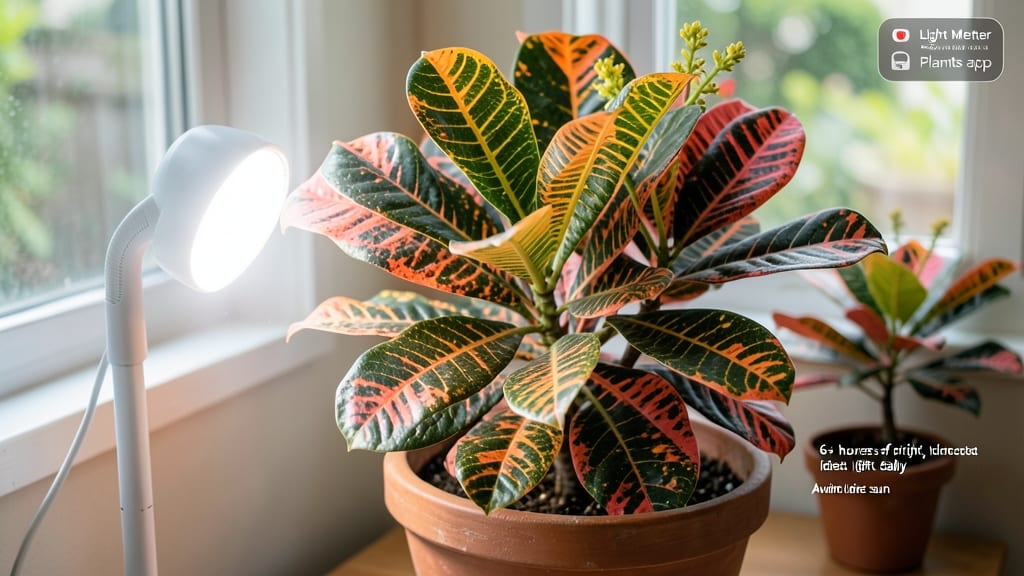
To keep your croton plant 🌿 thriving with its signature vibrant foliage, you need to master one critical element: light. Most gardeners unknowingly sabotage their crotons by placing them in spots that are either too dim or too harsh—both can turn those stunning variegated leaves dull or crispy.
Crotons crave bright indirect light, which mimics their natural tropical habitat without scorching delicate leaves. That means positioning them near east or west-facing windows where morning or late afternoon sun grazes them gently.
Too little light? Your plant will stretch awkwardly toward any available source, while too much direct sun can bleach or burn those gorgeous patterns.
Don’t worry if your home lacks ideal natural lighting—we’ll cover smart ways to supplement with artificial grow lights. The key is finding that sweet spot where your croton stays lush, colorful, and full of energy.
Let’s troubleshoot common light mistakes and help you create the perfect growing environment for your leafy showstopper.
Whether you’re dealing with leggy growth, faded colors, or crispy edges, understanding your croton’s light needs is the first step to bringing back that vibrant, healthy glow. Ready to transform your plant care routine? Let’s dive into the details that will keep your croton looking its best year-round.

Optimal light requirements for croton plants: bright indirect sun explained
Understanding your croton plant’s light needs is the foundation for vibrant foliage and healthy growth. These tropical beauties thrive in bright indirect light, which mimics their natural understory habitat.
Without the right balance, you’ll see dull leaves, leggy stems, or even scorched foliage—all signs your plant isn’t getting the perfect light conditions.
The ideal spot for a croton is near an east or west-facing window, where morning or late afternoon sun gently filters through. South-facing windows can work but require careful positioning—typically 3-5 feet away to avoid harsh midday rays.
North-facing windows often provide too little light unless supplemented with grow lights.
| Light Intensity | Characteristics | Ideal Croton Response | Adjustments Needed |
|---|---|---|---|
| Low Light | Dim corners, far from windows, artificial lighting only | Leggy growth, pale leaves, weak stems | Move closer to a window or add grow lights |
| Medium Light | East/west windows, indirect sunlight, 2-4 hours direct sun | Balanced growth, vibrant foliage, compact shape | Perfect conditions—no changes needed |
| High Light | South windows, direct midday sun, strong artificial lights | Brown leaf tips, crispy edges, bleached patterns | Move to indirect light or filter sunlight with sheer curtains |
| Seasonal Adjustments | Winter (shorter days), summer (longer sun exposure) | Slower growth in winter, potential sunburn in summer | Rotate plant quarterly; use sheer curtains in summer |
To test your croton’s current light conditions, perform the shadow test during peak sunlight hours. Hold a white piece of paper near your plant—if the shadows are sharp and dark, the light is too intense.
For bright indirect light, shadows should be soft and slightly blurred, indicating diffused sunlight. This simple trick helps you spot over-exposure before it damages your plant’s leaves.
Seasonal changes also affect your croton’s light needs. During summer months, when sunlight is strongest, position your plant slightly farther from windows or use sheer curtains to filter harsh rays.
In winter, when natural light diminishes, supplement with a grow light or rotate your plant to ensure even exposure from all sides. This rotation prevents uneven growth and keeps your croton looking full and symmetrical.
If you’re unsure whether your space meets the bright indirect light requirement, observe your croton’s leaves over a week. Healthy crotons maintain their vibrant colors and compact shape, while those in low light stretch toward any available source.
Use this natural behavior as your guide—your plant will visually communicate whether it needs more or less light.
For indoor gardeners, artificial grow lights can bridge the gap when natural light falls short. Look for full-spectrum LED bulbs that mimic sunlight, positioning them 6-12 inches above your croton for 12-14 hours daily.
This setup is especially helpful in apartments or during winter’s shorter days, ensuring your croton stays thriving year-round.
Remember, the goal is to replicate the dappled sunlight of a tropical understory. By balancing direct sun, shade, and seasonal adjustments, you’ll create the perfect environment for your croton to display its stunning foliage.
With the right light, your plant will reward you with lush, colorful leaves that turn every room into a mini tropical paradise.
Start by placing your croton near an east-facing window and monitor its response. Within weeks, you’ll notice a difference in its growth pattern and leaf vibrancy—proof you’ve found the sweet spot for optimal light conditions. Happy growing! 🌿
Signs your croton isn’t getting enough (or too much) light
Your croton’s leaves tell a story about its light conditions—yellowing or pale foliage often signals insufficient light, while brown crispy edges or bleached patterns mean it’s getting too much direct sun.
These visual cues are your plant’s way of communicating discomfort, and addressing them quickly prevents permanent damage to its stunning variegated leaves.
Start by examining the leaf color and growth pattern. Healthy crotons maintain their vibrant hues and compact shape, but when light is off, you’ll notice dramatic changes. For example, low light causes leaves to lose their color intensity and stretch toward any available source—a condition called etiolation.
On the flip side, excessive direct sun creates stress that manifests as crispy edges or sunburnt patches.
How Much Light Does a Croton Plant Need?
- Vibrant foliage colors
- Compact, bushy growth
- Prevents leggy stems
- Mimics natural habitat
- Pale, dull leaves
- Stretched, weak stems
- Loss of variegation
- Susceptible to pests
- Brown, crispy edges
- Bleached leaf patterns
- Sunburnt spots
- Premature leaf drop
If your croton shows signs of light deprivation, start by moving it to a brighter location, like an east or west-facing window. Avoid sudden exposure to intense sunlight, which can shock the plant.
Instead, acclimate gradually by placing it in a spot with partial shade for a few hours daily, then increasing exposure over 7-10 days. This slow transition helps prevent sunburn while allowing your croton to adjust to stronger light.
For over-exposed crotons, create shade by positioning sheer curtains between your plant and the window. Alternatively, move it to a spot with filtered sunlight, such as a few feet back from the window or under a sheer fabric shade cloth.
Rotate your plant quarterly to ensure even light exposure, which prevents one side from getting too much direct sun while the other remains shaded.
Remember, crotons are adaptable but need time to adjust. If you’ve recently repotted or moved your plant, give it 2-3 weeks to recover before expecting significant improvements in leaf color and growth.
Patience and observation are key—your croton will thank you with lush, vibrant foliage once you find the perfect light balance.
Pro tip: Use a grow light for 4-6 hours daily if natural light is insufficient. Position it 6-12 inches above your plant and use a timer for consistency. This mimics the bright indirect light crotons crave, ensuring they stay healthy even in low-light spaces.