
Trees
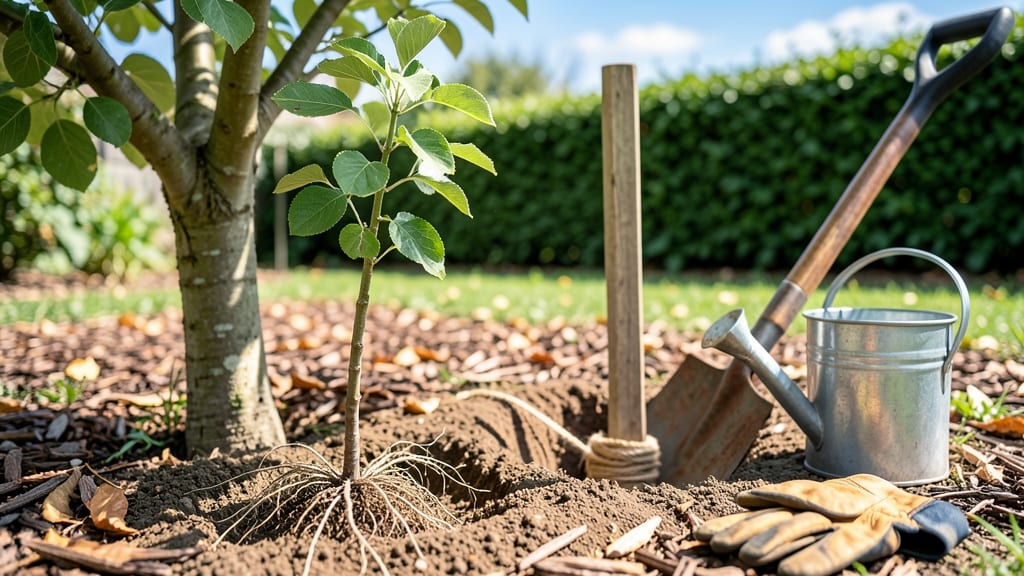
Planting an 🍎 Apple Tree in Arkansas at the wrong time can turn your dream orchard into a frustrating gamble—especially when you're dealing with 7a-8b zone challenges and Arkansas' unpredictable frosts.
Whether you're planting bare-root saplings or containerized trees, getting the timing right means the difference between a thriving tree that bears fruit for decades and one that struggles to take hold.
I've seen firsthand how Arkansas' humid climate can make or break apple tree success. The key isn't just about planting in spring or fall—it's about understanding when your soil warms up, how long before the first frost you should plant, and which varieties handle Arkansas' heat and humidity best.
These factors all work together to give your tree the best possible start.
In this guide, I'll break down exactly when to plant—whether you prefer the late winter/early spring window or the more traditional fall timing—and what each option means for your tree's long-term health.
You'll also discover how to prepare Arkansas' clay-heavy soil for planting, so your tree has the perfect foundation to grow strong roots before the first frost hits.
Ready to plant with confidence? Let's dive into the science behind Arkansas' planting windows and how you can set your apple trees up for success from day one.
Best planting windows in Arkansas: spring vs fall timing explained
Arkansas' humid subtropical climate creates two distinct planting windows for apple trees: late winter/early spring and late fall. Each offers unique advantages, but timing directly impacts root development and disease resistance.
Let's break down the science behind Arkansas' USDA Zones 7a-8b to help you choose the perfect window for your orchard.
In North Arkansas (Zone 7a), where last frost typically arrives around March 15, spring planting begins in February once soil warms to 50°F. Meanwhile, the Delta region (Zone 8a) enjoys milder winters, allowing fall planting until November.
Understanding these regional differences is critical for optimal growth and fruit production.
Here's a detailed comparison of Arkansas' two planting windows to help you decide which timing aligns best with your location and goals:
Fall planting in Arkansas offers 6-8 weeks of warm soil for root development before winter dormancy. This extended growing window gives young trees a competitive advantage when spring arrives.
However, North Arkansas gardeners must plant by November 1 to avoid early frost damage, while Delta region growers can extend planting until November 15.
Spring planting requires precise timing to avoid late frost damage while ensuring soil is warm enough for root establishment. In Zone 7a, wait until March 1 when soil reaches 50°F, while Zone 8a can begin as early as February 15.
The key is planting 2-3 weeks before your area's last frost date to allow roots to establish before buds break.
Arkansas' clay-heavy soils present unique challenges for apple tree planting. Spring planting benefits from warmer soil temperatures that accelerate root growth, but wet conditions in April-May increase fungal diseases like fire blight. Fall planting avoids this risk but requires careful drainage planning to prevent root rot during Arkansas' humid winters.
For bear-root apple trees, fall planting is generally preferred as it allows roots to establish before winter. However, container-grown trees can be planted in spring with minimal transplant shock. Remember, Arkansas' humidity levels mean well-draining soil is non-negotiable for both planting windows.
Regional microclimates play a crucial role in Arkansas' planting success. North Arkansas gardeners should prioritize fall planting to avoid late spring frosts, while Delta region growers can extend planting into early December thanks to milder winters. Always check your local frost dates and adjust planting windows accordingly.
Proper timing isn't just about when you plant—it's about creating conditions for strong root systems that can withstand Arkansas' humid summers and variable winters. Whether you choose spring or fall, focus on soil preparation and aftercare to maximize your apple tree's potential in Arkansas' unique climate.
How to prepare Arkansas soil for apple tree planting
Arkansas' clay-heavy soils can be a gardener's challenge, but with the right prep, they become perfect for apple tree growth. The key is breaking up compaction, balancing pH levels, and improving drainage—all while working with Arkansas' humid climate.
I'll walk you through each step to ensure your young trees get the best possible start, whether you're planting in spring or fall.
First, test your soil's pH level—apple trees thrive in 6.0 to 6.5. Arkansas' natural acidity often runs higher, so you may need to add lime (for pH above 6.5) or sulfur (for pH below 6.0).
Use a soil test kit from your local Arkansas Cooperative Extension service for precise results. This step alone can prevent nutrient deficiencies and disease susceptibility down the road.
🌱
📌 Key Takeaway: Arkansas Soil Prep Essentials
Next, focus on organic matter—aim for 30% by volume in your planting hole. Arkansas' clay doesn't drain well, so mix in composted manure, leaf mold, or well-rotted wood chips. For heavy clay, consider adding sand (50% sand, 50% organic matter) to improve structure.
Work this mixture into the top 12-18 inches of soil where roots will develop. This creates a loose, aerated zone that prevents waterlogging.
Drainage is critical in Arkansas' humid subtropical climate. If your yard has poor drainage, create a raised bed mound or plant on a slight slope to encourage water runoff.
For container planting, use pots with drainage holes and a mix of 50% potting soil, 30% perlite, and 20% compost. Waterlogged roots lead to root rot, which is deadly for young apple trees.
Before planting, schedule your fertilization based on the season. For fall planting, apply a balanced 10-10-10 fertilizer at half strength when you plant, then again in early spring before bud break.
If planting in spring, wait until soil warms to 50°F+ and apply fertilizer 2-3 weeks after transplanting. Arkansas' hot summers can burn roots if fertilizer is applied too early.
Finally, mulch around the base of your apple tree with 3-4 inches of wood chips or straw, keeping it 6 inches away from the trunk. This mulch layer helps retain moisture, regulate soil temperature, and suppress weeds—all critical in Arkansas's variable climate.
Replenish mulch annually, and you'll give your apple trees the best possible start for years of fruitful growth.
☀️