
Watering
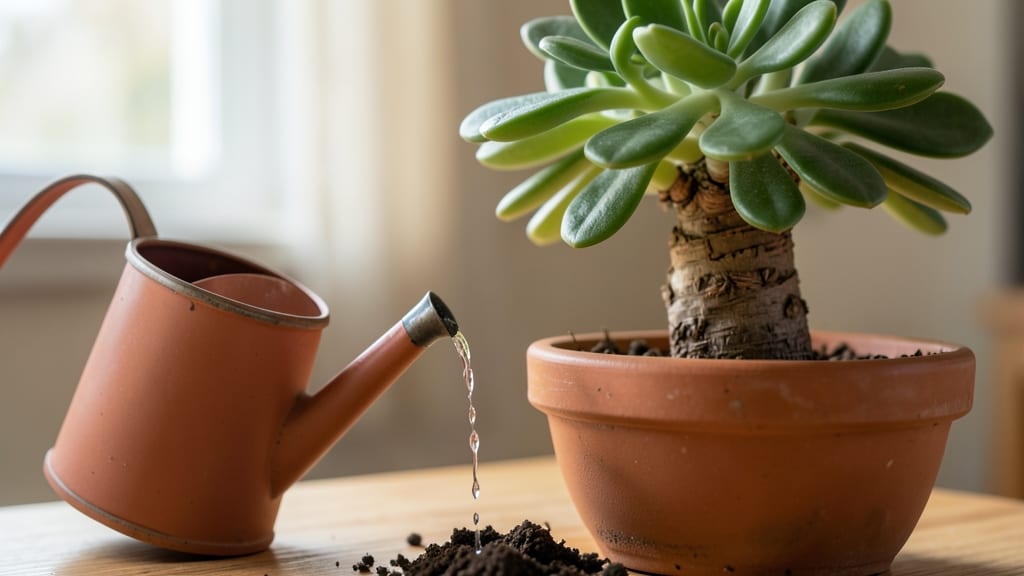
If your jade plant needs how much water, you’re probably watering it more than it needs—and that’s the fastest way to kill this beloved succulent. Unlike thirsty houseplants, jade plants store water in their plump stems, so they’d rather go without than drown in soggy soil.
Most gardeners overestimate how often these drought-loving plants need water, leading to root rot or stunted growth. The key is less frequent, deeper watering—and knowing when to adjust for seasons like winter dormancy or summer heat waves.
In this guide, I’ll break down the exact watering schedule for your jade plant, from spring’s active growth to winter’s rest period. You’ll learn how to check soil moisture like a pro, spot overwatering signs early, and keep those glossy leaves thriving for years.
Ready to stop guessing and start nurturing your jade plant the right way? Let’s dive into the simple routine that’ll have it looking lush in no time.
The perfect jade plant watering schedule by season (with exact intervals)
Jade plants (Crassula ovata) are succulents that store water in their thick leaves, making them extremely drought-tolerant. But too much water—even well-meaning watering—can kill your plant in weeks.
The key? Seasonal adjustments based on your plant’s natural growth cycle. Let’s break down the exact watering intervals for each season to keep your jade plant happy and healthy.
Most gardeners overwater jade plants because they assume "more is better." But these plants thrive on neglect—they’d rather go slightly dry than sit in soggy soil. The root rot risk is real, especially in terracotta pots without drainage.
My rule? Wait until the soil is completely dry before watering again. Stick your finger 1-2 inches deep—if it’s dry, it’s time. If not, wait another week.
Here’s the seasonal breakdown you’ve been searching for, including exact intervals and pro tips to avoid common mistakes. This schedule works for indoor plants in pots and outdoor jade plants in well-draining soil.
🌱 Comparison Table: Jade Plant Watering by Season
Spring is when your jade plant wakes up from dormancy and starts growing again. This is the best time to water—but don’t overdo it. The soil should dry out completely between waterings.
I like to water deeply (until water runs out the drainage hole) and then let the plant drink up what it needs. In USDA Zone 6a, spring typically runs from March to May, so adjust based on your last frost date.
Summer can be tricky because high temperatures speed up evaporation, but your jade plant needs less frequent watering. The key is to water early in the morning to prevent fungal growth from damp leaves.
If your plant is outdoors in full sun, it may need water every 3-4 weeks. For indoor plants, reduce watering to every 4 weeks if the air is dry. Always check the soil moisture first—stick your finger in!
Fall is a transition season for jade plants. As temperatures drop, growth slows, and your plant needs less water. I recommend watering every 3-4 weeks in fall, but monitor the soil closely.
If your plant is in a cool, shaded spot, it may need even less water. This is also a great time to repot if your plant has outgrown its container—use a well-draining cactus mix with perlite or pumice.
Winter is when jade plants enter dormancy. Most gardeners make the mistake of watering too much during this time, thinking their plant is still active. But in reality, your jade plant is conserving energy.
Only water every 4-6 weeks, and even then, use minimal water—just enough to keep the soil slightly moist at the bottom 1 inch. If your home is very dry (like in winter with forced heat), you might water every 6 weeks.
Pro tip: Group your jade plants together in a humid spot (like a bathroom with a window) to create a microclimate. This helps regulate moisture levels and reduces the need for frequent watering.
Also, avoid misting the leaves—jade plants hate humidity on their foliage, which can lead to rot or pests. Stick to bottom-watering when possible.
One of my biggest mistakes early on was watering on a schedule rather than checking the soil. Now, I always test moisture
5 Signs your jade plant is getting too much (or too little) water
Your jade plant communicates its water needs through subtle visual cues—if you know what to look for. As a succulent, it stores water in its thick stems, so wrinkled leaves or shriveled stems are red flags.
I’ve seen gardeners accidentally drown these plants by watering on a strict schedule, not checking soil moisture first.
Overwatering and underwatering both cause stress, but the symptoms look different. A yellowing leaf might signal too much water, while dry, papery leaves mean it’s thirsty. The key is observing your plant’s leaf texture and stem firmness regularly.
Let’s tackle the 5 most common signs your jade plant is thirsty or waterlogged—and how to fix each issue fast. Trust me, these adjustments will have your plant looking perky in days.
⚠️ WARNING: Overwatering vs. Underwatering
Overwatering causes mushy stems, yellow leaves, and blackened roots. Underwatering leads to wrinkled leaves, shriveled stems, and drooping branches. Both kill jade plants if ignored!
Fix immediately: Let soil dry completely between waterings. Use a pot with drainage holes and well-draining soil (like cactus mix).
First, check for wrinkled leaves—a clear sign your jade plant needs water. When the leaves lose their plumpness and feel hollow when pressed, it’s time to hydrate. I once revived a jade plant with wrinkled leaves by giving it a deep watering and placing it in bright, indirect light.
Next, watch for yellowing leaves, especially at the base. This usually means overwatering or poor drainage. If the soil stays soggy, roots suffocate and leaves turn yellow. Let the top 2-3 inches of soil dry out before watering again—this simple habit saved my last jade plant from root rot.
A shriveled stem is another underwatering warning. Unlike overwatered plants, underwatered jades pull water from their stems, causing them to collapse. If you see this, soak the soil thoroughly and place the plant in a humidity tray for 24 hours to help it recover.
Don’t ignore drooping branches—this could mean either too much or too little water. Gently press a leaf: if it springs back, it’s likely thirsty. If it stays flat, it’s probably overwatered. Adjust your routine: water deeply every 2-3 weeks in spring/fall, and every 4-6 weeks in winter.
Finally, black spots on leaves or stems signal fungal issues from overwatering. Remove affected leaves with sterilized scissors and repot the plant in fresh, dry soil. Keep it in bright light and water only when the soil is bone-dry to prevent recurrence.