
Watering
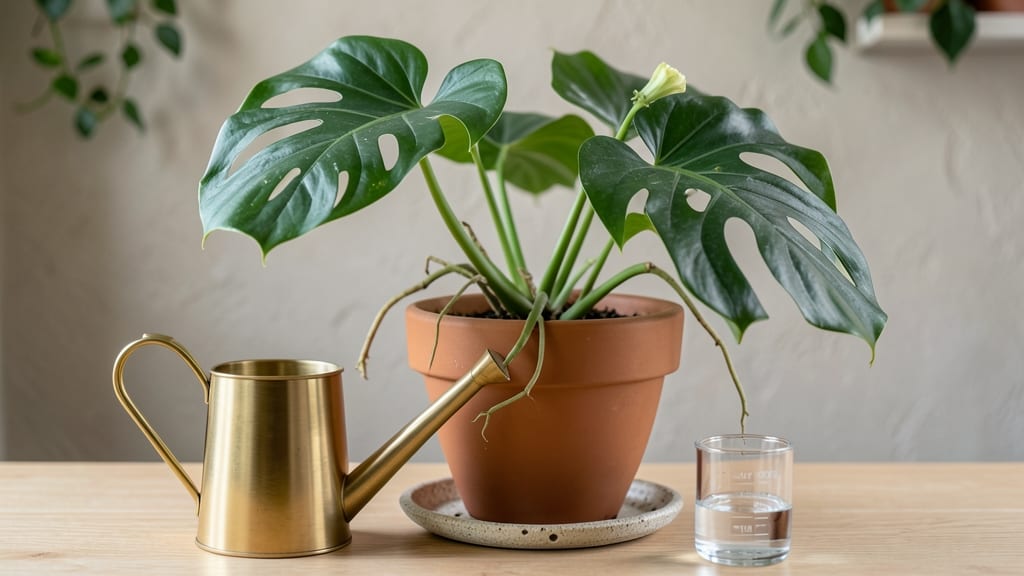
To keep your monstera plant thriving, guessing how much water it needs might just be the fastest way to kill it—dry, crispy edges or sad, yellowing leaves are dead giveaways you’re doing it wrong.
Most people overwater their Monsteras because they assume more moisture equals happier plants, but the truth is, this tropical beauty hates soggy roots. The key lies in understanding when the soil is truly thirsty versus just slightly damp, and how seasonal changes should adjust your watering routine.
I’ve learned the hard way that sticking to a strict schedule won’t cut it—your Monstera’s needs shift with humidity, pot size, and even the time of year.
What works in steamy summer months will leave your plant wilting by winter. Let me show you exactly how to read the signs and water with confidence.
By the end, you’ll know the perfect watering rhythm for your Monstera, plus how to spot the subtle clues that tell you it’s time to reach for the watering can—or hold off for another week.
How often to water a Monstera plant (exact schedule by season)
Monstera plants thrive on a consistent but flexible watering routine, but getting it right means understanding how seasonal changes and pot size impact their needs. Unlike drought-tolerant succulents, monsteras demand moisture without soggy soil, making the difference between lush growth and root rot razor-thin.
The key? Soil moisture tests and adjusting your schedule every few months.
I’ve learned the hard way that overwatering is the #1 killer of monsteras—those brown, crispy edges are a cry for help. But underwatering stunts growth and dulls the iconic split leaves you love.
The solution? A seasonal watering guide tailored to your plant’s environment, whether it’s basking in summer humidity or hibernating in winter’s dry air.
Here’s the golden rule: Water your monstera when the top 1-2 inches of soil feel dry to the touch. But since seasons change, let’s break it down by weather, pot size, and even your home’s humidity levels.
| Season | Watering Frequency | Soil Check Depth | Pot Size Adjustment | Humidity Tip |
|---|---|---|---|---|
| Spring | Every 5-7 days | Top 1-2 inches dry | Small pots: daily check | Increase humidity with pebble tray |
| Summer | Every 3-5 days | Top 1 inch dry | Large pots: every 4-5 days | Mist leaves 2x weekly |
| Fall | Every 7-10 days | Top 2 inches dry | Reduce by 30% from summer | Move away from drafts |
| Winter | Every 10-14 days | Top 2-3 inches dry | Small pots: every 10 days | Use humidifier near plant |
Notice how summer demands more frequent watering? That’s because higher temperatures and humidity levels dry out soil faster. But in winter, your monstera’s growth slows, so you’ll water half as often. Pro tip: Use a moisture meter for accuracy—it’s a game-changer for beginners.
Pot size plays a huge role. A 6-inch pot dries out faster than a 12-inch pot, so adjust your schedule accordingly. For example, my 8-inch monstera in summer needs water every 4 days, while my 16-inch variety stretches it to 6 days.
Always water until you see excess drain from the bottom—this ensures roots get a deep soak.
Here’s my 3-step foolproof check to avoid overwatering:
- Stick your finger 1-2 inches into the soil—if it’s dry, water.
- Lift the pot—if it feels light, it’s thirsty.
- Check leaves—yellowing or drooping means you’ve waited too long.
One mistake I see often? Watering on a strict schedule without checking soil moisture. Monsteras are not cacti—they need consistency, not rigidity. For instance, if your home has low humidity (like 30%), you’ll need to water 2-3 days earlier than the table suggests.
Conversely, in a humid bathroom, you might stretch it to 10 days in winter.
Finally, drainage is non-negotiable. Always use a pot with holes and a well-draining mix (like 60% potting soil, 30% perlite, and 10% orchid bark). Without this, even the best watering schedule will lead to root rot. I’ve saved multiple
Monstera watering mistakes that kill leaves (and how to fix them)
Your Monstera deliciosa thrives on consistency, but even the smallest watering missteps can send its leaves into a downward spiral. I’ve seen crispy brown edges, yellowing foliage, and even root rot—all from simple mistakes.
The good news? Most issues are reversible with the right adjustments. Let’s diagnose the most common problems and get your plant back to its lush, leafy glory.
First, understand that Monstera roots are sensitive to both drought and waterlogging. Unlike desert plants, they need moisture but hate soggy conditions. The key is finding that sweet spot where the soil stays evenly moist without becoming waterlogged.
Too much water starves roots of oxygen, while too little causes stress that shows up as brown tips or wilting. Let’s fix this together.
⚠️ Watering Warning Signs
Crispy brown edges = underwatering or low humidity. Yellow leaves = overwatering or poor drainage. Mushy stems = root rot from excess moisture. Check your pot’s drainage holes first—if they’re clogged, that’s your #1 culprit.
🌱 Pro Tip: Stick your finger 1-2 inches into the soil. If it’s dry, water. If it’s damp, wait.
Let’s tackle the top 3 watering mistakes that sabotage Monsteras. First up: overwatering. This is the silent killer—your plant might look fine above ground while its roots drown below. Look for yellowing leaves, especially starting from the bottom, or a foul smell from the soil.
If you’ve been watering on a strict schedule without checking moisture, that’s your first clue to slow down.
Next, underwatering causes stress that manifests as brown leaf tips or crispy edges. Unlike overwatering, this is usually obvious because the leaves curl inward and feel dry to the touch. Monsteras are tropical vines—they crave humidity!
If your home is dry (especially in winter), your plant might need more frequent watering or a humidity tray. I’ve seen Monsteras recover in just 2 weeks with proper hydration.
Don’t overlook the pot’s role in watering mistakes. Terracotta pots dry out faster than plastic, so they need more frequent watering. Meanwhile, plastic pots retain moisture longer, increasing the risk of root rot.
Always use a pot with drainage holes, and consider upgrading to a slightly larger container if your Monstera’s roots are crowded. A good rule of thumb: 1-2 inches of extra space per year of growth.
Finally, seasonal changes throw off many plant owners. In winter, Monsteras go dormant and need 30-50% less water. I’ve had clients water their plants the same amount year-round, only to watch them struggle in colder months.
Adjust your schedule: water every 2-3 weeks in winter, then ramp back up in spring. Pair this with a soil moisture meter for accuracy—it’s a game-changer.
Ready to revive your Monstera? Start by assessing its current symptoms, then adjust your watering routine based on the soil’s moisture level and your home’s humidity. With these fixes, you’ll see new growth in 4-6 weeks—and those iconic splits will return faster than you think. 🌿