
Watering
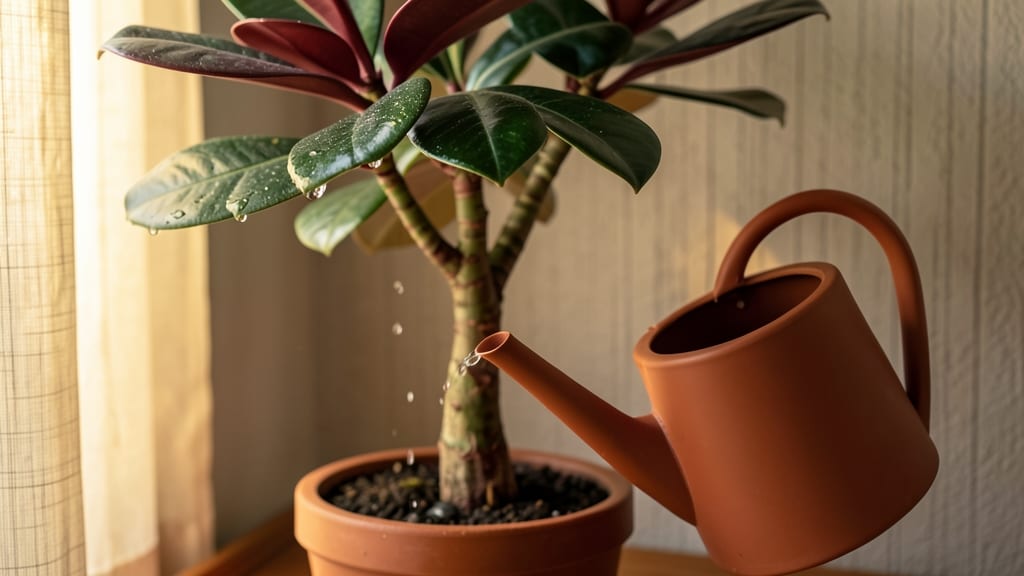
Figuring out how much water your rubber plant 🌿 needs can feel like solving a mystery—one wrong move, and those glossy leaves start to droop or yellow. The truth? Most people overwater by accident, thinking their plant craves constant moisture when it actually thrives on patience.
I’ve learned the hard way that rubber plants (Ficus elastica) are tough but finicky—they’d rather go thirsty than drown. In my experience, sticking to a weekly watering schedule in spring and summer, then cutting back to once a month in winter, keeps mine lush without the guesswork.
But here’s the catch: your plant’s needs change with light, humidity, and pot size.
What you’re about to discover is the exact routine I’ve perfected after years of trial and error—plus how to spot when your rubber plant is begging for a drink (or begging for you to stop).
Let’s dive into the simple rules that’ll save your plant from soggy soil or crispy edges.
Whether you’re a beginner or a seasoned grower, these tips will help you nail the balance. Trust me, your rubber plant will thank you with vibrant new growth in no time.
How often to water rubber plants: the exact weekly schedule by season
Your Ficus elastica (rubber plant) thrives on consistency—too much water causes root rot, while too little leads to crispy leaves. The key is understanding its seasonal water needs and adjusting your routine like a pro gardener. Let’s break down the science-backed schedule to keep your plant lush year-round.
Rubber plants are tropical natives, meaning they prefer slightly moist but never soggy soil. Their watering needs shift dramatically with temperature changes, humidity levels, and light exposure. Mastering these seasonal adjustments ensures your plant stays hydrated without drowning in overcare.
Here’s the exact weekly watering schedule tailored to each season, plus how to test soil moisture like a pro. No more guesswork—just healthy, glossy leaves!
Pro Tip: Always water in the morning (before 10 AM) to allow excess moisture to evaporate during the day. This simple habit prevents fungal issues and mimics their natural tropical rainfall patterns.
🌱
In spring, your rubber plant wakes up from dormancy and craves consistent moisture to fuel new growth. Water every 7-10 days, but always check the soil first—stick your finger 1-2 inches deep. If it feels dry, it’s time to water.
Summer is the most critical season for rubber plants. With higher temperatures and increased evaporation, you’ll need to water every 5-7 days. Look for slight leaf droop by evening—a natural indicator that your plant is thirsty. Adjust based on your home’s humidity; dry air means more frequent watering.
As fall arrives, growth slows, and your plant’s water needs drop. Reduce to every 10-14 days, letting the top 2 inches of soil dry out completely. This prevents overwatering while keeping roots hydrated for the transition to winter.
Winter is all about minimal watering. Your rubber plant enters dormancy, and overwatering is the #1 killer during this time. Water only every 3-4 weeks, using just 300-500ml per watering. The soil should be bone-dry 3 inches down before you water again.
💧
For potted rubber plants, the rule is simple: water until it drains from the bottom. If your pot lacks drainage holes, water 50% less and let the soil dry more thoroughly between waterings.
Over time, you’ll learn your plant’s unique rhythm—some rubber plants drink more, others less, depending on their pot size and soil mix.
Watch for these visual cues to fine-tune your schedule: dull leaves mean it’s thirsty, while yellowing leaves or mushy stems signal overwatering. Adjust your routine based on what you observe—your rubber plant will thank you with shiny, vibrant foliage!
5 Signs your rubber plant needs water (and 3 signs you’re overdoing it)
Rubber plants (Ficus elastica) are tough, but even they send clear signals when their thirst isn’t being met. The key is learning to read these visual cues before wilting or root rot sets in.
I’ve learned the hard way that crispy leaf edges and soggy soil are red flags most gardeners miss until it’s too late.
Your rubber plant’s leaves hold the most obvious clues. When they start feeling lightweight or droopy, it’s often a cry for hydration. But don’t wait until the leaves look sad—check the soil first.
Stick your finger 1-2 inches deep; if it feels bone-dry, it’s time to water. Trust me, this simple test saves plants every time.
🌱 5 Signs Your Rubber Plant Needs Water
- 1 Dry, cracking soil – Top 1-2 inches feel powdery when touched.
- 2 Wrinkled leaves – Edges curl inward like parchment paper.
- 3 Leaves feel light – Pick a leaf; if it’s easier than expected, it’s dehydrated.
- 4 Slow growth – New leaves appear smaller than usual or stop growing.
- 5 Dull leaf color – Glossy leaves lose their deep green shine and appear dull.
But here’s where most people go wrong: assuming more water is always better. Your rubber plant can’t tell you when you’ve overwatered, but the signs are unmistakable.
Yellowing leaves that feel mushy when touched? That’s your plant’s SOS for root rot. And if the soil smells sour or rotten, you’ve crossed the line.
Fixing overwatering starts with draining excess moisture. Move your plant to a dry spot and let the soil dry out completely—sometimes this takes 2-3 weeks. If the roots smell foul, trim the blackened parts with sterilized scissors and repot in fresh, well-draining soil.
Pro tip: Use a pot with drainage holes to prevent future soggy soil.
Remember, rubber plants store water in their leaves, so they’re more forgiving of underwatering than overwatering. When in doubt, check the soil before watering—your plant will thank you with bold, healthy leaves for years to come. 🌿