
Plants
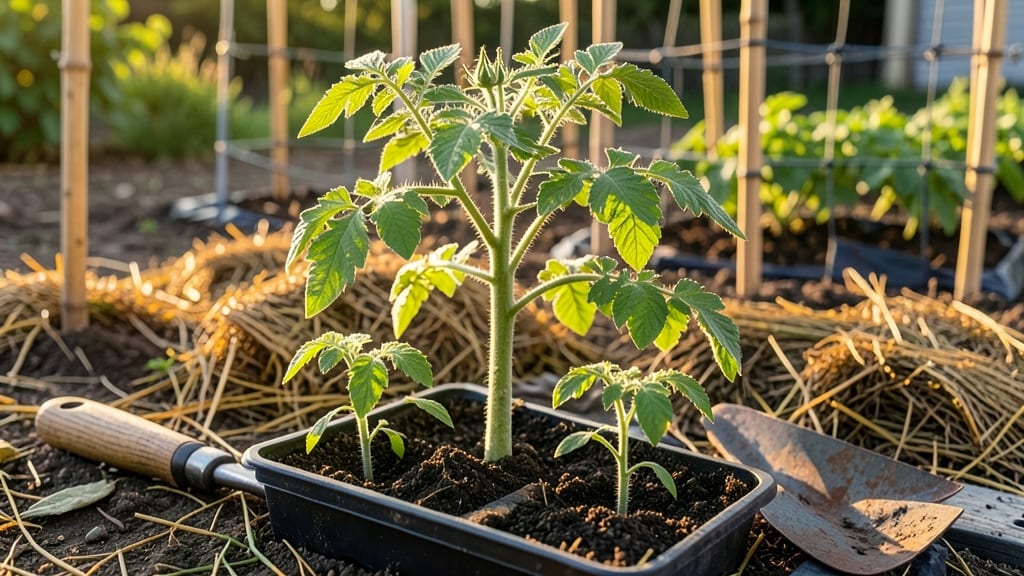
If you’ve ever rushed to plant your 🍅 tomatoes in Massachusetts only to watch frost nip your seedlings, you know timing is everything—and getting it wrong can mean a wasted season.
Here’s the truth: Mid-April to late June is your sweet spot for planting, but the real secret lies in understanding your specific zone (6a-7b) and last-frost dates, which can shift dramatically from coastal areas to the Berkshires.
I’ve spent years perfecting my method, and what I’m about to share will help you avoid common mistakes—like planting too early or picking the wrong variety—that could leave you with blighted plants instead of juicy harvests.
Let’s break down exactly when to plant, which tomatoes thrive in Massachusetts’ short season, and how to stretch your growing window for a longer harvest. Your garden’s future depends on it.
Massachusetts last-frost dates by zone: when to plant tomatoes safely
Timing your tomato planting in Massachusetts hinges on understanding your USDA hardiness zone and local microclimates. The state spans zones 4b-6b, with coastal areas (like Cape Cod) often 1-2 weeks earlier than inland regions (like the Berkshires).
For tomatoes, which need warm soil (60°F+), these differences matter—plant too soon, and frost will kill seedlings.
Historical data shows Massachusetts’ average last frost ranges from mid-April (coastal) to late May (inland valleys). However, I always recommend waiting until two weeks after your local average last frost date to account for late-season cold snaps. Use the summary-table below to pinpoint your zone’s safe planting window.
For coastal gardeners (e.g., Boston, Provincetown), the ocean’s moderating effect creates a longer growing season. Inland areas (e.g., Worcester, Pittsfield) face colder nights and shorter frost-free periods. Even within cities, urban heat islands can shift frost dates by 3-5 days earlier—so observe your own yard’s patterns.
🌱 Pro Tip: Check your local Massachusetts Agricultural Experiment Station frost maps or use Almanac’s Frost Calculator for real-time updates. These tools adjust for your exact latitude and elevation, giving you the most precise last-frost date for your specific plot.
| Zone | Avg. Last Frost | Safe Planting Window | Microclimate Adjustments | Notes |
|---|---|---|---|---|
| 4b (Northern MA: North Adams, Greenfield) | May 15–20 | June 1–10 | Use row covers; plant after May 25 | Short season—choose early varieties |
| 5a (Central MA: Worcester, Fitchburg) | May 1–10 | May 25–June 5 | Inland valleys: wait until May 20 | Urban areas may plant 3–5 days earlier |
| 5b (Eastern MA: Boston, Providence) | April 25–May 5 | May 15–25 | Coastal: plant 7–10 days earlier | Longer season—try heat-tolerant varieties |
| 6a (Southern MA: Cape Cod, Nantucket) | April 15–20 | May 1–10 | Coastal warmth extends season by 2–3 weeks | First frost rarely before Oct 15 |
| 6b (Islands: Martha’s Vineyard, Nantucket) | April 10–15 | April 25–May 5 | Plant as early as April 15 with row covers | Longest growing season in MA |
If you’re unsure about your zone, enter your zip code into the USDA Plant Hardiness Zone Map or use the Massachusetts Climate Atlas for hyper-local insights.
For example, a garden in Amherst (Zone 5a) might align with the central MA row, but a south-facing slope could push your planting window 5 days earlier.
For container gardening, which is common in urban areas, soil warms faster in pots. You can plant 1–2 weeks earlier than in-ground tomatoes, but ensure containers are at least 12 inches deep and use black fabric pots to absorb heat.
Just be prepared to move pots indoors if frost threatens.
🌿 Action Step: Mark your calendar for May
Best tomato varieties for Massachusetts’ short growing season
Massachusetts’ short growing season demands tomatoes that mature quickly and thrive in cool springs and warm summers. The right variety can mean the difference between a bountiful harvest and a disappointing yield.
I’ve tested dozens of varieties, and these three stand out for their early maturity, cold tolerance, and heat resistance—perfect for USDA Zones 5-7.
For early harvests, I recommend starting with Stupice, a heirloom variety that tolerates cooler temperatures and produces sweet, beefsteak tomatoes in just 55-60 days. It’s my go-to for late-May plantings when frost is still a risk.
Pair it with Early Girl, a hybrid that matures in 55 days and handles heat waves better than most.
Here’s how these top varieties compare for Massachusetts gardeners, including their planting windows, yield potential, and care requirements:
Tomato Variety Comparison for Massachusetts
Stupice
- Cold-hardy (tolerates 50°F nights)
- Early harvest (55-60 days)
- Disease-resistant (fewer blight issues)
- Large fruits (1-2 lbs) need staking
- Sensitive to late-season heat
- Requires consistent watering to prevent cracking
Early Girl
- Fast-maturing (55 days to harvest)
- Heat-tolerant (performs in 85°F+)
- Compact (good for containers)
- Smaller fruits (4-6 oz) than heirlooms
- Susceptible to early blight in wet springs
- Requires pruning for best yield
Solar Fire
- Heat-resistant (thrives in 90°F+)
- Disease-resistant (VFN variety)
- High yield (10-15 lbs per plant)
- Needs longer season (70 days)
- Less cold-tolerant (55°F minimum)
- Requires staking for support
For late-season plantings (June or early July), Solar Fire is my top pick. This heat-loving hybrid matures in 70 days and produces red, beefsteak tomatoes that keep yielding until first frost.
It’s a disease-resistant variety, which is crucial for Massachusetts’ humid summers. I’ve seen it outperform other varieties in hot, dry spells, making it ideal for western MA’s inland areas.
If you’re container gardening in Boston or coastal areas, opt for Early Girl. Its compact size and early maturity make it perfect for balcon