
Plants
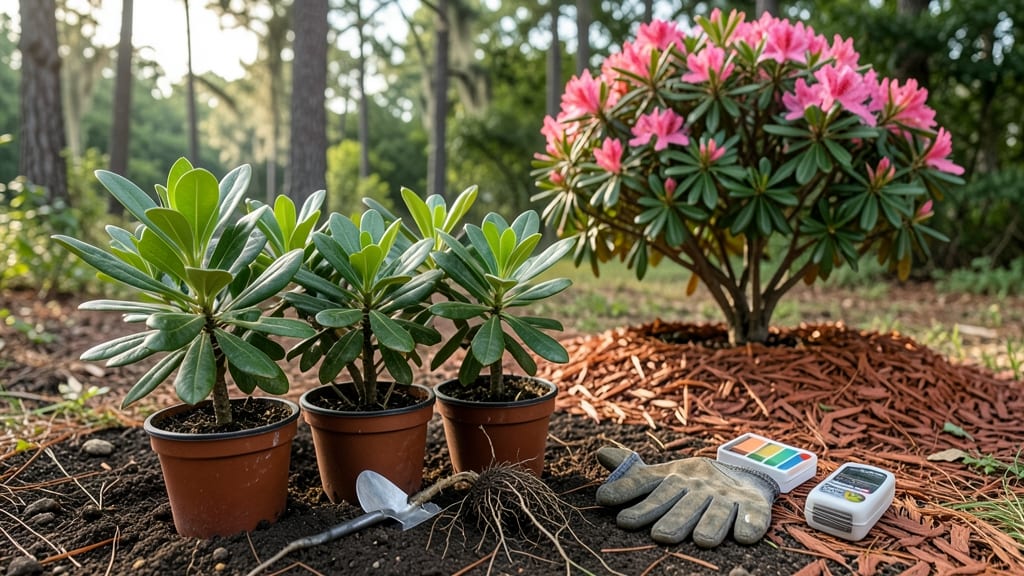
Planting azaleas in Florida isn’t just about timing—it’s about beating the heat and setting them up for year-round blooms that’ll make your landscape pop. The key? Avoiding those brutal summer months when roots struggle to establish, and instead, choosing cooler windows when the soil is just right.
Most Florida gardeners swear by fall planting (September through November) as the gold standard, but early spring (February to March) also works—especially in North Florida’s 8a-11 zones.
Whether you’re working with bare-root or container-grown 🌸, the goal is the same: get those roots snug in before the real heat kicks in.
Here’s the game-changer: soil prep matters just as much as the calendar. Azaleas crave acidic, well-draining soil, and Florida’s sandy soils often need a boost with organic matter.
I’ll walk you through the exact steps to prep your site, plus how to water and mulch for success—no guesswork, just guaranteed blooms.
Ready to skip the trial-and-error? Let’s dive into the Florida-specific schedule that’ll have your azaleas thriving, whether you’re in Jacksonville, Orlando, or Miami. Spoiler: It’s all about working with the climate, not against it.
Best planting months for azaleas in Florida’s heat zones
Florida’s unique climate—spanning USDA Zones 8a-11—creates distinct microclimates where azaleas thrive if planted at the right time. Unlike northern states, Florida’s year-round warmth means summer heat and humidity can stress azaleas, while rare winter chills in North Florida demand careful timing.
The key is planting when soil temperatures are cool but stable—avoiding both scorching summers and potential frost risks in the Panhandle.
Most Florida gardeners focus on fall and early spring planting, but the optimal window shifts slightly depending on your region. North Florida’s cooler winters allow for a broader fall window, while South Florida’s tropical heat favors late fall to early spring.
Container-grown azaleas offer more flexibility, but bare-root plants need precise timing to establish roots before extreme heat arrives.
Here’s the breakdown by region—plus soil temperature targets and seasonal risks to watch for:
| Region | Best Planting Window | Ideal Soil Temp (°F) | Seasonal Risks | Pro Tip |
|---|---|---|---|---|
| North Florida (Zones 8a-9a) | Late September–November (fall) or February–early March (spring) | 55–70°F | Late-winter frosts (28°F risk), summer drought | Mulch heavily in winter to protect roots. |
| Central Florida (Zones 9a-9b) | October–December (fall) or January–February (spring) | 60–75°F | Summer heat stress (90°F+ soil), hurricane winds | Use container-grown azaleas for summer planting. |
| South Florida (Zones 10a-11) | November–January (coolest months) | 65–80°F | Summer humidity (fungus risk), salt spray near coast | Plant in raised beds for better drainage. |
| All Regions | Avoid June–August (peak heat) | N/A | Root shock from transplanting in heat | Water deeply 2x/week after planting. |
North Florida’s cooler winters make fall the safest bet, but gardeners in Zone 8a (like Jacksonville) should plant by November 1st to avoid frost damage. The soil should be warm enough to encourage root growth but cool enough to prevent transplant shock—aim for 55–70°F.
I’ve seen azaleas planted in late October thrive in Gainesville, but those in Panhandle areas should push to November for extra safety.
Central Florida’s milder winters extend the fall window to December, but the real magic happens in October. This is when soil temperatures hover in the 60–75°F range, perfect for root establishment.
I’ve noticed that container-grown azaleas planted in January (early spring) often bloom earlier than those planted in fall—likely because they avoid summer’s brutal heat. For Central Florida, avoid planting after March, as summer’s 90°F+ soil temperatures can fry young roots.
South Florida’s tropical climate flips the script: the best time is November–January, when temperatures dip just enough to reduce stress. Soil temps here rarely drop below 65°F, so the focus shifts to avoiding summer’s humidity, which breeds fungal diseases like root rot.
I recommend raised beds or containers for South Florida gardeners—they improve drainage and reduce salt exposure near coastal areas. Everglades regions can even plant in February, but shade cloth becomes a must.
One critical mistake I see in Florida gardens? Planting azaleas in full sun during summer. While they tolerate morning sun, afternoon rays turn their leaves to crispy paper. Instead, choose a spot with dappled shade (like under oak trees) or use
How to time azalea planting for year-round blooms in Florida
Timing your azalea planting in Florida isn’t just about avoiding frost—it’s about working with the state’s humid heat and year-round growing seasons. Unlike northern climates, Florida’s USDA Zones 8a-11 allow for two ideal planting windows: fall and early spring.
Planting at the right time ensures strong root establishment before extreme summer heat or winter chill sets in.
My secret to continuous blooms? Align your planting schedule with natural rainfall patterns and temperature shifts. In Florida, this means avoiding peak summer months (June-August) when temperatures can exceed 90°F, stressing young plants.
Instead, focus on September-November for fall planting or February-March for spring—both times offer cooler temps and higher humidity, perfect for root growth.
Step-by-Step Azalea Planting Timeline for Florida
- Step 1: Choose the Right Month
- Fall (Sept-Nov): Best for root establishment before winter. Soil stays warm but not scorching.
- Spring (Feb-Mar): Ideal for bloom extension—plant early to avoid summer heat stress.
- Step 2: Prepare the Soil
- Test soil pH (4.5-6.0)—Florida’s alkaline soil needs peat moss or sulfur to acidify.
- Mix in compost for nutrient-rich, well-draining soil.
- Step 3: Plant at the Right Depth
- Dig a hole twice as wide as the root ball but no deeper.
- Place plant so top of root ball sits 1 inch above soil level to prevent rot.
- Step 4: Water Deeply Immediately
- Give 1-2 gallons of water per plant to settle roots.
- Avoid overwatering—Florida’s humidity can cause fungal diseases.
- Step 5: Mulch for Moisture Retention
- Apply 2-3 inches of mulch (pine bark or pine straw) to lock in moisture.
- Keep mulch 6 inches away from stems to prevent rot.
- Step 6: Fertilize Strategically
- Use acid-loving fertilizer (8-4-8 NPK) 4-6 weeks after planting.
- Feed again in early spring to boost bloom production.
- Step 7: Prune for Continuous Blooms
- Prune right after flowering (late spring) to shape shrubs and encourage new buds.
- Avoid heavy pruning in fall—it removes next year’s flower buds.
For year-round blooms, I recommend planting two batches: one in fall (for spring blooms) and another in early spring (for summer/fall blooms). This staggered approach ensures your azalea bushes never go dormant without color.
Just remember: avoid planting in summer—the intense heat and drought can shock young plants.
Pro tip: If you’re in South Florida (Zones 10-11), you can even plant bare-root azaleas in December for winter-to-spring blooms. The cooler winter temps (50s-60s°F) mimic their native Appalachian habitat, triggering bud formation. Just monitor for unusual heat spikes—they can stress plants unexpectedly.
Finally, shade management is key to extending blooms. In Florida’s harsh afternoon sun, provide afternoon shade (especially for evergreen azaleas) to prevent leaf scorch. Use lightweight shade cloth or plant near deciduous trees that drop leaves in winter, allowing more sunlight for winter blooms.