
Plants
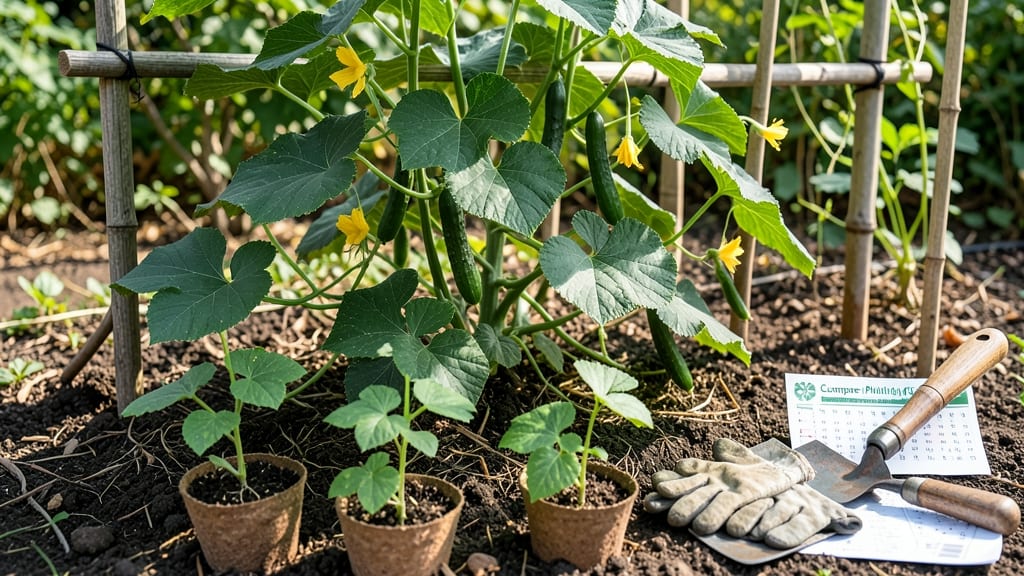
Planting cucumbers 🥒 in Michigan isn’t just about waiting for spring—it’s about catching that perfect window when soil temperatures and frost risks align. Get it wrong, and you’ll either lose seedlings to late frosts or watch your harvest shrink before summer’s peak.
But here’s the game-changer: with the right soil temperature tricks, you can jumpstart germination and stretch your growing season for bigger yields.
Most Michigan gardeners wait until mid-April to late June to plant cucumbers, but that’s just the start. The real secret lies in soil warmth—cucumbers won’t germinate properly until temperatures hit 60°F or higher. That means even if the air feels spring-like, your soil might still be too cold.
I’ll show you exactly how to test soil temperature and use simple tools like black plastic mulch to create the ideal conditions for fast, reliable sprouts.
Whether you’re in the Upper Peninsula’s cooler 5b zone or the warmer 6b regions near Detroit, timing matters. Some varieties thrive with early starts, while others need the heat of July to really shine.
I’ll break down the best planting dates for your microclimate, plus which cucumber types are tough enough to handle Michigan’s unpredictable weather—so you can avoid common pitfalls and maximize your harvest from July to September.
Ready to turn your cucumber dreams into reality? Let’s dive into the soil temperature secrets and planting strategies that’ll have your vines climbing and your kitchen overflowing with fresh, homegrown 🥒—without the guesswork.
Best planting dates for cucumbers in Michigan by microclimate
Michigan’s diverse climate means your cucumber planting schedule depends heavily on your microclimate. The Upper Peninsula, Northern Lower Peninsula, and Southern Michigan all have different last frost dates, which directly impact when you should sow seeds or set out transplants.
For example, Southern Michigan can start cucumbers as early as mid-April, while the Upper Peninsula may need to wait until late May. Understanding these regional differences helps you avoid frost damage and maximize your harvest.
Cucumbers thrive in warm soil (at least 60°F) and struggle with cool temperatures. In Michigan, this means waiting until after the last frost date, which typically falls between mid-April and early June, depending on your location.
Early varieties can be planted just after the last frost, while late-season varieties benefit from a longer growing window. USDA zones 5b-6b cover most of Michigan, but microclimates—like urban heat islands or lakeside areas—can shift planting windows by 1-2 weeks.
Here’s a microclimate-specific breakdown of when to plant cucumbers in Michigan, including adjustments for early vs. late varieties and soil temperature tricks to speed up germination.
For Southern Michigan, where last frosts average mid-April, you can start cucumbers as early as late April if you use black plastic mulch to warm the soil. Varieties like 'Straight Eight' mature quickly (about 50-55 days) and are perfect for early planting.
If you’re in Northern Lower Peninsula, wait until mid-May to avoid frost, and opt for heat-tolerant varieties like 'Sweet Success', which handle cooler soils better than standard types.
In the Upper Peninsula, where frosts linger until late May, focus on late-season varieties like 'Tyria' or 'Excelsior'. These varieties thrive in warmer soil (70–75°F) and can be started in cold frames or under row covers to extend the growing season.
If you’re unsure about your local frost date, check the Michigan State University Extension’s frost date map or use a soil thermometer to confirm the soil is ready.
Another key factor is whether you’re planting seeds directly or using transplants. For direct sowing, wait until the soil is consistently 60°F or warmer. If you’re using transplants, you can plant them 1-2 weeks earlier since they’re already established.
However, avoid transplanting when nighttime temperatures dip below 50°F, as this can stunt growth. For extended harvests, consider planting a second crop in late June—this works well in Southern Michigan but may be risky in cooler regions.
Pro tip: Use biodegradable row covers to protect young plants from late spring frosts and warm the soil faster. These covers also deter pests like cucumber beetles, which can devastate your crop. Remove them once plants are established (about 2-3 weeks after planting) to allow pollination.
If you’re in a lakeside microclimate, you might have 1-2 extra weeks of growing season due to the moderating effect of large bodies of water.
Finally, keep an eye on weather forecasts in the days leading up to your planting window. A sudden cold snap can delay germination or damage tender seedlings. If frost is predicted, cover plants with frost cloth or move potted cucumbers to a sheltered spot.
With the right timing and a few soil-warming tricks, you’ll be enjoying fresh cucumbers from your Michigan garden by mid-summer!
Soil temperature secrets: how to speed up cucumber germination
Cucumbers are finicky about soil warmth—plant them when the ground is too cold, and you’ll wait weeks for germination (or worse, never see sprouts). The ideal soil temperature range for cucumbers is 70–90°F, but Michigan’s spring soil often lingers in the 40s or 50s even after the last frost.
That’s why I’ve perfected a few tricks to create the perfect heat boost for my cucumber seeds, saving me from the frustration of slow starts.
First, check your soil temperature before planting. A simple soil thermometer (just $10 at any garden center) inserted 2 inches deep will give you real-time data. If it’s below 60°F, hold off—cucumbers won’t germinate reliably.
I’ve learned the hard way that rushing leads to patchy sprouts or no sprouts at all. Patience here pays off with stronger seedlings.
⚠️ callout warning
Even if your air temperature feels spring-like, soil warms last. In USDA Zone 5b (Upper Peninsula), wait until May 15–June 1 for soil to reach 60°F+. In Zone 6b (Southern Michigan), you can plant as early as late April, but always verify with a soil thermometer. Never plant before last frost—cold snaps can kill seedlings overnight.
To warm cold soil fast, I swear by black plastic mulch. Lay it down 1–2 weeks before planting to raise soil temps by 10–15°F. It also suppresses weeds and retains moisture—three benefits in one.
For an even bigger boost, combine it with a low tunnel or row cover. These create a mini greenhouse effect, trapping heat during the day and insulating at night. I’ve seen germination improve from 2 weeks to just 5–7 days using this combo.
Cold frames are another game-changer for Michigan gardeners. A simple DIY version (just a clear plastic box with a hinged lid) can raise soil temps by 20°F+ on sunny days. I use mine to start seeds in early April, then transplant hardened-off seedlings after Memorial Day.
The key is ventilation—crack the lid during the day to prevent overheating, but close it at night to lock in warmth.
If your soil stays stubbornly cool, try planting in raised beds filled with compost-rich soil. Organic matter heats up faster than clay-heavy native soil. I fill mine with a mix of compost, peat moss, and perlite to improve drainage and warmth retention.
For container growers, use black pots—they absorb heat like mulch and keep roots cozy.
Slow germination? Don’t blame the seeds first. Double-check your soil temp, moisture (keep it consistently damp, not soggy), and seed depth (1 inch deep max for cucumbers). If you’ve done everything right but still see delays, try soaking seeds overnight in lukewarm water to kickstart the process.
With these tricks, you’ll go from seed to sprout in record time—ready to climb your trellis by summer.