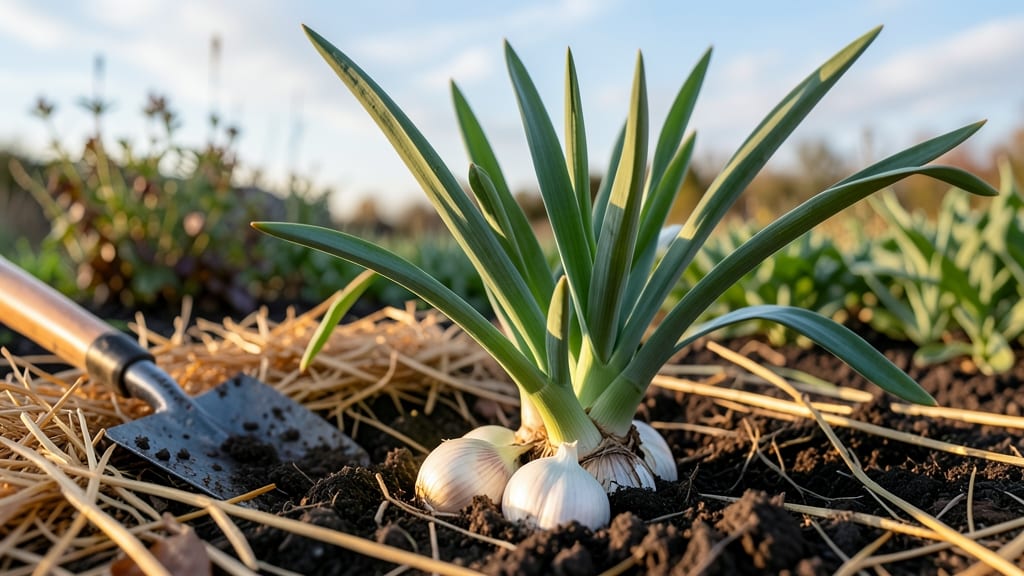
Timing your 🧄 garlic planting in Vermont isn’t just about the calendar—it’s about beating the frost before it beats you. Plant too early, and your cloves might sprout prematurely; too late, and winter’s chill stunts those bulbs before harvest.
The 4-6 week window before the ground freezes (usually October to November) is your golden opportunity.
Vermont’s 4b-5b climate favors hardneck varieties like Rocambole and Artichoke, which thrive in cold winters, but even they need the right start. Softneck types can also work, though they’re less common here.
The key? Soil prep with compost and a pH of 6.0-7.0—Vermont’s acidic soils need balancing for optimal growth.
Miss the fall window? Don’t panic—early spring planting (March) is a backup, but it requires patience and protection from late frosts. I’ll walk you through the exact deadlines, soil tricks, and mulching hacks to ensure your garlic survives Vermont’s winters and delivers plump, flavorful bulbs by late summer.
Whether you’re a first-time planter or a seasoned gardener, these insights will help you avoid common mistakes—like planting too deep or ignoring frost dates—and set you up for a harvest that’ll make your neighbors jealous. Let’s get those cloves in the ground the right way.
🧄
When to Plant Garlic
Jan
❄️
Feb
❄️
Mar
🌱
Apr
🌱
May
🌸
Jun
☀️
Jul
☀️
Aug
☀️
Sep
🌱
Oct
🧄
Nov
🧄
Dec
🌱
Vermont garlic planting deadlines by variety and hardiness zones
Vermont’s USDA Zones 3-5 create a unique challenge for garlic growers—too early, and your cloves sprout before winter sets in; too late, and frost stunts bulb development.
The 4-6 week window before the ground freezes (typically October 15th to November 15th) is your sweet spot, but it varies slightly by garlic variety and local microclimate.
Hardneck varieties like Rocambole and Artichoke dominate Vermont gardens because they thrive in cold winters, while softneck types like Silverskin are less common but still viable with proper timing.
If you miss the fall window, don’t despair—early spring planting (March 1st to April 1st) is a backup, but it requires extra care to protect young plants from late frosts. The key is understanding your last frost date (usually mid-November) and adjusting your planting schedule accordingly.
For example, in Zone 4b (northern Vermont), you’ll want to plant by October 20th, while Zone 5b (southern Vermont) gives you until November 10th.
Below is a detailed comparison of planting deadlines for Vermont’s most popular garlic varieties, including hardneck and softneck options. This table also highlights the ideal planting months, soil temperature thresholds, and mulching recommendations to protect your crop through winter.
Use this as your guide to avoid common mistakes like planting too deep or ignoring soil pH adjustments for Vermont’s acidic soils.
| Variety |
Type |
Zone 3 Deadline |
Zone 4b Deadline |
Zone 5b Deadline |
Spring Backup |
Soil Temp |
Mulch Thickness |
| Rocambole |
Hardneck |
Oct 10-20 |
Oct 15-25 |
Oct 20-Nov 5 |
Mar 1-Apr 1 |
40-50°F |
4-6 inches |
| Artichoke |
Hardneck |
Oct 10-20 |
Oct 15-25 |
Oct 20-Nov 5 |
Mar 1-Apr 1 |
40-50°F |
4-6 inches |
| Silverskin |
Softneck |
Oct 20-Nov 10 |
Oct 25-Nov 15 |
Nov 1-15 |
Apr 1-15 |
50-60°F |
6-8 inches |
| Creole |
Hardneck |
Oct 15-25 |
Oct 20-Nov 5 |
Oct 25-Nov 10 |
Mar 1-Apr 1 |
40-50°F |
4-6 inches
Step-by-step Vermont garlic planting calendar: October to April
Vermont’s short growing season means garlic planting is a race against frost. The 4-6 week window before the ground freezes (typically October 1st to November 15th) is your best bet for hardneck varieties like Rocambole, which thrive in cold winters.
Soil temperatures should be below 40°F but not frozen solid—aim for 40-50°F for ideal root establishment.
If you miss fall planting, don’t despair—early spring planting (March 1st to April 15th) is a viable backup. However, spring-planted garlic may not mature as fully, so prioritize fall if possible.
Vermont’s USDA Zones 4b-5b require extra care to protect cloves from freeze-thaw cycles that can heave them out of the soil.
📅 Your Vermont Garlic Planting Timeline
-
October 1st-15th: Primary planting window for hardneck varieties. Soil temps should be 40-50°F. Work compost into beds and adjust pH to 6.0-7.0 with lime if needed.
-
October 16th-November 15th: Backup window if soil isn’t frozen. Plant 2 inches deep, 4 inches apart, with 6 inches between rows. Cover with 4-6 inches of straw mulch immediately.
-
November 16th-April 15th: Overwintering phase. Monitor mulch thickness—top up if snow melt exposes soil. Avoid disturbing beds until spring thaw (late March).
-
March 1st-April 15th: Spring planting window if fall was missed. Plant shallower (1.5 inches deep) and use cloches or row covers to protect from late frosts (below 28°F).
-
April 16th-May 15th: Spring care. Remove winter mulch, add 1 inch of compost, and water deeply once soil thaws. Watch for scapes (flower stalks)—cut them to redirect energy to bulb growth.
🌱 Pro Tip: Label beds with flags—Vermont’s snow cover can erase planting memories!
Soil preparation is half the battle in Vermont’s acidic soils. Before planting, mix in aged compost or well-rotted manure to improve drainage and fertility. Test your soil’s pH level—if it’s below 6.0, amend with pelletized lime (apply 2-3 months before planting).
Hardneck varieties like German White or Music perform best in these conditions.
Mulching is non-negotiable in Vermont’s winters. Use straw or leaves (6+ inches thick) to insulate cloves from temperature swings and prevent heaving. Remove mulch in early spring (late March) to allow soil to warm and encourage sprouting.
If you’re planting in early spring, opt for row covers instead of heavy mulch to avoid suffocating emerging shoots.
Watch for vernalization—the cold period garlic needs to form bulbs. Vermont’s winters naturally provide this, but spring-planted garlic may need artificial chilling (place pots in a garage or unheated shed for 6-8 weeks before transplanting). This mimics the 60-day cold exposure hardneck varieties require for optimal bulb development.
By following this calendar, you’ll avoid the two biggest Vermont garlic mistakes: planting too early (premature sprouting) or too late (stunted growth).
Whether you’re a fall planter or a spring backup, these deadlines will set you up for bold, flavorful bulbs ready to harvest by late July or August. 🧄
★★★★★4.6(15 reviews)
|