
Plants
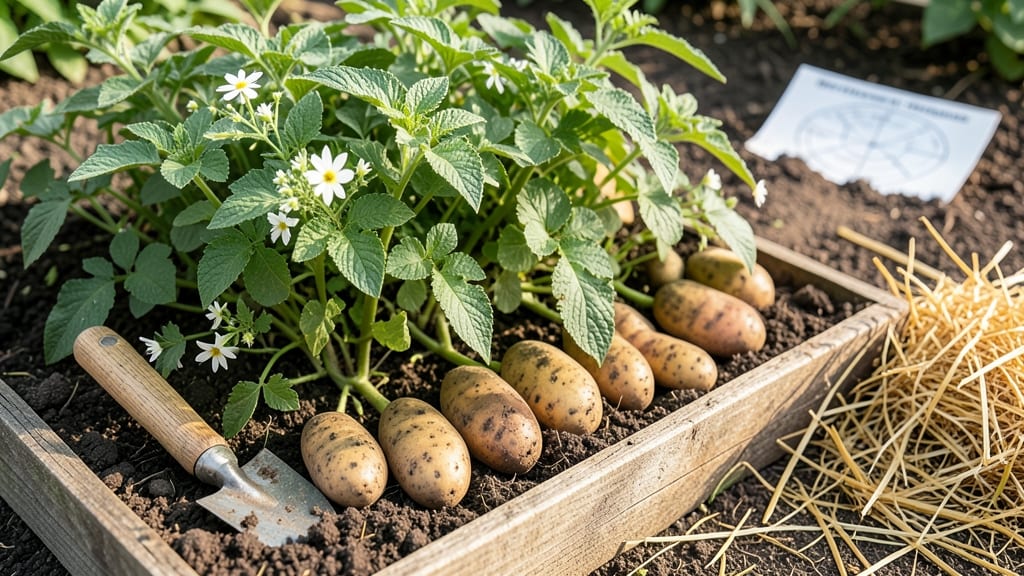
Planting potatoes in Pennsylvania isn’t just about dropping them in the dirt—it’s about timing them perfectly to beat frost and maximize your harvest.
Whether you’re in the cooler Zone 5b or the warmer Zone 7a, getting those seed potatoes in the ground at the right moment makes all the difference between a bumper crop and a disappointing yield.
Most gardeners in Pennsylvania start their 🥔 potatoes indoors in late winter or directly in the soil as early as March, but the exact window depends on your last frost date.
Too soon, and a late freeze will kill your young sprouts; too late, and you’ll miss the optimal growing season. I’ll break down the best planting strategies for your specific zone so you can avoid these common mistakes.
Here’s the key: soil temperature matters just as much as calendar dates. When the ground reaches 45°F, it’s time to plant—usually around 4-6 weeks before your last frost. But Pennsylvania’s unpredictable spring weather means you’ll need backup plans, like row covers or cold-hardy varieties, to protect your crop.
Ready to grow potatoes that thrive? I’ll walk you through the exact planting timeline for your region, plus tips to adjust for late frosts and other local challenges. Let’s get those spuds in the ground the right way!
Pennsylvania planting potatoes timeline by USDA Zone (4-7)
Timing your potato planting in Pennsylvania depends heavily on your USDA zone, as frost dates and soil temperatures vary dramatically from the Poconos (Zone 4) to Philadelphia (Zone 7).
In colder zones, you’ll need to start indoors or under row covers, while warmer zones can plant directly as early as March. The key is planting 4-6 weeks before your last frost date—but only when soil temperatures reach 45°F (7°C).
For Zone 4 gardeners (e.g., Erie, Scranton), your last frost date typically falls around May 15, meaning you should plant seed potatoes indoors in March or use row covers for outdoor planting in late April.
In Zone 7 (e.g., Pittsburgh, Harrisburg), you can plant outdoors as early as mid-March, thanks to warmer soils and later frosts (around April 1).
Here’s the critical rule: Potatoes need 90-120 days to mature, so calculate your harvest window backward from your first frost date (usually October 15 in PA). For example, if your frost arrives October 15, plant early varieties by June 15 to ensure a harvest before cold sets in.
Soil temperature is just as important as air temperature. Potatoes won’t sprout until the soil reaches 45°F (7°C), but ideal planting conditions occur at 50-60°F (10-15°C).
In Zone 5 (Central PA), this often means waiting until mid-April, while Zone 6 (Lancaster, Reading) can start in early April. Use a soil thermometer to confirm readiness—don’t guess!
Another pro tip: Early-season varieties (like ‘Yukon Gold’) mature in 90 days and can handle cooler soils, while late-season varieties (like ‘Russet Burbank’) need 120 days and warmer conditions. Match your variety to your zone to avoid disappointment.
🌱
Spacing also varies by variety. Early-season potatoes (like ‘Red LaSoda’) can be planted 12 inches apart in rows 30 inches wide, while late-season varieties (like ‘Kennebec’) need 15 inches apart to accommodate larger tubers.
In containers, use 10-inch pots with one seed potato per pot—just ensure pots are deep enough for tuber growth.
One common mistake? Planting too shallow. Seed potatoes must go 4 inches deep to prevent light exposure, which turns tubers green and toxic. Use a trowel or dibber to create trenches, place potatoes with eyes facing up, and cover with soil.
After sprouting, hill soil around stems every 2-3 weeks to encourage more tuber formation.
For fall planting (a lesser-known trick in PA), choose early-maturing varieties and plant 6-8 weeks before your first frost (around September 1 in most zones). This method works best in Zone 6-7 and yields smaller but sweet potatoes for winter storage. Just be prepared to harvest before hard frosts.
Pro tip: Use a planting calendar or set reminders for your zone’s last frost date. Pennsylvania’s spring weather is famously unpredictable—one year you’ll have 60°F soil by April 1, the next you’ll be shivering
How to adjust potato planting time for Pennsylvania’s unpredictable spring weather
Pennsylvania’s spring weather can be as unpredictable as a whirlwind—one day warm and sunny, the next a surprise frost. If you’ve ever watched your potato sprouts turn to mush overnight, you know how critical it is to adjust your planting strategy.
The key is flexibility: knowing when to plant, when to protect, and when to delay without sacrificing your harvest.
Most gardeners aim to plant 4-6 weeks before the last frost date, but Pennsylvania’s USDA Zones 4-7 mean that timeline can shift dramatically. For example, in Zone 4, you might plant as early as late March, while in Zone 7, early April could be safer.
The real challenge? Soil temperature and frost warnings. If your ground is still below 45°F, your potatoes won’t sprout properly—no matter what the calendar says.
Here’s the game-changer: cold-hardy varieties and protective measures. Varieties like ‘Yukon Gold’ and ‘Red LaSoda’ tolerate cooler soils better than ‘Kennebec’, which needs warmer conditions to thrive. Pair them with row covers or black plastic mulch, and you’ve got a backup plan for late frosts.
I’ve used straw blankets to warm soil in Zone 5 and extended my planting window by nearly two weeks—no frost damage in sight!
⚠️ Warning Signs You Need to Delay Planting
- 🌡️ Soil temp below 45°F: Use a soil thermometer—this is your #1 rule.
- ❄️ Frost warnings in the forecast: Even if the ground is warm, a late freeze can wipe out sprouts.
- 🌱 Sprouts struggling to emerge: If they’re weak or blackened, pull them and replant later.
- 📅 More than 6 weeks until last frost: If you’re planting too early, you’ll risk stunted growth.
Don’t assume you’re stuck with the calendar. I’ve planted ‘Early Red’ potatoes in early April in Zone 6 using row covers, and they’ve outyielded my late-May plantings every time.
The trick is to monitor your soil and weather closely. A soil thermometer is your best friend—plant only when it consistently hits 45°F during the day.
For extra insurance, try black plastic mulch or straw blankets to warm the soil faster. Spread them over the planting area a week before you plan to plant, and you’ll create a microclimate that’s 5-10°F warmer than the surrounding soil.
I’ve seen this method shave off 10-14 days from my planting timeline in cooler zones. Just remember to remove the mulch once the potatoes sprout to avoid overheating.
If all else fails, start your potatoes indoors in late February or early March. Use small pots or a seed tray, and transplant them outdoors once the soil warms up. This gives you a 2-week head start on the season.
I’ve grown ‘Adirondack Blue’ this way in Zone 5, and the yield was just as good as my outdoor plantings—sometimes even better!
Adjusting your potato planting time in Pennsylvania isn’t about following a rigid schedule—it’s about reading your soil, watching the weather, and using the right tools. With these strategies, you’ll beat frost, maximize your harvest, and enjoy homegrown potatoes that rival the grocery store’s best. Happy planting! 🌱