
Plants
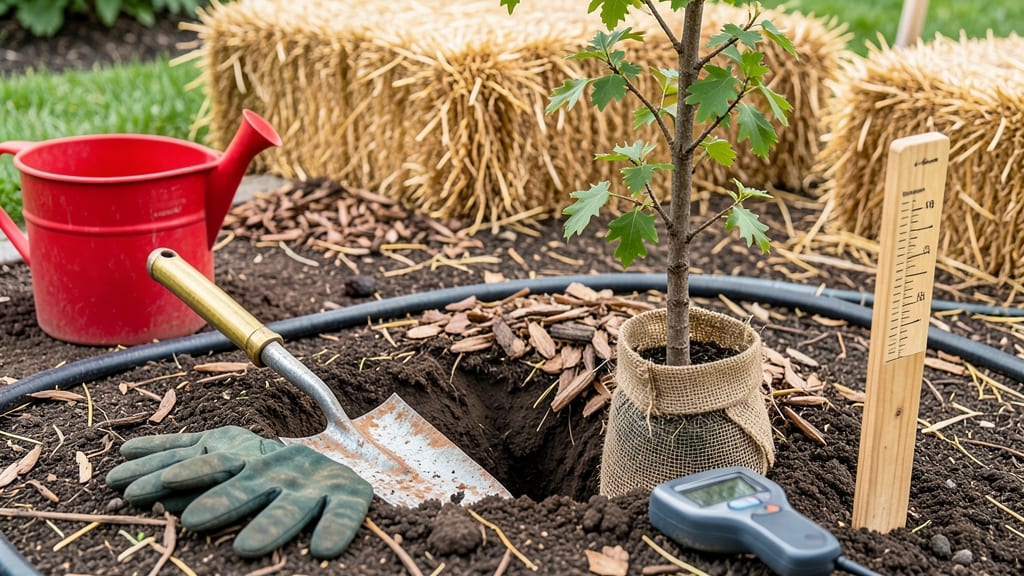
Timing your tree planting in Colorado isn’t just about picking a season—it’s about catching that perfect frost-free window when your 🌳 has the best shot at thriving through harsh winters and dry summers.
Most gardeners assume spring is the only option, but Colorado’s elevation zones—ranging from 5-7 USDA hardiness zones—actually offer two ideal planting periods. The key? Planting when soil temperatures stabilize and roots can establish before the first frost hits around October 15.
In this guide, I’ll break down the exact months for your elevation zone, whether you’re in the Front Range, Mountains, or High Plains. You’ll also discover which tree species handle Colorado’s climate best—and how to avoid common mistakes that kill young trees before they even take root.
Ready to plant with confidence? Let’s dive into the science behind Colorado’s planting calendar so your tree grows strong for decades to come.
Colorado’s frost-free planting windows by elevation zone (with exact months)
Colorado’s dramatic elevation changes—from 3,000 feet in the Front Range to over 10,000 feet in the mountains—create wildly different planting windows for trees. At lower elevations, soil warms early, while high-altitude gardens face late frosts that can delay planting until June or July.
The key is planting when soil temperatures reach 40°F+ and stay frost-free for at least 60 days.
Most Colorado gardeners focus on two prime windows: spring (March–May) and fall (September–October). Spring planting gives roots time to establish before summer drought, while fall planting avoids winter stress.
However, your exact timing depends on whether you’re in the Front Range, Mountains, or High Plains—each with unique frost risks and soil conditions.
Below is your elevation-specific planting calendar, including soil temperature thresholds and frost risk analysis. Use this to pick the best month for your zone and tree species. For example, Colorado Blue Spruce thrives in high-altitude zones, while Hackberry trees are better suited for the Front Range’s warmer microclimates.
If you’re in the Front Range (Denver, Boulder, Fort Collins), aim for March 15–April 30 in spring or September 15–October 15 in fall. Soil temperatures typically hit 45°F+ by mid-March, giving roots a head start before summer drought.
For mountain gardens (Estes Park, Frisco, Telluride), wait until April 15–May 31 to avoid late frosts, which can kill young trees.
High-altitude gardeners in Grand Junction or the San Juan Mountains face the latest frost dates (until June 1), so plant between May 1–June 15. These zones also require drought-resistant species like Ponderosa Pine or Rocky Mountain Juniper, which tolerate dry soils and thin air.
Always check USDA Zone 5-7 guidelines for your exact elevation.
One common mistake? Planting too early when soils are still cold. Roots won’t establish, and trees may struggle to uptake water. Use a soil thermometer to confirm temps—40°F+ is ideal for most species. For container-grown trees, you can plant 2–4 weeks earlier since their roots are already established.
Fall planting is often overlooked but ideal for Colorado. By planting in September or October, roots grow slowly through fall, then dormant in winter and burst into growth in spring.
Just avoid planting after October 15, when first frosts typically arrive. For high-altitude zones, shift to August planting to beat early frosts.
For evergreen trees (spruces, pines, firs), prioritize fall planting—they establish better before winter. Deciduous trees (maples, oaks, aspens) do well in either spring or fall.
Always water deeply after planting and mulch to retain moisture. In Colorado’s dry climate, mulch reduces soil temperature swings by up to 10°F, protecting roots.
Need a quick reference? Bookmark this guide or print it before heading to the nursery. Your tree’s long-term health depends on planting at the right time—not just picking a random spring day. With these elevation-specific windows, your 🌳 will thrive for decades, providing shade, wildlife habitat, and curb appeal.
Best tree species for Colorado’s planting zones (cold-hardy vs. drought-resistant)
Colorado’s elevation zones create unique challenges for tree planting, but the right species can thrive in 5-7 USDA hardiness zones. For high-altitude areas (6,000+ ft), cold-hardy evergreens like Colorado Blue Spruce dominate, while drought-resistant deciduous trees like Hackberry excel in Front Range urban areas.
Your choice depends on whether you prioritize winter survival or water conservation. Evergreens need consistent moisture but handle snow load, while drought-tolerant species like Russian Olive thrive with minimal irrigation—ideal for xeric landscapes.
Cold-Hardy Trees (High Altitude) vs. Drought-Resistant Trees (Low Altitude)
- Pros: Survive -30°F winters
- Pros: Evergreens provide year-round cover
- Cons: Need consistent moisture (30-40 gal/week)
- Cons: Slow growth in high altitude
- Pros: Thrive with 50% less water
- Pros: Fast establishment in USDA Zone 5-6
- Cons: Limited winter hardiness (-20°F max)
- Cons: Fewer evergreen options
For high-altitude gardens (7,000+ ft), the Colorado Blue Spruce stands out with 95% survival rates when planted in well-draining soil. Its needles resist wind damage, making it perfect for exposed mountain sites. Water deeply twice weekly during the first growing season to establish roots before winter.
In urban Denver (5,000 ft), Hackberry trees thrive with minimal care. They tolerate alkaline soil and urban pollution, growing 3-4 ft/year once established. Mulch heavily in Zone 5-6 to retain moisture and suppress weeds, reducing water needs by 40%.
If your property faces both drought and cold, consider Gambel Oak. This native species handles -40°F winters while requiring only 15 gallons of water/month once mature. Its disease resistance makes it ideal for low-maintenance landscapes.
Always match your tree to your microclimate. For example, Russian Olive thrives in arid conditions but struggles in high humidity, while Quaking Aspen needs moist, well-drained soil to survive Colorado’s summers.
Pro tip: Test your soil’s pH and drainage before planting. Most Colorado trees prefer 6.0-7.5 pH, but Ponderosa Pine tolerates acidic soil (5.0-6.0). Amend clay soils with compost or sand to improve root penetration.