
Plants
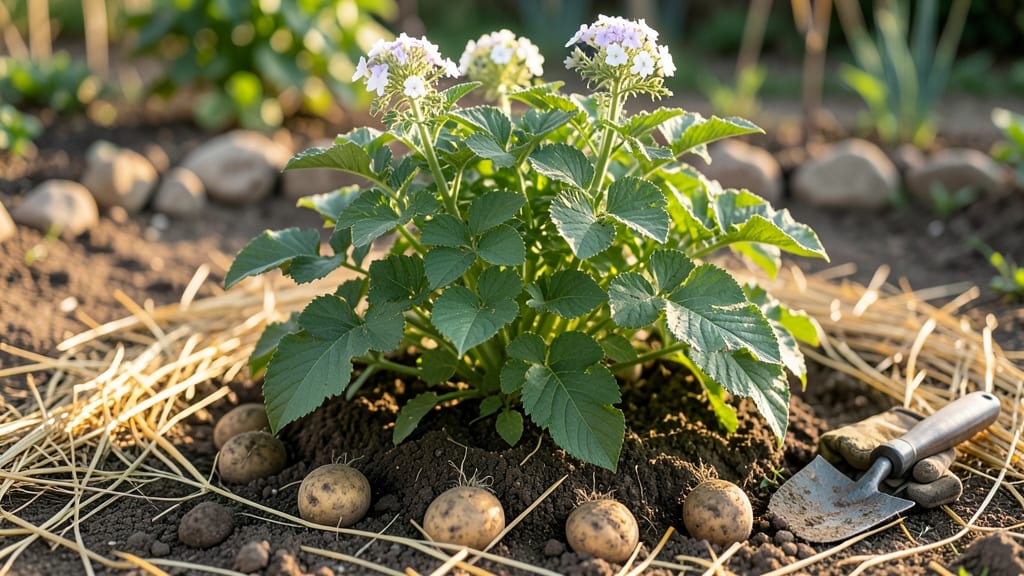
Planting potatoes in Michigan isn’t just about dropping seed potatoes into the dirt—it’s about timing them perfectly to outsmart the state’s notorious late frosts. Miss the window by even a few days, and you could end up with stunted 🥔 tubers or worse, a total bust.
But get it right, and you’ll enjoy a harvest of crisp, homegrown spuds that rival anything from the grocery store.
The key is knowing when your soil warms up and when those last frosts are actually behind you—not just guessing based on the calendar. Michigan’s climate varies wildly from the Upper Peninsula to the Lower, so one-size-fits-all advice won’t cut it.
I’ll break down the exact deadlines for your zone, plus backup strategies if Mother Nature throws a curveball.
You’ll also discover how to prep your soil for success, whether you’re starting with seed potatoes or indoor sprouts. From mulching tricks to frost-proofing hacks, these tips ensure your potatoes thrive even when Michigan’s weather plays hard to get. Let’s dig in—literally.
By the end, you’ll know not just when to plant, but how to set your potatoes up for a bumper crop, no matter where you are in the state. Ready to turn your garden into a potato powerhouse?
Michigan’s potato planting timeline by hardiness Zone (5a-6b)
Michigan’s potato planting window hinges on two critical factors: soil temperature (must reach 45°F+) and last-frost dates, which can vary by 2-3 weeks between the Upper Peninsula and Lower Peninsula.
In Zone 5a (e.g., Detroit, Grand Rapids), you’ll need to wait until mid-to-late May, while Zone 6b (e.g., Ann Arbor, Kalamazoo) can plant as early as early-to-mid May. The Upper Peninsula’s cooler climate (Zone 5a) often requires a 2-week delay compared to the Lower Peninsula.
For early varieties (e.g., ‘Yukon Gold’, ‘Red Norland’), the window is tight—plant too late, and you risk blight before harvest. Mid-season varieties (e.g., ‘Kennebec’) offer more flexibility, while late varieties (e.g., ‘Russet Burbank’) can handle planting up to June 1 in Zone 6b. The key is balancing frost risk with harvest timing to avoid summer diseases.
Here’s your zone-by-zone breakdown, including backup strategies for late springs when frost lingers. Use this as your planting deadline calendar to avoid common mistakes like over-planting too early or underestimating frost risks.
If you’re in the Upper Peninsula (Zone 5a), don’t rush—waiting until May 20 is safer than planting early and risking frost damage. I’ve seen seed potatoes planted in April wilt overnight when temperatures dip below freezing.
For the Lower Peninsula (Zones 5b-6b), you can start as early as mid-April, but always check your local USDA frost map for updates.
For late springs (when frost lingers past average dates), use these backup strategies
5 Critical signs your Michigan soil is ready for potatoes (before you plant)
Your Michigan garden might look ready for potatoes, but the soil tells a different story. Cold, soggy ground or unbalanced pH can ruin your harvest before it even starts. I’ve learned the hard way—planting too early in clay-heavy Michigan soil means rotten tubers, not spuds.
Let’s fix that with a simple checklist to ensure your soil is potato-ready.
First, check the soil temperature—it must stay above 45°F (7°C) for at least a week. Use a soil thermometer or wait until your daffodils bloom, a natural signal that the ground is warming.
Cold soil slows germination, leaving your seed potatoes vulnerable to rot. Michigan’s late springs demand patience—don’t rush it.
Next, test your soil moisture. Stick your finger 6 inches deep—if it feels damp but not soggy, you’re golden. Overly wet soil suffocates roots, while dry soil cracks and repels water.
Aim for consistently moist conditions, like a wrung-out sponge. If your soil drains poorly, amend it with compost or sand to improve aeration.
✅ 5 Critical Signs Your Soil Is Ready
- 🌡️ Soil temp stays above 45°F (7°C) for 7+ days
- 💧 Moisture is damp but not waterlogged (6" deep)
- 🔄 Drainage takes 4–6 hours for excess water to seep away
- 📉 pH is between 5.0–6.5 (test with a kit)
- 🌱 No frost forecast for 2+ weeks after planting
Don’t skip the drainage test. Dig a hole, fill it with water, and time how long it takes to drain. If water pools after 4–6 hours, your soil is too dense.
Michigan’s clay soils often need organic matter—work in aged compost or peat moss to loosen it up. Poor drainage leads to blight and rot, so fix it now.
Now, grab a pH test kit—potatoes thrive in acidic to slightly acidic soil (5.0–6.5). Michigan’s native soils often lean alkaline, stunting nutrient uptake. If your test reads higher, sweeten the soil with sulfur or pine needles.
For alkaline fixes, elemental sulfur works best—sprinkle it in and water thoroughly.
Finally, scout for last-frost dates. Even if your soil is perfect, a late frost can devastate young sprouts. Use frost cloth or plant cold-hardy varieties like ‘Yukon Gold’ if frost lingers.
In Zone 5a (UP), wait until mid-May; in Zone 6b (Lower Peninsula), early May is safe. When all five signs check out, your potatoes are ready to go in!
Pro tip: Mulch heavily after planting to lock in moisture and regulate soil temp. Straw or shredded leaves work perfectly—just keep it 4–6 inches away from stems to prevent rot. Now your soil is set, and your potatoes are one step closer to harvest. Happy digging!