
Trees
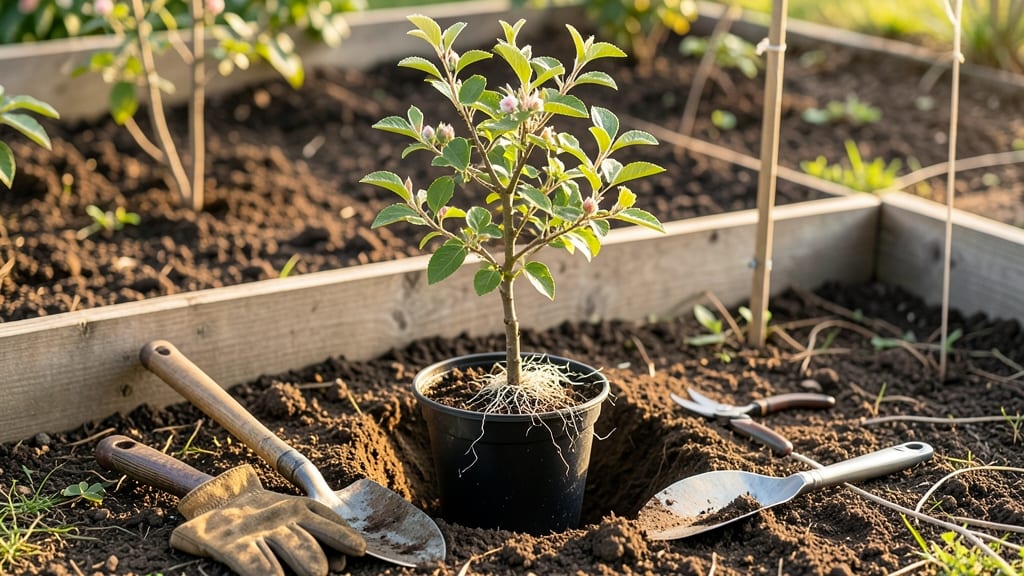
Timing your 🍎 apple tree planting in Massachusetts isn't just about picking a month—it's about giving your tree the best shot at strong roots and bountiful harvests.
Planting too early or too late in USDA Zones 5B-6B can leave your tree struggling with frost damage or poor establishment, and nobody wants to watch their hard work wither away.
I've seen firsthand how the right planting window transforms a struggling tree into a thriving one. Whether you're working with bare-root saplings or container-grown varieties, understanding Massachusetts' frost-free dates and soil conditions is the key to success.
Let me walk you through exactly when to plant for maximum root growth and fruit production.
Most gardeners in New England swear by fall planting, but early spring has its advantages too. We'll break down the science behind each window, including how to prepare your soil and choose the perfect variety for your climate.
By the end, you'll know exactly when to dig that hole for apples that'll make your neighbors jealous.
Ready to turn your backyard into a productive orchard? The clock is ticking—literally. Let's get your 🍎 apple tree off to the right start with these proven planting strategies for Massachusetts growers.
Best planting months for apple trees in Massachusetts (USDA Zones 5B-6B)
Planting an apple tree in Massachusetts requires precise timing to ensure strong root development before winter or summer heat arrives. The ideal planting windows are late winter to early spring (March-April) or fall (October-November), when soil temperatures hover between 40°F and 50°F—perfect for root establishment.
Missing these windows risks stressing young trees during extreme weather.
Massachusetts' frost-free dates vary by region, but most areas experience their last frost around April 15 and first frost by October 15. Planting in October-November gives roots 6-8 weeks to establish before winter dormancy, while March-April planting aligns with soil thawing and bud break.
Both timings leverage natural moisture from spring rains or fall precipitation.
| Planting Window | Soil Temp Threshold | MA Frost-Free Alignment | Root Establishment Benefit |
|---|---|---|---|
| Late Winter (March) | 40°F-50°F | Before last frost (April 15) | 6-8 weeks of spring growth |
| Early Spring (April) | 50°F-60°F | Post-frost-free period | Full growing season access |
| Fall (October-Nov) | 40°F-50°F | Before first frost (Oct 15) | 8-10 weeks pre-dormancy |
| Avoid (June-Aug) | 60°F+ | Summer heat stress | Root shock risk |
For bare-root apple trees, spring planting (March-April) is ideal because roots are dormant but ready to absorb moisture as soil warms. Fall planting (October) works best for container-grown trees, as their roots stay active longer in pots.
Always check for soil moisture—planting when the ground feels damp (but not soggy) ensures immediate hydration for new roots.
Massachusetts' microclimates create regional variations. Coastal areas (like Cape Cod) have milder winters, allowing November planting, while inland zones (Pioneer Valley) should finish by mid-October. Use the USDA Plant Hardiness Zone Map and local agricultural extension offices to confirm your specific frost dates before planting.
After planting, mulch heavily (3-4 inches) with wood chips to insulate roots from winter temperature swings. In spring, remove mulch 3 inches from the trunk to prevent rot. Young apple trees need consistent moisture—water deeply twice weekly during the first growing season to encourage deep root penetration.
One common mistake is planting too late in fall, leaving trees vulnerable to winter desiccation. Aim to finish by mid-November in most of Massachusetts to allow roots to harden before freezing. Similarly, early spring planting (before bud break) prevents stress from rapid temperature changes that can occur in March.
Consider your apple tree's variety and maturity. Dwarf varieties like Honeycrisp establish faster and can tolerate slightly later fall planting, while standard-sized trees need the full 8-10 week window. Always choose cold-hardy varieties (e.g., McIntosh, Cortland) that thrive in Zones 5B-6B.
For container-grown trees, planting is possible year-round in Massachusetts, but spring or fall still offer the best conditions. Remove the container and loosen roots before planting to prevent girdling. Amend the planting hole with compost and a balanced fertilizer (10-10-10) to give young trees an immediate nutrient boost.
Monitor your newly planted apple tree closely for the first two growing seasons. Look for signs of healthy root growth like steady trunk diameter increase (about 1/4 inch per year) and vibrant new leaves in spring.
Adjust watering based on rainfall—drought stress in summer can stunt growth, while overwatering leads to root rot in heavy clay soils common to New England.
By aligning your planting with Massachusetts' frost-free dates and soil temperature thresholds, you'll give your apple tree the best chance to establish a robust root system before facing winter or summer challenges. With proper timing, your tree can bear fruit in 3-5 years—making the effort absolutely worth it! 🍎🌱
How to prepare your Massachusetts soil for apple tree planting success
Apple trees thrive when planted in well-draining, nutrient-rich soil with a slightly acidic pH. In Massachusetts, many areas—especially in the Pioneer Valley and central regions—have clay-heavy soils that need amendment before planting.
Without proper prep, your tree may struggle with root rot or poor nutrient uptake, leading to stunted growth or fruit failure.
Start by testing your soil’s pH level—apple trees prefer a range of 6.0 to 6.5. If your soil is too alkaline (above 7.0), you’ll need to lower the pH with elemental sulfur or peat moss.
For acidic soils (below 5.5), lime or wood ash can help raise the pH. Use a home soil test kit or send a sample to the UMass Extension Soil Lab for precise results.
⚠️ WARNING: Don’t Plant in Heavy Clay Without Amending! ⚠️
Solution: Mix in 3-4 inches of compost or aged manure into the top 12-18 inches of soil. For extreme cases, consider raised beds with a 50/50 mix of native soil and compost. Avoid planting in low-lying areas where water pools after rain.
Apple trees also need organic matter to support strong root development. Work in 3-5 gallons of compost or well-rotted manure per planting hole, mixing it thoroughly with the native soil. For sandy soils (common in coastal areas like Cape Cod), add peat moss or coconut coir to improve moisture retention.
Avoid fresh manure, as it can burn young roots and introduce pathogens.
Before planting, loosen the soil in a 3-foot-wide circle around the planting site to a depth of 12-18 inches. This helps roots spread easily and prevents compaction. If your soil drains poorly, create a sandy loam mix by blending native soil with coarse sand or perlite.
Test drainage by digging a hole, filling it with water, and checking how quickly it drains—ideal drainage should take 2-4 hours to fully absorb.
Timing is key for soil amendments. For fall planting (October-November), amend the soil 4-6 weeks before planting to allow microbes to break down organic matter. If planting in early spring (March-April), amend the soil in late winter so it’s ready when roots start growing.
Avoid amending too close to planting, as fresh organic matter can overheat roots in warm soil.
Finally, mulch the planting area with 3-4 inches of wood chips or straw, keeping it 6 inches away from the tree trunk to prevent rot. Mulch helps retain moisture, regulate soil temperature, and suppress weeds—critical for young apple trees in Massachusetts’ variable climate.
Replenish mulch annually to maintain its benefits.