
Plants
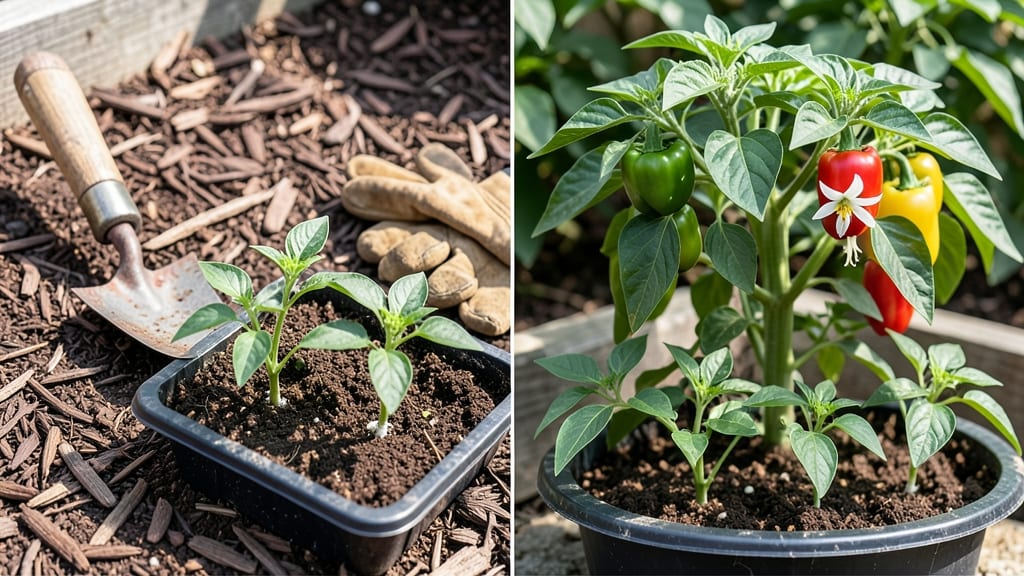
Timing your 🌶️ bell pepper planting in Indiana can make or break your harvest—get it wrong, and you’ll end up with wilted plants or stunted peppers. The key is planting after the last frost, when soil temperatures hit 60°F, ensuring your plants thrive from July through October.
If you’re starting seeds indoors, begin them 8-10 weeks before your target transplant date (around early March). For direct sowing, wait until April 15 to May 15, when the risk of frost has passed and the ground is warm enough for germination.
This window is critical in Zone 6a, where cool springs can delay growth.
Don’t assume all bell peppers are created equal—some varieties mature faster, giving you more flexibility. Whether you’re a first-time gardener or a seasoned pro, knowing when to plant will help you avoid common mistakes like transplant shock or missed harvests.
Ready to grow your own? I’ll walk you through the exact steps, from seed starting to transplanting, so you can enjoy homegrown peppers all summer long. Let’s get started!
Optimal bell pepper planting dates in Indiana by USDA Zone 5-6
Indiana’s USDA Zones 5-6 present unique challenges for growing bell peppers, thanks to cool springs and variable frost dates. Unlike heat-loving peppers, these plants need warm soil (60°F+) and consistent temperatures to thrive.
Planting too early risks frost damage, while waiting too long shortens your harvest window. The key is balancing last frost dates with soil warmth—and Indiana’s climate demands precision.
Most of Indiana experiences its average last frost between April 15-30, but microclimates in northern counties (Zone 5) can delay this by 2-3 weeks. Southern areas (Zone 6) often see frost-free conditions by mid-April.
However, soil temperature is the real deciding factor—bell peppers won’t germinate or grow well below 60°F. In cooler zones, you’ll need to start seeds indoors or use season extenders to meet these requirements.
🌱 Pro Tip: Use a soil thermometer to confirm readiness. In Zone 5, soil may still be 50°F in early May, while Zone 6 could hit 65°F by late April. This variance explains why transplanting is often the safer bet for Indiana gardeners.
For Zone 5 gardeners, the transplant window (May 15-June 1) is critical. Start seeds indoors 8-10 weeks before the last frost (around March 1-15) to ensure sturdy seedlings. Use grow lights if natural light is limited, as peppers need 12+ hours of light daily to prevent leggy growth.
Harden off seedlings for 7-10 days before transplanting to avoid shock.
Direct sowing in Indiana is riskier but possible in Zone 6 after May 1. Plant seeds ½ inch deep in well-draining soil and cover with black plastic mulch to warm the soil faster.
Germination can take 7-21 days, depending on soil temperature—patience is key! If nights are still chilly (50°F), use row covers to protect young plants.
One common mistake is ignoring microclimates. Urban areas with concrete or pavement may warm up faster than rural gardens, while low-lying spots stay cooler longer.
Test multiple locations with a soil thermometer for 3-5 days to find the warmest spot. South-facing beds with 6+ hours of sun are ideal—bell peppers are sun-worshippers and won’t produce well in shade.
If you’re eager for an earlier harvest, consider heat-tolerant varieties like 'Carmen' or 'Aristotle', which handle Indiana’s summer heat waves better than standard types. These varieties also resist blossom-end rot, a common issue when soil moisture fluctuates.
Pair them with calcium-rich fertilizer (like crushed eggshells) to prevent this problem.
For succession planting, sow a second batch every 2-3 weeks after your first transplant date. This stretches your harvest from July through October, even in Indiana’s shorter growing season. Just be sure to protect seedlings with floating row covers if late frosts threaten—your 90-day varieties won’t forgive delays!
Finally, monitor your plants for color changes as summer progresses. Bell peppers mature from green to red, yellow, or purple, but cool nights in September can stall ripening. If this happens, pick green peppers early for cooking or let them ripen indoors on a sunny windowsill.
With the right timing, you’ll enjoy homegrown peppers well into fall—no grocery store required! 🌶️
How to extend Indiana’s bell pepper growing season for longer harvests
Indiana’s short growing season can feel like a race against time for bell pepper lovers. With the right strategies, you can push your harvest from early summer all the way to October—sometimes even later.
The key lies in combining season extension tools, succession planting, and heat-tolerant varieties that thrive in Indiana’s Zone 5-6 climate. I’ve tested these methods in my own garden, and they’ve added 4-6 extra weeks of pepper production.
Start by choosing varieties bred to handle Indiana’s cool nights and inconsistent heat. Look for early-maturing types like ‘Early California Wonder’ (60 days) or ‘Aristotle’ (70 days), which produce peppers faster than standard varieties.
These give you a head start before summer’s end. Pair them with late-season performers like ‘Carmen’ or ‘Jupiter’ (85-90 days), which can handle cooler temperatures better than most.
Here’s how I balance these strategies for maximum results:
Cold Frames
- Pros: Extends season 2-3 weeks each side
- Pros: Protects from light frosts (28°F)
- Cons: Requires daily monitoring for ventilation
- Cons: Can overheat on sunny days
Row Covers
- Pros: Adds 4-5 weeks of protection
- Pros: Blocks insect pests naturally
- Cons: Reduces light penetration slightly
- Cons: Must be removed in heat to prevent sweating
Succession Planting
- Pros: Creates continuous harvest windows
- Pros: Uses limited garden space efficiently
- Cons: Requires careful timing for soil warmth
- Cons: Early plantings may outcompete later ones
For my succession planting schedule, I start with the first batch of seedlings indoors by March 1. These go into the garden after the last frost (mid-May), while I begin my second planting in late May using transplants from a nursery.
The third batch goes in around June 15, using fast-growing varieties that mature in 60-70 days. This staggered approach ensures peppers ripen at different times, giving me a steady supply.
Don’t overlook the power of black plastic mulch—it warms soil 5-10°F faster than bare ground, helping peppers establish roots quickly. I pair this with drip irrigation to maintain consistent moisture without wetting the leaves (which reduces disease risk).
Together, these methods let me plant 2-3 weeks earlier than I could without them.
When late summer arrives, protect your maturing peppers with floating row covers or lightweight hoop tunnels. These shield plants from early October frosts while still allowing sunlight and airflow.
I’ve seen peppers ripen successfully into mid-November using this method, even in Indiana’s Zone 6a. Just remember to remove covers during the day if temperatures rise above 85°F to prevent heat stress.
Finally, save seeds from your best-performing peppers for next year! Indiana’s climate is unpredictable, so local seed adaptation gives you an edge. Store seeds in a cool, dry place and start them indoors by February 15 for an even earlier jump on the season.
With these techniques, you’ll turn Indiana’s short summer into a long pepper harvest that rivals warmer climates. 🌶️