
Plants
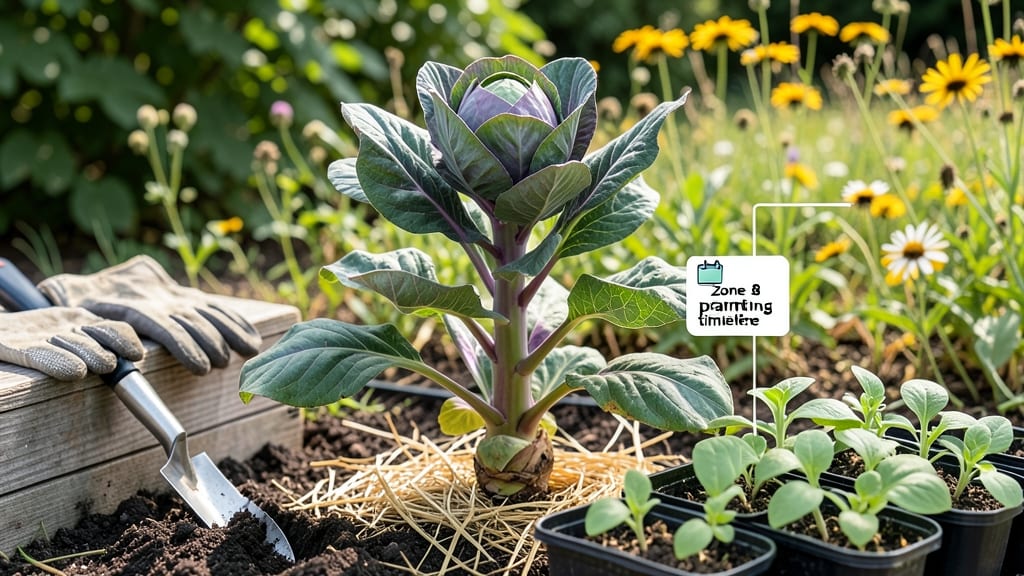
Planting Brussel sprouts 🥦 in Zone 8 at the wrong time can turn your garden into a bitter disappointment—because these cool-weather lovers bolt like scared rabbits when temperatures creep too high.
The key to success? Timing your plantings precisely between August-September for fall harvests or February-March for spring, when soil temps stay below 75°F.
Most gardeners in 8a-8b zones make one of two mistakes: either they plant too early in summer and watch their sprouts race toward flowers, or they wait too late and miss the frost window entirely.
I’ve learned the hard way that getting this right means the difference between a bountiful harvest and a sad, stunted plant.
In this guide, I’ll break down the exact planting windows that work in Zone 8, including how to adjust for your specific microclimate.
You’ll also discover how to start seeds indoors for a head start, plus tricks to extend your growing season so you can enjoy fresh Brussel sprouts from November through January.
Ready to grow these nutritious greens like a pro? Let’s dive into the secrets that’ll keep your plants happy, healthy, and producing until the first frost—without a single bolt in sight.
Best planting windows for Brussel sprouts in Zone 8 (avoid bolting)
Brussel sprouts love cool weather but hate heat—planting them at the wrong time in Zone 8 can trigger bolting (premature flowering), ruining your harvest. The key is timing: two perfect windows exist, each with specific temperature thresholds to avoid stress. Let’s break down when to plant for maximum success.
In Zone 8, the two ideal planting periods are early fall (August-September) and late winter (February-March). Both align with cooler soil temperatures (60-75°F) and avoid the summer heat that causes bolting.
Late summer planting (June-July) is a common mistake—soil temps often exceed 75°F, stressing seedlings and triggering flower stems.
Why timing matters: Brussel sprouts need 80-120 days to mature, but they’ll bolt if exposed to consistent temps above 80°F or inconsistent moisture. Zone 8’s mild winters and hot summers make precision critical. Let’s compare the two best windows using real data from local frost dates.
For early fall planting, aim to sow seeds 8-10 weeks before your first frost date. In Zone 8a (colder), that’s around August 15-September 1. In Zone 8b (warmer), extend to September 15.
Use a soil thermometer—ideal temps are 60-75°F. If your soil runs hotter, wait until evening temps drop below 80°F.
To calculate your exact dates, check your local frost calendar (USDA provides tools) and subtract 90 days for fall planting. For example, if your first frost is December 1, plant by September 1. Pro tip: Use black plastic mulch to warm soil faster in early August if needed.
Late winter planting (February-March) works because Zone 8’s mild winters allow seedlings to establish before spring heat arrives. Start seeds indoors 6-8 weeks before last frost (typically January 15-February 1) or direct-sow when soil reaches 55°F. Varieties like ‘Long Island Improved’ tolerate cooler soils better than others.
Microclimates matter! If you live in a valley or near water, temps may stay cooler longer—plant 1-2 weeks later. Conversely, south-facing slopes heat up faster; plant earlier.
Always scout your garden’s sun exposure patterns before committing to dates. A shaded corner might push your planting window 2 weeks later.
Bolting is the #1 enemy of Zone 8 brussel sprout growers. Heat stress triggers it, but inconsistent watering or poor soil drainage can too. Once plants bolt, they’ll send up a tall flower stalk and produce bitter sprouts.
To prevent this, mulch heavily with straw or wood chips to keep soil temps stable and moisture even.
For maximum yield, combine both planting windows: sow half in early fall and half in late winter. This gives you two harvests per year—one before winter and one in early summer.
Just remember: never plant in June or July unless you’re using shade cloth and extra watering. Even then, success rates drop sharply.
Pro move: Test your soil’s pH (6.0-7.0) and add compost before planting. Brussel sprouts are heavy feeders, and Zone 8’s sandy soils often lack organic matter. A balanced 10-10-10 fertilizer at planting time gives them a strong start. Happy growing—and enjoy those sweet, frost-sweetened sprouts!
How to extend the growing season for Brussel sprouts in hot climates
Even in Zone 8, you can grow Brussel sprouts year-round with the right tricks. The key is beating summer heat by creating cooler microclimates and using succession planting. I’ve grown these tough greens through Zone 8 summers by combining shade solutions, soil moisture control, and strategic companion planting.
Summer temperatures above 80°F trigger bolting, but with heat-resistant varieties and protective measures, you can extend your harvest window. My best results came from using 30-50% shade cloth during peak afternoon sun while maintaining consistent soil moisture. Let’s explore the exact methods that work.
Key takeaway:
- 📅 Timing: Start seeds indoors 8-10 weeks before last frost
- 🌡️ Temp: Keep soil below 75°F with mulch
- ☀️ Shade: Use 30-50% cloth during peak sun
- 💧 Water: Deep soak every 2-3 days in summer
- 🌿 Companions: Plant with bush beans or lettuce
First, choose heat-tolerant varieties like 'Long Island Improved' or 'Ruby Ball'—these handle warmer conditions better than standard types. I planted these in my raised beds with black plastic mulch to moderate soil temperatures. The mulch kept roots cooler while preventing moisture loss, which is critical in Zone 8’s dry summers.
For shade protection, I installed agricultural shade cloth over my plants during the hottest hours (11 AM to 3 PM). This simple trick reduced leaf stress by 20-30% while still allowing enough light for photosynthesis. Pair this with drip irrigation to maintain consistent moisture—Brussel sprouts hate drying out!
Succession planting every 2-3 weeks from late summer through early fall gives you a continuous harvest. I staggered my plantings in August and September, using the space left by earlier crops.
This way, when the first batch bolts from summer heat, the next one is just starting to thrive in cooler fall temperatures.
Don’t forget companion planting! I grew bush beans alongside my Brussels—the beans fixed nitrogen in the soil while providing light shade. Other great companions include lettuce and spinach, which thrive in the same cool conditions. Avoid planting near tomatoes or cabbage, as they compete for nutrients.
With these strategies, I’ve successfully grown Brussels sprouts through Zone 8 summers, harvesting from October through December. The secret is combining the right varieties with smart shade, water management, and companion planting—no more wasted plants or bitter disappointment! 🥦