
Plants
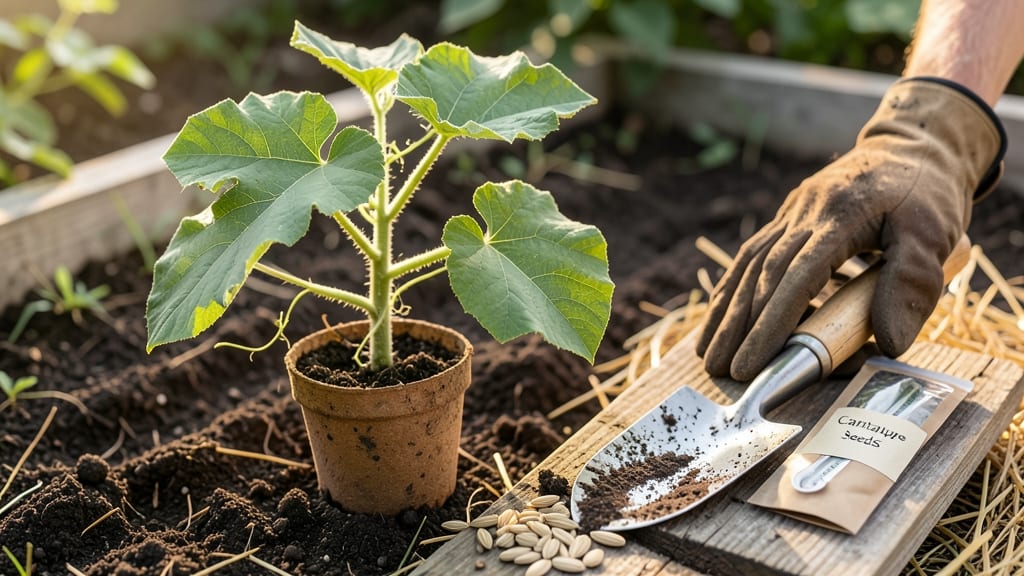
Planting cantaloupe in Illinois isn’t just about waiting for spring—it’s about hitting that sweet spot of 1,200–1,500 growing degree days (GDD) to guarantee ripe, flavorful fruit. If you’ve ever watched your cantaloupe vines wilt in a late frost or struggle through cool soil, you know timing is everything.
The key? Starting seeds indoors in March for a jumpstart, then transplanting after your last frost—typically late April to early May—when soil temperatures consistently hit 70°F.
Illinois’ USDA Zones 5-6 mean you’ve got a narrow window to work with, especially in northern areas where frost can linger into May. But don’t panic—even if Mother Nature throws a curveball, black plastic mulch or row covers can buy you extra weeks.
The goal is to have your cantaloupe 🍈 ready to thrive by June, when the real heat kicks in and those vines can spread and produce.
Here’s the game-changer: most gardeners in Illinois make one of two mistakes—planting too early and risking frost damage, or waiting too long and missing the harvest window entirely. I’ll show you exactly how to avoid both, including how to calculate your local GDDs and adjust for your specific microclimate.
Whether you’re a first-time gardener or a seasoned pro, these tips will help you grow cantaloupe that’s sweeter than anything you’ve ever bought at the store.
Ready to turn your Illinois garden into a cantaloupe powerhouse? Let’s dive into the exact planting dates, soil prep secrets, and backup plans that’ll keep your vines happy—and your harvest bountiful—from July through August. Your taste buds will thank you.
Illinois cantaloupe planting dates by USDA Zone (5-6) with exact heat unit targets
Cantaloupes love Illinois’ long, hot summers—but getting the planting timing right is everything. In USDA Zones 5-6, your seeds need 1,200–1,500 growing degree days (GDD) to mature.
Plant too early, and frost will nip tender vines; too late, and you’ll miss the harvest window. Let’s break down the exact dates and soil conditions for success.
First, understand that Zone 5 (northern IL) has a shorter growing season (about 160 frost-free days) than Zone 6 (southern IL) (around 180 days). This means Zone 5 growers should prioritize early-maturing varieties and use season-extending tricks.
For both zones, soil temperature is your best guide—wait until it hits 70°F+ at least 1 inch deep.
Here’s your Illinois cantaloupe planting timeline based on heat units and frost dates:
For direct sowing, drop seeds ½ inch deep and 1–2 inches apart in hills spaced 3–4 feet apart. Thin seedlings to 2–3 plants per hill when they’re 2 inches tall.
If you’re transplanting, harden off seedlings for 7–10 days before moving them outdoors after the last frost.
Pro tip: Use a soil thermometer to monitor temperatures. Cantaloupes won’t germinate below 60°F, and growth stalls under 65°F. In Zone 5, consider black plastic mulch to warm the soil faster—this can shave 1–2 weeks off your planting timeline.
To calculate GDDs (Growing Degree Days), use this formula: (Daily High + Daily Low) ÷ 2 – Base Temperature (50°F for cantaloupe). Track daily totals until you hit your target (e.g., 1,300 GDD for Zone 6).
Many Illinois gardeners use online GDD calculators like the Midwest Regional Climate Center’s tool for real-time tracking.
If you’re in Zone 5 and worried about late frosts, opt for bush-type cantaloupes like ‘Tasty Bite’ or ‘Minnesota Midget’—they mature faster than vining types. For Zone 6, you can afford to plant vining varieties like ‘Hale’s Best’ or ‘Ambrosia’ for bigger yields.
Just be ready to harvest by early September before cooler temps set in.
Remember: Cantaloupes hate cold soil. If your spring is slow to warm, try starter plants from a local nursery (hardy to 50°F soil). For extended harvests, succession-plant seeds every 2 weeks in Zone 6—this ensures fruit ripens over June–August instead of all at once.
🌱
How to adjust planting dates for Illinois’ unpredictable spring weather
Illinois’ spring weather can be a rollercoaster—one day 70°F, the next a surprise frost. Cantaloupe seeds need soil temperatures above 70°F to germinate, but late frosts can strike well into May. I’ve learned to use flexible planting strategies to protect my vines while maximizing the short growing season.
For Zone 5 (northern Illinois), I wait until mid-May to sow seeds directly, while Zone 6 growers can start slightly earlier in late April. But even then, a cold snap can ruin young plants. That’s why I’ve added backup planting dates and protective measures to my routine.
⚠️ callout-warning ⚠️
🌡️ Late Frost Alert!
Illinois’ average last frost date is April 15 (Zone 5) and May 1 (Zone 6), but frosts can occur up to 2 weeks later. Planting cantaloupe too early risks frost damage to young vines. Use row covers or black plastic mulch to warm soil faster and protect seedlings.
Pro Tip: Check the Midwest Regional Climate Center for real-time frost forecasts before planting.
My go-to solution is black plastic mulch, which warms soil by 10–15°F and speeds up germination. I lay it down 2 weeks before planting and cut X-shaped holes for seeds.
This trick lets me plant earlier in Zone 6 and still avoid frost risks. For Zone 5, I combine mulch with floating row covers until vines are established.
Another trick I swear by is succession planting. Since cantaloupe takes 70–90 days to mature, I plant a second batch in early June if the first one faces cool weather.
This ensures a harvest even if spring drags on. I also use heat-loving varieties like ‘Athena’ or ‘Hale’s Best’—they tolerate cooler soils better than standard types.
Don’t forget about soil temperature gauges—they’re a game-changer. I bury one in my garden bed and wait until it hits 70°F consistently before sowing. If temperatures dip, I delay planting and use seedling trays indoors under grow lights.
This way, I’m ready to transplant hardened-off seedlings as soon as the risk of frost passes.
For extra insurance, I’ve created a backup planting schedule based on Illinois’ historical data. If frost strikes after my initial planting, I’m ready to replant with seeds or young seedlings. It’s not perfect, but it’s saved my cantaloupe crop more times than I can count!
Remember, cantaloupe needs 1,200–1,500 growing degree days (GDD) to ripen. Use a GDD calculator (like the one from the University of Illinois Extension) to track progress. If your season feels too short, opt for earlier-maturing varieties or extend the season with season extenders like hoop houses.