
Plants
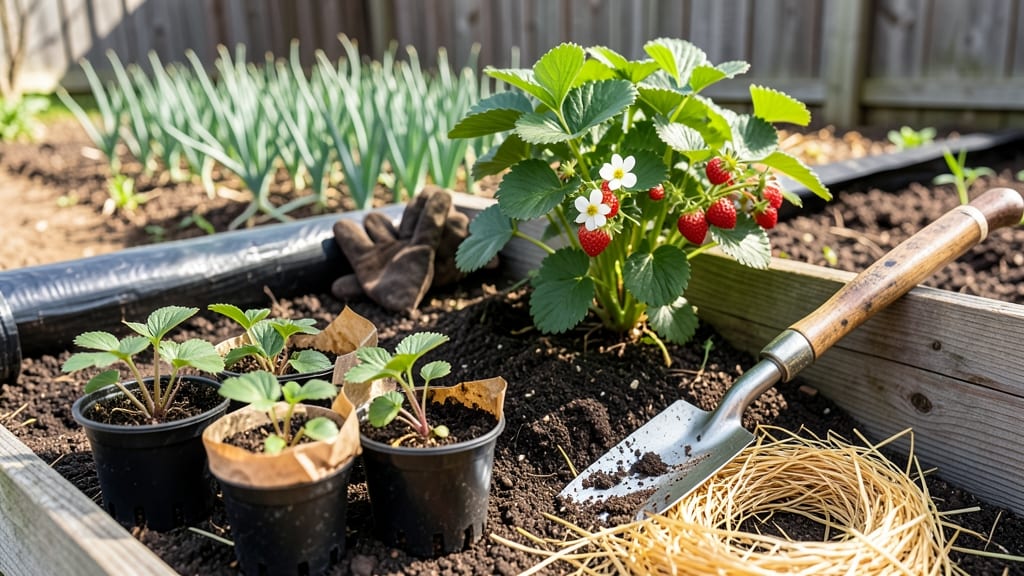
Planting strawberries in Missouri at the wrong time can mean the difference between a bountiful harvest of juicy 🍓 and a sad, frost-nipped disappointment. With our state’s unpredictable spring frosts and hot summers, timing isn’t just important—it’s everything.
Most Missouri gardeners swear by spring planting between March and April, but fall offers a second chance too—August to September works for hardy varieties. The key? Avoiding late frosts in spring or early freezes in fall, which can wipe out tender new plants.
Whether you’re starting with bare-root plants or potted varieties, I’ll break down the exact windows that work best for your region—plus soil prep tips to give your strawberries the perfect start. Let’s get those berries thriving!
Ready to skip the guesswork? You’ll learn how to time your planting for maximum yields, protect your crop from Missouri’s quirks, and keep your strawberries producing year after year—no matter which season you choose.
Best Missouri strawberry planting times: spring vs. fall breakdown
Missouri’s unpredictable climate makes strawberry planting tricky—too early, and frost zaps your plants; too late, and you miss peak yields. But with the right timing, you can enjoy sweet berries from June through October.
The key is choosing between spring (March-April) or fall (August-September) planting, each with distinct advantages for Missouri gardeners.
Spring planting gives you an earlier harvest but requires careful frost monitoring, while fall planting establishes roots before winter for stronger plants next spring. Your location—whether in St. Louis, Kansas City, or rural areas—also affects ideal timing due to microclimates.
Let’s break down the best approach for your Missouri garden.
Soil temperature is the #1 factor: strawberries need 40°F+ soil to thrive. In Missouri, this typically means mid-March to early April for spring or late August to early September for fall. Use a soil thermometer to check—don’t guess! Rural areas often warm up faster than cities, so adjust accordingly.
Here’s how Kansas City (Zone 6a), St. Louis (Zone 6b), and rural southern Missouri (Zone 7a) differ:
For spring planting, aim for bare-root plants in late March (Kansas City) or early April (St. Louis). Soak roots for 2-3 hours before planting to reduce transplant shock. Use black plastic mulch to warm soil faster—critical in Missouri’s cool springs.
If you miss spring, don’t panic: fall planting works too, but get plants in by mid-September to avoid winter dieback.
Fall-planted strawberries develop stronger root systems before winter, leading to bigger yields next year. In rural areas with later frosts, you can push fall planting to early October, but cover plants with straw mulch (4-6 inches) to insulate roots.
Avoid planting in late September or October in St. Louis—frost will catch young plants off guard.
Pro tip: June-bearing varieties (like 'Jewel') thrive with fall planting, while everbearing varieties (like 'Seascape') handle both seasons. If you’re new to strawberries, start with everbearers for fall planting—they’re more forgiving of timing mistakes.
Always space plants 12-18 inches apart in rows 3-4 feet apart for airflow and easy harvesting.
Missouri’s clay-heavy soils can suffocate strawberry roots, so amend with 2-3 inches of compost before planting. Raised beds work wonders in urban areas like St. Louis, where soil compaction is an issue.
After planting, water deeply once a week (more in summer) and mulch with straw or pine needles to retain moisture and suppress weeds.
Remember: Bare-root plants are cheaper and easier to handle than potted ones, but soak them overnight before planting. For potted strawberries, plant them at the same depth as they were in the container. Whether you choose spring or fall, consistent moisture and full sun are non-negotiable for Missouri success.
🌱 Start with spring planting for a summer treat, or go fall for next year’s bounty. Either way, your Missouri garden will thank you with juicy
How to prepare Missouri soil for strawberry planting (before spring or fall)
Missouri’s clay-heavy soils can be a double-edged sword for strawberries—retaining too much moisture while struggling to drain properly. Before planting, focus on amending texture and balancing pH to create the perfect growing environment for your June-bearing or everbearing varieties.
With the right prep, you’ll give your plants a strong start, especially in USDA Zones 5b-6b.
Start by testing your soil’s pH level. Strawberries thrive in slightly acidic soil with a pH between 5.5 and 6.5. If your soil tests higher, add sulfur or peat moss to lower it.
For alkaline soils common in Missouri, aim for 1-2 pounds of elemental sulfur per 100 square feet, mixed into the top 6-8 inches of soil. This adjustment takes time, so test again in 4-6 weeks before planting.
⚠️ WARNING: Avoid Over-Amending! ⚠️
- Don’t till deeply—focus on top 4-6 inches only.
- Avoid fresh manure—use composted organic matter instead.
- Test drainage by digging a 12-inch hole and filling it with water. If it doesn’t drain in 2-4 hours, amend with coarse sand or perlite.
Next, improve soil structure by incorporating 2-3 inches of compost or well-rotted leaf mold into the top 6 inches of soil. For nutrient-poor clay, mix in aged manure or worm castings (avoid fresh manure, which can burn roots).
Spread a 2-inch layer of straw mulch after planting to retain moisture, suppress weeds, and protect berries from soil-borne diseases like gray mold.
Drainage is critical in Missouri’s wet springs. If your garden sits in a low spot or has standing water after rain, create mounds or ridges for planting. Space rows 3-4 feet apart to allow airflow and reduce humidity around foliage.
For container growing, use a mix of 50% potting soil, 30% perlite, and 20% compost to ensure fast drainage while retaining moisture.
Before finalizing your bed, add a slow-release fertilizer like 10-10-10 at 1 tablespoon per square foot. Work it into the top 2 inches of soil to provide balanced nutrients without overloading young roots. Avoid high-nitrogen fertilizers, which encourage leafy growth at the expense of fruit production.
Finally, protect your newly planted strawberries from winter dieback by applying a 4-inch layer of straw mulch after the first frost. This insulates roots while preventing soil heave—a common issue in Missouri’s freeze-thaw cycles.
In spring, remove old mulch and replace it with fresh straw to maintain moisture and weed control throughout the growing season.
With these steps, your Missouri strawberry patch will have well-aerated, nutrient-rich soil ready for planting—whether you’re prepping for spring’s early start or fall’s cooler roots. Happy planting! 🍓