
Plants
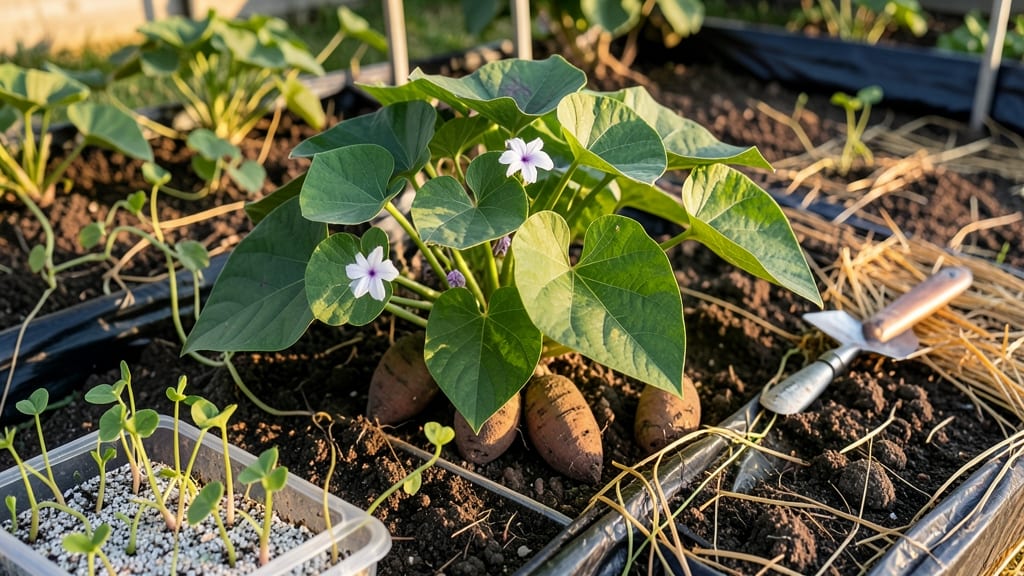
Planting sweet potatoes 🍠 in Texas isn’t just about checking a calendar—it’s about catching that perfect soil temperature window that turns your garden into a high-speed grower. Skip the guesswork, and you could end up with slow, stunted plants or—worse—losing them to a surprise frost (yes, even in Texas!).
The key? Waiting until the soil hits at least 65°F and those last frost dates are safely behind you. In North Texas, that means holding off until mid-April, while South Texas gardeners can start as early as March.
But here’s the catch: rushing it means risking weak vines and tiny tubers.
What if you could shave weeks off your growing time and guarantee a harvest before the heat peaks? I’ll show you exactly how to time it right—plus the pro tricks Texas gardeners use to stretch their season and avoid common pitfalls.
Let’s break down the exact planting schedule for your region, soil temp secrets, and how to pick varieties that thrive in Texas’s sweltering summers—so you’re harvesting sweet, juicy 🍠 by fall.
Texas sweet potato planting calendar: best months by region (north vs. south)
Texas gardeners know sweet potatoes love our heat—but timing matters more than you think. Plant too early, and late frosts can kill your slips. Plant too late, and short growing seasons mean small tubers.
The key? Understanding your region’s frost dates and heat zones to maximize that 6-8 week harvest window before fall frost.
North Texas (Dallas/Fort Worth) has cooler springs and earlier frosts, while South Texas (Houston/Corpus Christi) stays warm longer. Central Texas (Austin/San Antonio) falls in between. Let’s break down the best planting months for each region to ensure you get plump, sweet tubers every time.
Pro Tip: Always use slips (young plants), not seeds, for Texas gardens. They sprout faster when soil hits 65°F+. Buy slips from local nurseries in March-April for spring planting.
| Region | Last Frost Date | First Frost Date | Ideal Planting Window | Harvest Window | Key Consideration |
|---|---|---|---|---|---|
| North Texas (Dallas/Fort Worth) | Mid-February | Early December | April 15 - May 15 | October 1 - November 15 | Plant after soil warms to 65°F+; shortest growing season in Texas. |
| Central Texas (Austin/San Antonio) | Late January | Mid-November | March 20 - May 1 | September 15 - November 1 | Longer growing season allows fall planting (Sept-Oct) for winter harvests. |
| South Texas (Houston/Corpus Christi) | Early January | Late November | March 1 - May 10 | October 15 - December 15 | Warmest region—plant early (March) for longer harvest before frost. |
🌱 Note: All regions can attempt fall planting (Sept-Oct) for a second harvest, but tubers may be smaller due to shorter daylight.
If you’re in North Texas, don’t rush to plant in March—soil temperatures often dip below 60°F, slowing growth. Wait until April 15 when soil consistently stays above 65°F. Use a soil thermometer to check; sweet potatoes need warm soil to thrive.
For Central Texas, you’ve got flexibility. Plant in late March for a summer harvest or try September for a winter crop. Just be ready to harvest before November 15 to avoid frost damage. Black plastic mulch can extend your season by 2-3 weeks.
South Texas gardeners have the luxury of earlier planting. Start as early as March 1 to take full advantage of the longer growing season. But watch for humidity spikes—sweet potatoes need good airflow to avoid fungal diseases like black rot.
Regional Tip: In all areas, choose heat-tolerant varieties like Beauregard or Jewel. They handle Texas’s summer heat better than standard types. For fall planting, opt for shorter-season varieties like Georgia Jet to mature before frost.
Remember, sweet potatoes need 90-120 days to mature. If you plant in May, you’ll likely miss the fall harvest window. Use a planting calendar to track your last frost date and count backward.
For example, in Austin, planting by May 1 risks tubers not reaching full size before frost.
One trick I use in North Texas is to stagger plantings—put in half the slips in April and the rest in early May.
This gives me a gradual harvest from October through November, extending my storage time. Fall-planted sweet potatoes often store better because they mature in cooler weather.
Finally, don’t overlook soil prep. Sweet potatoes thrive in loose, well-draining soil with a pH of 5.8-6.5. In heavy clay soils (common in East Texas), mix in compost and sand to improve drainage. Raised beds work well in urban areas where soil quality is poor.
Soil temperature triggers for fast sprouting: what to watch in Texas
Texas gardeners know timing is everything when growing sweet potatoes. Unlike cool-season crops, these heat-lovers need warm soil to sprout quickly and avoid rot. In my experience, waiting for the right soil temperature cuts down on wasted slips and boosts yields—especially in Texas’s unpredictable spring weather.
Most gardeners focus on air temperature, but soil temperature is the real game-changer. Sweet potatoes won’t germinate well below 55°F, and their roots struggle to develop in cold, damp soil. Here’s what I’ve learned after years of testing in North Texas and Central Texas gardens.
- 1 Minimum soil temp: 55°F–60°F (use a soil thermometer to check 2" deep)
- 2 Optimal range: 70°F–80°F (fastest sprouting and root growth)
- 3 Signs to plant: Leaf drop from store-bought sweet potatoes (place cuttings in water until roots form)
- 4 Moisture test: Soil should be damp but not soggy (stick your finger in—if it’s dry at 2", water first)
- 5 Troubleshooting: Slow sprouting? Warm soil with black plastic mulch (raises temps by 5°F–10°F)
In my Central Texas garden, I’ve seen slips planted in 50°F soil rot before sprouting, while those in 75°F soil shoot up in 7–10 days. The key is patience—don’t rush! Even if your neighbor plants in March, their North Texas soil might still be too cold for reliable growth.
Pro tip: Use a soil thermometer for 3–5 days before planting to spot trends. If temps dip below 60°F at night, delay planting or use row covers to retain heat. I’ve also had success planting in late May for a fall harvest, but that requires heat-tolerant varieties like Beauregard.
Watch for leaf drop on your slips—this means they’re ready to harden off and plant. Pair that with warm soil, and you’ll see vigorous vines within weeks. Texas’s heat is your ally once you crack the soil temp code!