
Trees
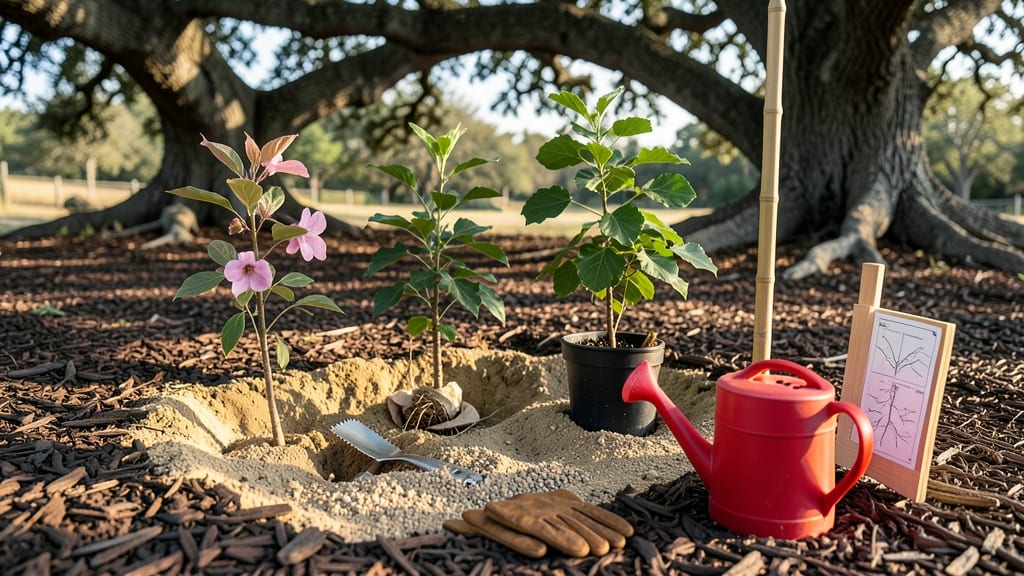
Planting a tree in North Texas at the wrong time can mean struggling survival rates—even with the best soil and care. The key to success lies in understanding the frost-free window and soil temperature thresholds that give your 🌳 the best chance to thrive.
For most tree species in zones 7b-8a, the ideal planting window opens in fall (October-November) and early spring (February-March). This timing lets roots establish before summer heat or winter frost becomes a threat.
Why does timing matter so much? Planting when soil temperatures hover between 60-70°F ensures roots grow actively without stress. In North Texas, this means avoiding the scorching summer months when drought and heat can shock young trees.
Let’s break down the exact months that work best for your region, plus pro tips to give your new tree the strongest start. You’ll discover how to read your soil’s readiness and avoid common mistakes that derail even well-intentioned plantings.
North Texas frost-free window & ideal planting months by tree species
North Texas has a 90-day frost-free window from October 15 to July 15, but planting timing varies by tree species. Understanding this window helps you avoid frost damage and summer drought stress, both of which can kill young trees.
The key is planting when soil temperatures reach 60–70°F—ideal for root establishment.
For most native Texas trees, the best planting months are October–November (fall) or February–March (early spring). Fall planting allows roots to establish before winter dormancy, while spring planting avoids summer heat stress. However, fruit trees and pine species often have narrower windows due to their unique growth cycles.
Here’s how the 90-day frost-free window breaks down for North Texas:
🌡️ Frost-Free Window: October 15 – July 15 (210 days)
🌱 Ideal Planting Months: October, November, February, March
⚠️ Risky Months: April (summer drought), May–September (extreme heat)
For oaks and pines, fall planting is critical—their roots need time to establish before winter dormancy. Pecan and fruit trees, however, prefer early spring because they thrive in warmer soil and need to avoid summer heat stress.
Always check local microclimates; urban areas like Dallas may have 5–10°F warmer soil than rural zones.
Soil temperature is more important than air temperature. Use a soil thermometer to check 4–6 inches deep. If the soil is below 60°F, wait—cold soil can stunt root growth. In North Texas clay soil, fall planting also benefits from natural rainfall, reducing irrigation needs.
If you miss the ideal window, container-grown trees can be planted in late spring (April), but they’ll need extra watering and shade cloth during summer. Avoid planting in July–August—the extreme heat and drought can kill young trees before roots establish.
Pro tip: Mulch heavily (3–4 inches) after planting to retain moisture and regulate soil temperature. Use shredded bark or pine straw, but keep mulch 6 inches away from the trunk to prevent rot.
For urban landscapes (e.g., Plano or Arlington), consider dwarf or semi-dwarf varieties of fruit trees—they establish faster and handle heat better. Always call 811 before digging to avoid utility lines, which is a common issue in North Texas.
Soil temperature & moisture secrets for tree root success in North Texas
North Texas’ clay-heavy soil and extreme temperature swings make root establishment tricky—but mastering soil temperature and moisture balance can double your tree’s survival odds. The key lies in a 60–70°F root zone, where roots grow aggressively without stress.
Without this window, even drought-resistant species like Live Oak or Pecan struggle to take hold.
Testing soil temperature is simpler than you think. Use a soil thermometer (or even a meat thermometer) to check 4–6 inches deep—this is where roots first explore.
In Dallas-Fort Worth, this window typically opens in late September and closes by mid-November for fall planting, or reopens in early March for spring. Miss it, and you risk transplant shock from either frozen ground or scorching heat.
- 1 Test soil temp daily at 4–6" depth until it hits 60°F+—this triggers root growth.
- 2 Avoid planting in clay when soil is dry and hard—amend with compost (3–4 inches) to improve drainage.
- 3 Mulch heavily (3–4" of wood chips) to retain moisture and regulate soil temp—critical in DFW’s urban heat islands.
- 4 Water deeply 2–3x/week for the first 60 days, then taper to once weekly—clay holds water but suffocates roots if over-saturated.
- 5 Monitor for wilting—southern exposure spots dry faster. Adjust irrigation if leaves curl or yellow, a sign of root stress.
Moisture management is where most gardeners fail. North Texas’ clay soil acts like a sponge—holding water but also cutting off oxygen to roots. After planting, water slowly and deeply (15–20 gallons per tree) to encourage roots to grow downward.
Use a soaker hose or drip irrigation to avoid surface runoff, which wastes water and compacts soil. Morning watering is best—it reduces evaporation and fungal risks from overnight dampness.
Mulching isn’t optional—it’s a non-negotiable for clay soil. Apply 3–4 inches of wood chips (avoid dyed mulch) in a 3-foot-wide ring around the base, keeping it 6 inches away from the trunk.
This layer insulates roots from heat spikes in summer and frost heave in winter. Replenish mulch annually, as it breaks down and loses effectiveness.
Even with perfect timing, transplant shock can still strike if moisture isn’t consistent. In DFW’s summer heat, trees planted in spring may need daily watering until roots establish (usually 60–90 days).
For fall plantings, reduce watering as temps drop below 50°F—overwatering in cool weather leads to root rot. Always check soil moisture by hand: if the top 2 inches feel dry, it’s time to water.
Pro tip: Container-grown trees (like those from nurseries) need more frequent watering than bare-root ones—their roots are already stressed. Soak the root ball thoroughly at planting, then maintain consistent moisture until new growth appears.
With these soil temp and moisture secrets, your North Texas trees will establish roots like a pro—no guesswork required. 🌱💧☀️