
Plants
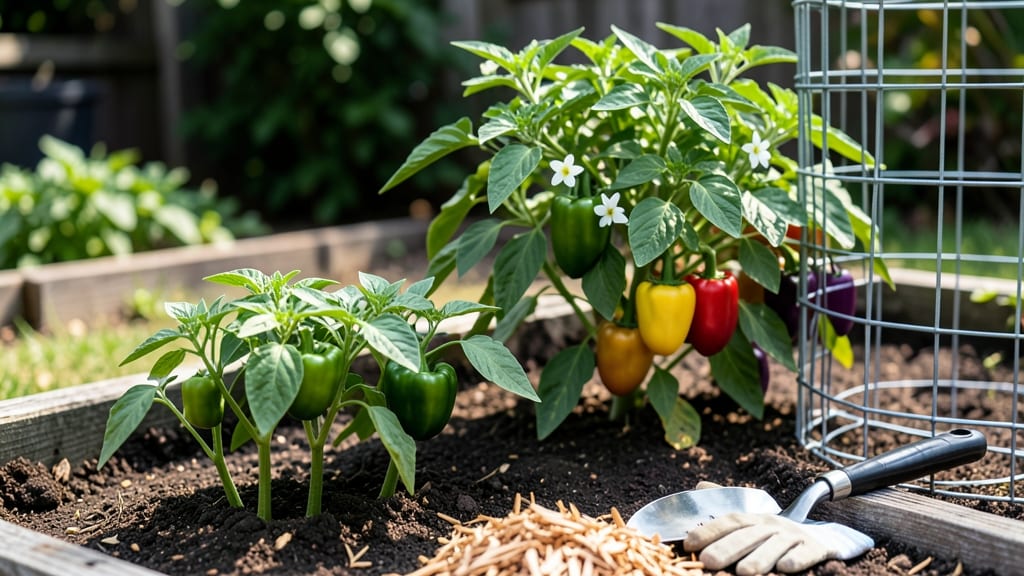
Planting bell peppers in Michigan isn’t just about checking the calendar—it’s about mastering the soil temperature and timing your seeds perfectly to beat the late spring frosts that can wipe out your crop before it even starts.
I’ve learned the hard way that those crisp 50°F mornings in May might look inviting, but your pepper seeds will just sit there, stubbornly refusing to sprout until the dirt warms up to at least 60°F.
Skip this step, and you’ll be staring at bare soil by summer, wondering where your 🌶️ harvest went wrong.
The key to success? Start seeds indoors 8-10 weeks before your last frost date—or risk waiting too long for the ground to cooperate. Michigan’s climate throws curveballs, with frost-free dates shifting from early May in the south to late May or even June in the Upper Peninsula.
Even if you’re eager to get outside, resist the urge to plant too early. Cold soil slows germination, and damp, chilly conditions invite fungal diseases that can kill seedlings before they take root.
Here’s the game-changer: use a soil thermometer to track warmth, and opt for fast-germinating varieties like ‘Early Cal Wonder’ if you’re pushing your luck with a short season. Once your seedlings are sturdy enough to handle 55°F nights (around 4-6 weeks old), harden them off gradually to avoid shock.
This isn’t just theory—it’s how I went from zero peppers to a bounty of red, yellow, and green bells by August, even in my Zone 5b garden.
Ready to turn your Michigan garden into a pepper powerhouse? I’ll walk you through the exact steps to time your planting, troubleshoot common pitfalls, and even extend your harvest into fall—so you’re not left scrambling when the first frost hits. Let’s get those seeds in the ground the right way.
Michigan’s bell pepper planting timeline: frost dates, soil temps, and hardening off
Timing your bell pepper planting in Michigan isn’t just about checking the calendar—it’s about understanding your region’s frost dates and soil temperature thresholds. The Lower Peninsula typically warms faster than the Upper Peninsula, meaning your planting window could shift by weeks.
For example, southern Michigan gardeners might start seedlings indoors in early March, while northern regions wait until late April. Bell peppers need consistent warmth to thrive, and cold soil can stall germination for weeks.
Soil temperature is the single most critical factor for successful pepper growth. Seeds won’t germinate until the soil reaches 60°F, but ideal temperatures for strong seedlings hover between 70-85°F.
In Michigan, this often means waiting until late May or early June for direct sowing, or transplanting hardened-off seedlings after the last frost. Last frost dates vary wildly—some years, you’ll be planting by Memorial Day, while others demand patience until mid-June.
Here’s the key: Monitor soil temps with a thermometer (not just air temps) and adjust your planting timeline accordingly. For instance, if your soil hits 65°F by May 15th, you’re golden.
But if it’s still 55°F in early June, hold off until it warms up. Transplant shock is a real risk if seedlings aren’t acclimated properly, so hardening off is non-negotiable.
| Region | Avg. Last Frost | Soil Temp for Planting | Indoor Start Date | Transplant Ready |
|---|---|---|---|---|
| Southern MI (Zone 6a) | May 10–15 | 60–65°F | Early March | Late May |
| Central MI (Zone 5b) | May 20–25 | 65–70°F | Mid-March | Early June |
| Northern MI (Zone 5a) | May 30–June 5 | 70–75°F | Late March | Mid-June |
| Upper Peninsula (Zone 4b) | June 10–15 | 75–80°F | Early April | Late June |
*Adjust dates 1–2 weeks earlier if your spring was unusually warm, or later if snow delayed soil warming.
Hardening off seedlings is your secret weapon against transplant shock. Start this process 7–10 days before planting by moving seedlings outdoors for 2–3 hours daily, gradually increasing exposure. Begin with morning sun only, then add afternoon sun over the week.
This mimics Michigan’s unpredictable weather and toughens up seedlings so they can handle wind, temperature swings, and even light frost.
If you’re direct sowing (not recommended for Michigan’s short season), wait until the soil is at least 70°F and use black plastic mulch to warm the soil faster.
This is especially critical in the Upper Peninsula, where cool summers can limit pepper growth. Row covers can also buy you extra weeks of protection if an early frost threatens.
Pro tip: Keep a gardening journal to track your soil temps year-over-year. I’ve seen 5–7 day differences in frost dates between years, even in the same region. For example, my 2022 garden had peppers thriving by July 1st, while 2023’s late snow pushed my harvest back to mid-August.
Adjusting your timeline based on past data saves seeds and heartache.
One common mistake is planting too early in hopes of a longer harvest. Bell peppers grow slowly in cool soil, leading to stunted plants and fewer fruits. Instead, focus on warm soil and full sun.
If you’re in doubt, err on the side of waiting—peppers planted in 75°F+ soil will outperform those in 60°F soil every time.
For container gardening, use heat-absorbing pots (like black plastic) and place them in sunny spots. Containers warm up faster than garden beds, giving you a 1–2 week head start on soil temperature. Just ensure pots have drainage holes to prevent root rot from Michigan’s frequent rain.
Finally, remember that Michigan’s growing season is short, so choose fast-maturing varieties (like
How to use soil thermometers and seedling trays for faster germination in Michigan’s climate
Michigan’s unpredictable spring weather makes soil temperature the secret weapon for successful bell pepper germination. I’ve found that even when the air feels warm, the ground can stay stubbornly cold—especially after those late April snow showers.
A soil thermometer (just $10 at garden centers) lets you check the real story beneath the surface. Aim for 60-65°F for consistent germination; below 55°F, and your seeds will languish, if they sprout at all.
I test my soil every morning for a week before planting to catch those sneaky cool spells.
For indoor starts, seedling trays with clear domes create the perfect microclimate. Place trays on a heat mat (set to 70-75°F) to mimic summer conditions, and keep the soil moist but not soggy. I swear by 72-cell trays—they’re shallow enough to prevent damping-off while giving roots room to spread.
Just remember: once your seedlings hit 2-3 inches tall, remove the dome to harden them off gradually. This mimics Michigan’s fluctuating spring temps and prevents leggy, weak plants.
🚨 PROS-CONS BOX: Indoor vs. Outdoor Planting for Michigan Bell Peppers 🚨
- Controlled 60-85°F soil temps
- Longer growing season start
- Protection from pests/disease
- Hardening off flexibility
- Requires grow lights/heat mats
- Transplant shock risk
- Space limitations
- Direct soil adaptation
- No transplanting needed
- Lower upfront cost
- Dependent on unpredictable soil warmth
- Higher frost risk
- Slower maturation
Troubleshooting is where Michigan gardeners separate the winners from the wishful thinkers. If your germination is spotty, check for uneven moisture—I’ve seen seeds sprout in one tray corner while the rest stay dry.
For damping-off (that sad, moldy seedling collapse), boost airflow with a small fan on low setting and avoid overhead watering. My trick? Water from the bottom of the tray using a saucer filled with ¼-inch of water. This keeps roots happy without drowning them in Michigan’s damp springs.
Once your seedlings have 2-3 sets of true leaves (about 4-6 weeks old), it’s time to transplant. But don’t rush! Wait until nighttime temps stay above 55°F consistently—even then, I cover my seedlings with row fabric for the first week.
This buffer gives them time to adjust to Michigan’s whimsical weather without shock. I’ve lost entire batches by transplanting too soon, so patience here pays off in bigger, healthier plants that actually produce peppers.
For those late-starting gardeners, don’t despair—Michigan’s climate allows for succession planting. After your first batch goes in, sow another round in late May or early June when soil finally warms. Just use a soil thermometer to confirm it’s hit 70°F before committing.
I’ve had success with this method, though the harvest comes later in the season. The key is consistent soil warmth, not just wishful thinking about summer’s arrival.
With these tools and timing tricks, you’ll turn Michigan’s short season into a pepper-growing powerhouse. Start indoors, monitor that soil temp religiously, and harden off carefully—your future 🌶️ harvest depends on it!
The first time I saw peppers ripening on my plants in early August, I knew I’d cracked the code. Now it’s your turn.