
Plants
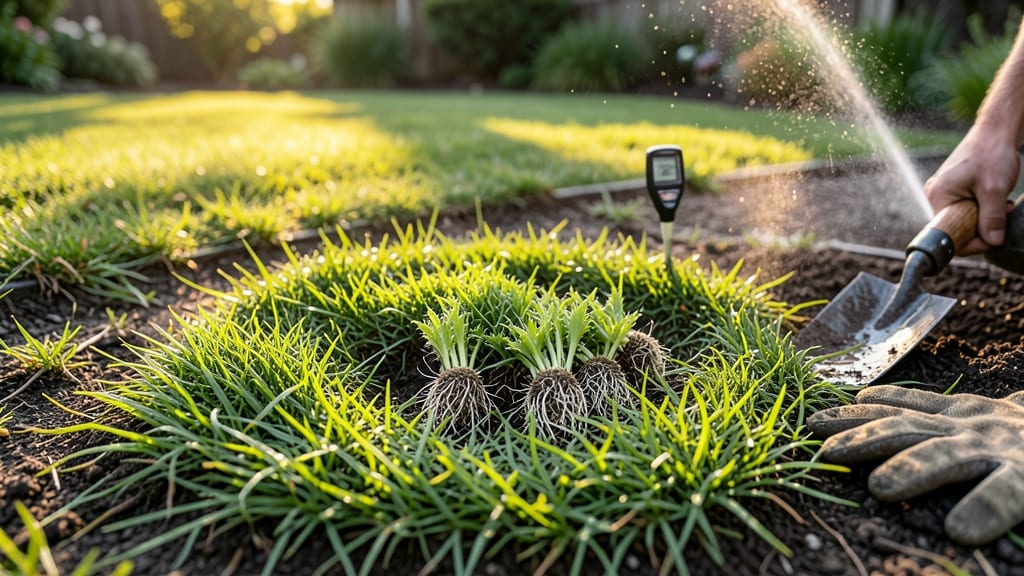
Planting Bermuda grass at the wrong time in Virginia can mean the difference between a lush, heat-resistant lawn and one that struggles to take hold. With USDA zones 7a-8a bringing warm springs and long summers, timing isn’t just important—it’s critical for strong root development before the heat kicks in.
If you’ve ever wondered why some lawns thrive while others fail, the answer often starts with when you plant. Bermuda grass needs soil temperatures of at least 65°F to germinate properly, which in Virginia typically means waiting until after the last frost—usually around March 15 for most counties.
But there’s a second chance too: late summer (August-September) works just as well.
Let me show you exactly how to match your planting schedule to Virginia’s climate zones, from Northern Virginia’s cooler springs to the faster-warming Piedmont and Tidewater regions. We’ll cover everything from soil prep to avoiding common mistakes that derail even the best-laid plans.
Whether you’re seeding or laying sod, getting this right means fewer weeds, deeper roots, and a lawn that stays green even when summer temperatures hit their peak. Ready to transform your yard? Let’s get started.
Virginia’s ideal Bermuda grass planting timeline by county and climate zone
Bermuda grass thrives in Virginia’s heat but needs precise timing to establish strong roots before summer’s intensity. Planting too early risks frost damage, while waiting too late can stunt growth before peak heat.
Your county’s USDA zone (7a-8a) and last frost date determine the perfect window—typically March-April or August-September—to maximize success.
Northern Virginia (e.g., Fairfax, Arlington, Loudoun) has cooler springs, so aim for late April to early May when soil warms to 65°F+. Southern regions (e.g., Norfolk, Richmond, Roanoke) can start earlier—mid-March—thanks to milder winters.
Late summer replanting (August-September) works statewide but requires consistent moisture as roots establish.
Soil temperature is your best indicator, not just calendar dates. Use a soil thermometer to confirm 65°F+ at 4-inch depth before planting. Cold soil delays germination, leaving your lawn vulnerable to weeds. Test weekly in March-April to catch the ideal moment—especially in higher-elevation counties like Shenandoah or Augusta.
Here’s how Virginia’s climate zones break down for Bermuda grass planting:
For sod installation, prioritize late spring (May) in Northern Virginia or early April in Southern Virginia. Sod establishes faster than seeds but still needs consistent moisture for the first 2–3 weeks. If using seeds, plant 4–6 weeks before your ideal window to account for slower germination.
Watch for false springs—warm spells in February-March can trick you into planting too early. A late frost (after March 15) can kill young Bermuda grass. Use frost cloth if planting early in Zone 7a counties like Loudoun or Augusta to protect tender seedlings.
Late summer planting (August-September) is ideal for repairing thin patches or transitioning from winter grass. Choose dwarf varieties like ‘TifEagle’ for cooler microclimates (e.g., Shenandoah Valley) or ‘Riverstar’ for heat tolerance in Norfolk or Richmond.
Always mow higher (3–4 inches) in late summer to shade roots and retain moisture.
Pro tip: Test soil pH (6.0–7.0) before planting—Virginia’s clay soils often need lime or sulfur adjustments. Amend 2–3 weeks before planting to avoid disrupting young roots. In sandy coastal areas (e.g., Virginia Beach), add organic matter to improve water retention.
Timing isn’t just about months—it’s about weather patterns. Check the <
How to prepare your Virginia lawn for Bermuda grass planting success
Bermuda grass thrives in Virginia’s heat, but only if your soil is properly prepped. Clay-heavy soils in the Piedmont region and sandy coastal soils near Norfolk require different approaches. The key is creating a loose, nutrient-rich bed that holds moisture without suffocating roots.
I’ve seen too many lawns fail because homeowners skipped this critical step—don’t let that be you!
Start by testing your soil’s pH level (aim for 6.0-7.0) and organic matter content. Virginia’s native soils often lack the nutrients Bermuda grass craves. If your soil is compacted, aerate at least 2-3 weeks before planting to let roots penetrate deeply.
For sandy areas, add compost to improve water retention, while clay soils benefit from gypsum to break up particles.
Now let’s get to the actionable steps—this is where most gardeners trip up. Follow this proven sequence to ensure your Bermuda grass gets the perfect start, whether you’re seeding or laying sod.
-
Step 1: Clear and Level
Remove all existing vegetation using glyphosate (apply 2 weeks before planting). Rake the area smooth to prevent low spots where water pools.
-
Step 2: Soil Amendment
Mix 2-3 inches of compost into the top 6 inches of soil. For clay: add 2 lbs of gypsum per 100 sqft. For sand: blend in peat moss for moisture retention.
-
Step 3: Fertilize Strategically
Apply a starter fertilizer (16-4-8 NPK) at 0.5 lbs per 100 sqft. For clay soils, use half this amount to avoid salt buildup.
-
Step 4: pH Adjustment
If pH is below 6.0, add lime (20 lbs per 1000 sqft). For pH above 7.0, use sulfur (1 lb per 100 sqft). Retest after 2 weeks.
-
Step 5: Final Prep for Planting
Rake the soil to a fine, crumbly texture. For seeds, create a 1/4-inch deep furrow pattern. For sod, ensure the ground is perfectly level.
After prepping, water deeply the day before planting to settle the soil. For seeds, maintain constant moisture for the first 2 weeks—this is when most failures happen. If you’re using sod, water immediately after installation to eliminate air pockets.
In Virginia’s heat, Bermuda grass can establish roots in just 10-14 days if conditions are ideal.
One final tip: Avoid walking on freshly seeded areas for at least 3 weeks. The tiny seedlings are fragile, and compaction will smother them. If you’re in a sandy coastal region, consider a light mulch (straw) to retain moisture without suffocating growth.
For clay areas, skip mulch entirely—it can trap too much moisture.
With these steps, your Bermuda grass will have the perfect foundation to handle Virginia’s summer heat and humidity. The payoff? A lawn that stays green when others brown out—and requires far less water once established. 🌱