
Plants
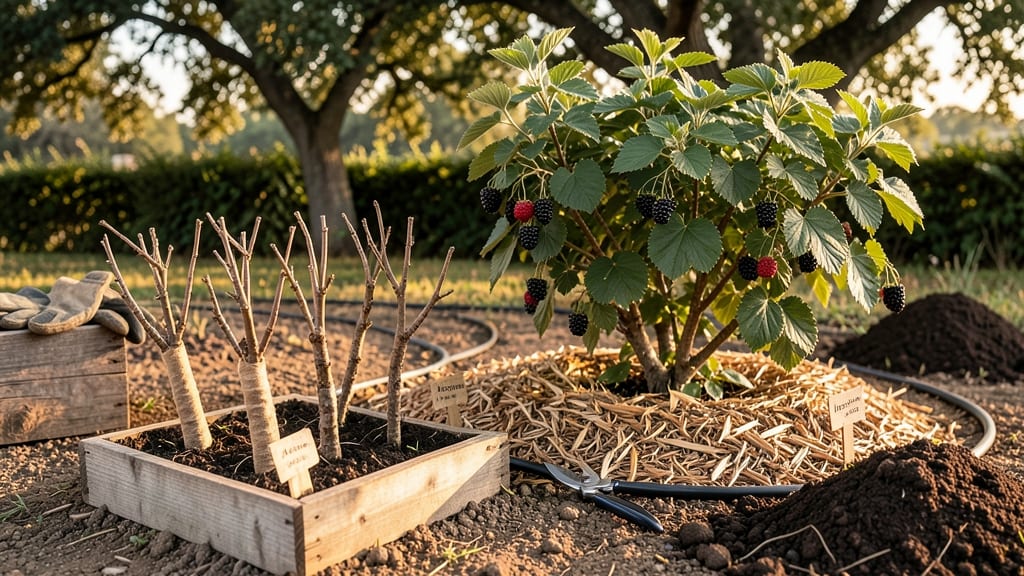
Planting blackberries in Central Texas isn’t just about grabbing a plant and sticking it in the ground—it’s about matching your variety to the region’s 300-800 chill hours to guarantee a bountiful harvest. Too early, and frost zaps your young 🫐; too late, and your berries may never ripen.
The secret? Timing it right between late winter and early spring when the soil warms but the threat of hard freezes fades.
If you’ve ever wondered why some blackberry bushes thrive while others struggle, the answer lies in understanding Central Texas’s unique climate quirks. Unlike cooler northern regions, our USDA Zone 8a demands varieties that balance early growth with heat tolerance—think ‘Arapaho’ or ‘Navaho’ for reliable fruiting.
I’ll show you exactly when to plant (and why bare-root vs. potted matters) to set your blackberries up for success.
Let’s cut through the guesswork. You’ll discover the precise planting window, soil prep tricks, and how to protect your plants from Central Texas’s unpredictable swings between frost and scorching heat. No more wasted effort—just a foolproof plan for juicy, homegrown blackberries by summer.
Ready to skip the trial-and-error? By the end, you’ll know not just when to plant, but how to give your blackberries the best shot at thriving in our tough growing conditions. Let’s get started.
Central Texas chill-hour zones: matching blackberry varieties to reliable harvests
Central Texas’s USDA Zones 8a-8b bring unique challenges for blackberry growers, where 300-800 chill hours determine which varieties will reliably fruit. Unlike cooler climates, our mild winters mean you must choose low-chill blackberries that won’t languish in dormancy or produce poorly.
The wrong variety can leave you with sparse harvests or no fruit at all—so let’s match your plants to Central Texas’s climate.
Blackberries thrive when their chill-hour needs align with your local winter. In Zone 8a (2,400-2,800 feet elevation), you’ll typically see 400-600 chill hours, while Zone 8b (below 2,400 feet) often hits 600-800 chill hours.
Varieties like 'Arapaho' (500-700 hours) or 'Navaho' (400-600 hours) are perfect for these zones, while high-chill types like 'Triple Crown' (900+ hours) will struggle and may produce small, poor-quality berries.
Why chill hours matter: Blackberries need cold exposure to break dormancy and set fruit buds. Too little chill (300 hours) can prevent flowering, while too much (1,000+ hours) may cause delayed fruiting. Central Texas’s unpredictable winters—with occasional hard freezes—add another layer of complexity. The right variety ensures your plants bloom on time and produce consistently year after year.
If you’re in higher elevations (Zone 8a), prioritize varieties like 'Ouachita' or 'Chester', which handle 600-800 chill hours without issue. For lower elevations (Zone 8b), 'Navaho' or 'Arapaw' are ideal—they thrive with 400-600 chill hours and produce reliable harvests even in mild winters.
Avoid high-chill varieties like 'Boygen' or 'Darrow', which require 900+ chill hours and may fail to fruit in Central Texas.
Pro tip: Check your local chill-hour data using tools like the Texas A&M AgriLife Extension or a home weather station. If you’re near Austin or San Antonio, you’ll likely fall into the 600-700 hour range, making 'Arapaho' or 'Ouachita' your best bets.
For Waco or College Station, where chill hours may dip closer to 500-600, 'Navaho' is a safer choice.
Once you’ve selected the right variety, timing your plant
Step-by-step planting timeline for Central Texas blackberries
Timing your blackberry planting in Central Texas is critical—get it wrong, and you’ll face frost damage or stunted growth. The ideal window for planting is November through early December, when soil temps drop but before hard freezes hit.
This gives roots time to establish before spring’s heat arrives. For potted plants, you can extend this to February, but bare-root varieties need that early start.
Central Texas’s unpredictable winters (USDA Zone 8a-8b) demand extra care. A late November planting offers the best balance—soil stays workable, and plants avoid early frost risks. If you miss this window, wait until February, but be prepared for slower initial growth due to heat stress.
Always check your local frost dates (typically mid-November to mid-February) before planting.
📅 Central Texas Blackberry Planting Timeline
- Late October - Early November: Test soil pH (5.5-6.5) and amend with compost. Mark planting spots 4-6 feet apart for airflow.
- November 1-15: Plant bare-root blackberries (best for Central Texas). Soak roots overnight, then dig a trench 12 inches deep and wide.
- November 16-30: Mulch heavily with straw or wood chips (3-4 inches) to insulate roots. Water deeply if rainfall is sparse.
- December-February: Monitor for frost warnings. Cover young plants with frost cloth or row covers if temps drop below 25°F.
- March 1-15: Prune dead canes and fertilize lightly with 10-10-10 to kickstart spring growth.
- April-June: Install trellis supports (blackberries need vertical space). Train canes to trellis as they grow.
- July-August: Harvest fully black berries (no red/purple tint). Thin canes to 6-8 strongest for next year’s yield.
Soil preparation is non-negotiable in Central Texas’s clay-heavy soils. Amend with organic matter (compost or aged manure) to improve drainage. Blackberries hate waterlogged roots, so raised beds or mounds work well if your soil drains poorly. A slightly acidic pH (5.5-6.5) is ideal—test and adjust with sulfur or lime if needed.
For frost protection, I recommend row covers or burlap wraps around canes during hard freezes. Even mature plants can suffer damage if temps drop below 20°F. In my garden, I’ve seen Arapaho variety blackberries survive 22°F with these protections, but younger plants are far more vulnerable.
Always have frost cloth on hand—Central Texas’s winters are deceptive!
Post-planting care focuses on watering consistency and pruning discipline. Water deeply 2-3 times per week until established (first year), then taper to weekly deep soaks. Prune annually in late winter to remove dead, weak, or crossing canes. This keeps your blackberries productive and disease-free—a game-changer for Central Texas’s humid summers.
Pro tip: Mulch in late winter (February) to suppress weeds and retain moisture. I use straw because it breaks down slowly and doesn’t mat like grass clippings. This simple step can double your yield by reducing stress on the plant.
Pair it with regular trellis training, and you’ll have juicy, sun-ripened blackberries by June or July—just in time for Texas’s scorching heat! 🫐