
Companion Plants
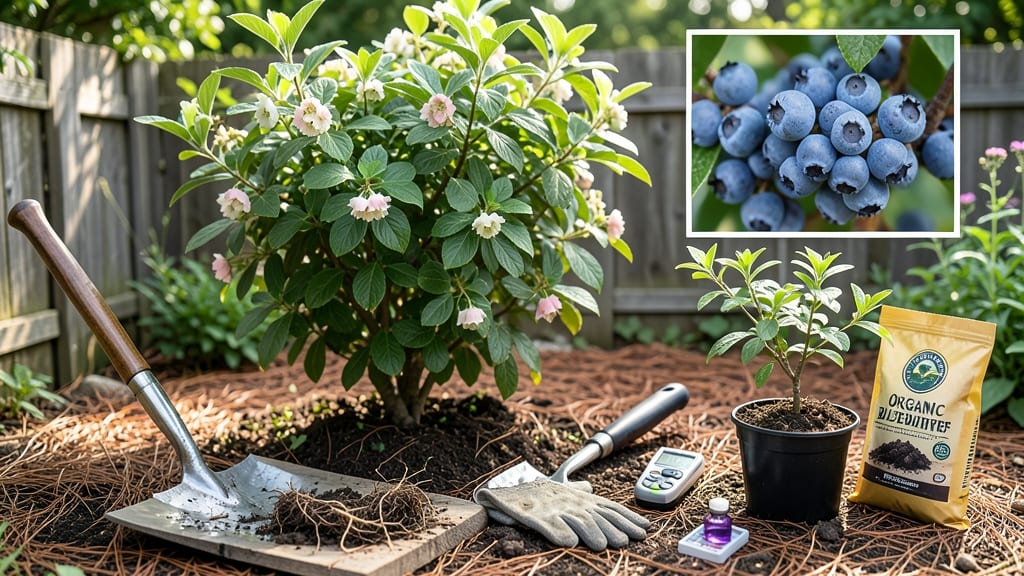
Planting blueberries in Zone 5 at the wrong time can mean the difference between a thriving bush and one that struggles to survive your first winter. The late April to early June window is your golden opportunity—after the last frost has passed but before summer’s heat sets in.
I’ve learned the hard way that rushing blueberry planting too soon risks frost damage, while waiting too long means your bushes won’t establish strong roots before winter hits. Whether you’re working with bare-root plants or container-grown 🫐 bushes, timing is everything for success.
Zone 5’s unpredictable spring weather adds another layer of challenge, but with the right soil prep and a few pro tips, you can give your blueberries the best possible start.
Let’s break down exactly when to plant, how to prepare your soil, and what to avoid to ensure your bushes grow strong and productive.
From testing your soil’s acidity to protecting young roots from late frosts, I’ll walk you through every step to set your blueberries up for a bountiful harvest in July and August. Ready to get started?
Optimal blueberry planting window in Zone 5: month-by-month breakdown
Blueberries thrive in Zone 5 when planted during the right spring window, but timing varies by location. In Chicago, the last frost typically arrives by mid-May, while Pittsburgh sees frost-free conditions slightly earlier, around late April.
Planting too soon risks frost damage, while waiting too long delays root establishment before winter.
For bare-root blueberries, aim to plant as soon as the soil reaches 45°F (7°C)—usually late April to early May. Container-grown plants offer more flexibility, allowing you to plant until early June in most of Zone 5. Always check your local last-frost dates to avoid surprises.
Soil temperature is critical: roots need warm but not hot conditions to grow. Use a soil thermometer to confirm 50°F (10°C) at 4" depth before planting.
This usually aligns with late April to early May in most of Zone 5, but cooler microclimates may need to wait until early June.
| Month | Optimal Planting Time | Soil Temp Threshold | Last Frost Risk | Plant Type |
|---|---|---|---|---|
| Late April | Early Zone 5 (Pittsburgh) | 45–50°F (7–10°C) | High (wait if frost predicted) | Bare-root |
| Early May | Ideal for most Zone 5 | 50–55°F (10–13°C) | Low (safe in most areas) | Bare-root/Container |
| Mid-May | Late Zone 5 (Chicago) | 55–60°F (13–16°C) | Very Low | Container (best option) |
| Early June | Last chance for containers | 60°F+ (16°C+) | None | Container only |
If you miss the spring window, fall planting is possible but riskier in Zone 5. Plant 6–8 weeks before first frost (usually late August to early September) to allow roots to establish before winter. Use mulch heavily to protect roots from freezing.
For container-grown blueberries, you have more flexibility. These plants can handle warmer soil and are less frost-sensitive, so you can plant up to early June in most of Zone 5. Just ensure the container has drainage holes and use acidic potting mix (pH 4.5–5.5).
Regional microclimates matter: Southern Zone 5 (e.g., Cincinnati) can plant 2 weeks earlier than Northern Zone 5 (e.g., Minneapolis). Check local USDA frost maps or ask your local Cooperative Extension for precise dates.
After planting, water deeply to settle soil and remove any air pockets around roots. Use 1–2 gallons per plant and keep the soil consistently moist (not soggy) for the first 4–6 weeks. Avoid overhead watering to prevent fungal diseases like botrytis.
Mulch with 3–4 inches of pine needles or wood chips to retain moisture, regulate soil temperature, and slowly acidify the soil over time. Reapply mulch annually in early spring to protect roots during winter freezes.
Remember: Blueberries need acidity to thrive. If your soil isn’t naturally acidic, amend it with peat moss or sulfur before planting. Test your soil’s pH with a home test kit—aim for 4.5–5.5 for optimal growth and fruit production.
How to prepare your Zone 5 soil for blueberries: acid-loving secrets
Blueberries thrive when their soil mimics the acidic, well-draining conditions of their natural bog habitats. In Zone 5, where soil pH often leans alkaline, preparing your soil properly is the foundation for healthy 🫐 bushes.
Without the right acidity (pH 4.5–5.5), your plants will struggle to absorb essential nutrients like iron and manganese, leading to yellow leaves and poor fruit production.
I’ve found that testing your soil first is non-negotiable—skip this step, and you risk wasting time and money on amendments that won’t work. Grab a soil pH test kit (digital or liquid) and test your garden bed at least 2–3 weeks before planting.
If your pH reads above 6.0, don’t panic—organic amendments like peat moss and elemental sulfur can adjust it over time.
📋 Step-by-Step Soil Prep Checklist for Blueberries
- 🔍 Test pH: Aim for 4.5–5.5; use a meter or lab test for accuracy.
- 🪴 Amend soil: Mix in 3 inches of peat moss or pine bark fines per square foot.
- 💧 Improve drainage: Add coarse sand or perlite if soil compacts easily.
- ⚗️ Lower pH: Sprinkle elemental sulfur (1 lb per 100 sq ft) and water thoroughly.
- 🌿 Mulch heavily: Use pine needles or wood chips (3–4 inches deep) to retain acidity.
- 🌱 Plant in raised beds: If native soil is too alkaline, consider raised beds filled with acidic mix.
For drainage challenges, consider planting your blueberries in a raised bed or on a slight mound. Blueberries hate soggy roots, but they also can’t tolerate dry spells—aim for soil that drains within 24 hours after watering.
If your yard has clay soil, mix in coarse sand or composted leaves to improve aeration without altering pH too drastically.
Once your soil is prepped, mulch is your secret weapon. A 3–4 inch layer of pine needles or wood chips not only locks in moisture but also slowly releases acidity as it breaks down.
Avoid using cedar mulch, as it can raise pH over time. Replenish mulch annually in early spring to maintain optimal conditions.
Pro tip: If you’re planting bare-root blueberries, soak the roots in water mixed with a little vinegar (1 tbsp per gallon) for 20 minutes before planting. This gives your plants a head start on adjusting to acidic conditions.
After planting, water deeply to settle the soil and encourage root contact with the amended area.
With the right soil prep, your Zone 5 blueberries will establish faster, resist diseases, and produce sweeter, larger berries year after year. Don’t underestimate the power of a little acidity—it’s the difference between a struggling bush and a thriving 🫐 powerhouse!