
Plants
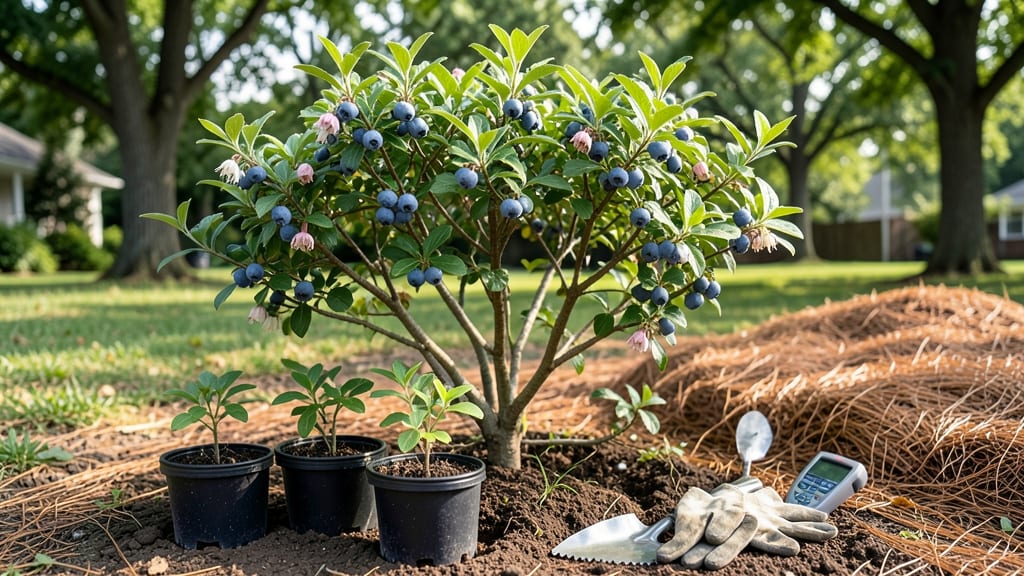
Planting blueberry bushes in North Carolina might seem straightforward, but timing is everything—especially when you're dealing with Southern varieties that need just the right chill hours to thrive.
Whether you're growing Premier, Climax, or Tifblue 🫐, getting them in the ground too early or too late can mean the difference between a bountiful harvest and a struggling shrub.
Most NC gardeners know the ideal window is late winter to early spring or fall, but the exact timing depends on your USDA zone and the specific variety's chill-hour needs. In zones 6b-8a, you've got two prime opportunities: late winter (February-April) for bare-root plants or fall (September-October) for container-grown bushes.
This is when soil temperatures are cool enough to prevent root stress while still allowing roots to establish before summer heat arrives.
The key is understanding your microclimate—Coastal areas might push planting slightly later than the Piedmont or Mountains due to warmer winters.
I'll show you exactly how to match your planting schedule with your local frost dates and soil conditions, so you can give your blueberries the best possible start for that sweet May-July harvest you're dreaming of.
Let's break down the best months for each method, soil prep secrets, and how to avoid common mistakes that NC gardeners make when planting their blueberry bushes. You'll walk away with a clear plan tailored to your corner of the state.
Best planting months for NC blueberries by chill-hour needs
North Carolina’s diverse climate zones—from the Coastal Plain to the Mountains—create unique challenges for blueberry growers. The key to success lies in matching chill-hour needs with the right planting window, as well as soil temperature thresholds.
Low-chill varieties (300-400 hours) thrive in milder Piedmont and Coastal areas, while medium-chill types (500-700 hours) suit the cooler Mountain regions. Timing isn’t just about months—it’s about avoiding heat stress in spring or frost damage in fall.
For bare-root blueberries, the ideal window is late winter to early spring (February–March), when soil temperatures hover around 40–50°F. This gives roots time to establish before summer heat arrives. However, container-grown bushes can also be planted in fall (September–October), provided they’re watered deeply before the first frost.
Regional microclimates play a huge role—Coastal areas can plant slightly later, while Mountain zones should aim for earlier windows to avoid late-season frosts.
The chill-hour requirement determines which varieties will thrive in your zone. For example, Premier (300–400 hours) is perfect for the Coastal Plain, while Climax (500–700 hours) excels in the Piedmont and Mountains.
Planting at the wrong time can stunt growth or delay fruiting by a full season. Let’s break down the best months for each chill category and region.
In the Coastal Plain, where winters are mild, you can push planting into March or even early April for low-chill varieties like Tifblue. The soil stays warm longer, reducing transplant shock. However, avoid planting after April 15, as summer heat can stress young roots.
For the Piedmont, aim for February–March—this balances frost risk with soil warmth. In the Mountains, plant by late February at the latest, as cooler soils take longer to warm.
Fall planting in NC works best for container-grown bushes in September–October, giving roots time to establish before winter dormancy. The soil should still be above 50°F to encourage root growth. Avoid planting in November, as frost can damage tender roots before they acclimate.
If you’re in the Coastal region, fall planting can extend into early November, but Mountain zones should finish by October 15.
Soil temperature is often overlooked but critical. Use a soil thermometer to confirm conditions—roots won’t grow well in cold, soggy soil. For spring plantings, wait until the soil reaches 40°F for low-chill varieties or 35°F for medium-chill types.
In fall, soil should stay above 50°F for at least 2 weeks post-planting. Mulching with pine straw or wood chips helps regulate temperature and retain moisture, especially in sandy Coastal soils.
Microclimates within NC can shift planting windows by weeks. For example, Asheville’s Mountains may have 300 fewer chill hours than Raleigh’s Piedmont, making low-chill varieties risky in higher elevations.
Always check your USDA Hardiness Zone (NC ranges from 6b–8a) and local frost dates. Extension offices in your county can provide hyper-local advice—don’t guess!
One common mistake is planting bare-root bushes too early in January, when soil is still frozen. Roots stay dormant until temperatures rise, delaying establishment. Conversely, planting too late in spring (after April 15) risks heat stress and poor root development.
For container-grown bushes, fall planting is ideal, but ensure they’re watered deeply every 5–7 days until the first frost to encourage root spread.
If you’re unsure about your region’s chill hours, start with hybrid varieties like Duke or Reveille, which bridge the 400–600-hour gap. These adapt well to Piedmont transitions and reduce the risk of poor fruiting. Always amend soil with peat moss or sulfur to maintain the ideal pH of 4.
Top 5 Southern blueberry varieties for NC gardens and their planting tips
North Carolina’s blueberry bushes thrive when you match the right variety to your region’s chill hours. Southern varieties like Premier and Tifblue are perfect for NC’s climate, producing sweet berries with minimal fuss. The key? Planting them at the right depth, spacing, and soil acidity to maximize yields.
For NC gardeners, selecting the best variety depends on your chill-hour zone. Coastal areas (like Wilmington) need low-chill varieties, while Piedmont regions (Raleigh, Greensboro) can handle medium-chill types. Soil pH between 4.5-5.5 is non-negotiable—blueberries won’t thrive in alkaline soil.
Let’s dive into the top 5 varieties and their planting tips for NC success.
Start by amending your garden soil with peat moss or sulfur to hit that acidic pH. For drainage, avoid low spots where water pools—blueberries hate soggy roots.
When planting, dig a hole twice as wide as the root ball but only as deep as the root flare (where roots meet the stem). This prevents stem rot and encourages strong growth.
For fall planting (September-October), choose container-grown bushes. They establish roots before winter, giving you a head start. If planting in late winter (February-March), opt for bare-root varieties like Tifblue or Climax.
Soak roots for 2-3 hours before planting to rehydrate them. Mulch with pine straw or wood chips to retain moisture and suppress weeds—critical in NC’s hot summers.
Spacing matters too. Tifblue needs 6-8 feet between bushes to avoid competition, while Southern Highbush can squeeze into 3-4 feet for smaller gardens. After planting, water deeply to settle the soil, then mulch again.
In NC’s Piedmont, where summers are humid, drip irrigation helps prevent fungal diseases. For coastal areas, prioritize salt-tolerant varieties like Premier to handle brackish soil.
Finally, feed your bushes in early spring with an acid-loving fertilizer (like 10-10-10 with sulfur). Avoid over-fertilizing—blueberries prefer lean soil. With the right variety, planting depth, and soil prep, your NC blueberry patch will reward you with juicy berries for years. Happy planting!