
Plants
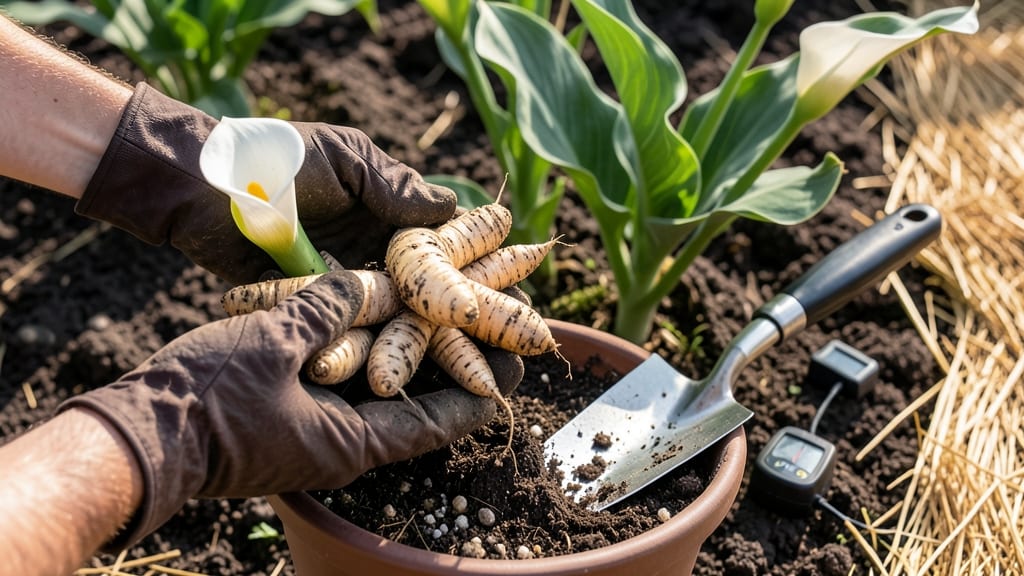
Timing your calla lily 🌸 planting in Zone 5 could mean the difference between stunning summer blooms and frost-damaged bulbs. The perfect window isn't just about dates—it's about soil temperature, and getting it wrong can leave you waiting for flowers that never arrive.
Most gardeners in Zone 5 assume late spring is the only option, but the truth is more nuanced. The ideal soil temperature for planting calla lily bulbs is between 50°F and 60°F, which often arrives after your last frost date.
If you plant too early, your bulbs might rot in cold soil, while waiting too long risks stunted growth before summer heat sets in.
I've learned the hard way that a 4-6 week head start—like pre-chilling bulbs indoors—can give you that extra edge in Zone 5's short growing season.
But timing isn't everything; soil prep and post-planting care play just as big a role in ensuring your calla lilies thrive from the first green shoot to their dramatic summer blooms.
Let me walk you through the exact steps to plant your calla lily bulbs at the perfect moment, so you can enjoy those elegant 🌸 flowers all season long without the guesswork.
Zone 5 soil temperature guide: exact timing for calla lily bulb planting
Timing your calla lily bulbs in Zone 5 hinges on two critical factors: soil temperature and last frost dates. Unlike tropical natives, these beauties need warm soil (50°F-60°F) to thrive, but planting too early risks frost damage. Let’s break down the perfect window for your region.
Calla lilies (Zantedeschia aethiopica) are tender perennials that demand precision. In Zone 5, we’re balancing late frosts (often until mid-May) with heat-sensitive bulbs. The ideal soil temperature trigger is 55°F—when roots can establish without freeze risk.
| Region | Avg Last Frost | Soil Temp Trigger | Planting Window | Key Risk |
|---|---|---|---|---|
| Chicago, IL | May 10-15 | 55°F (late May) | May 20-June 5 | Late frost |
| Pittsburgh, PA | May 5-10 | 55°F (early May) | May 15-30 | Early heat stress |
| Minneapolis, MN | May 20-25 | 60°F (late May) | June 1-15 | Short growing season |
| Cincinnati, OH | April 25-May 5 | 50°F (early May) | May 10-25 | Variable temps |
🌡️ Pro Tip: Use a soil thermometer to confirm temps before planting.
Your local last frost date is your starting point, but soil temperature is the real decider. Even if air temps feel spring-like, cold soil can stunt root growth. For example, in Chicago, wait until late May when soil hits 55°F—not when daffodils bloom.
Zone 5’s regional variations create challenges. In Pittsburgh, where frosts linger until May 10, aim for May 15-30 planting. Meanwhile, Minneapolis gardeners should delay until June 1 to avoid early heat stress after a late frost. Always check a 10-day forecast for frost warnings.
Pre-chilling bulbs for 4-6 weeks in the fridge mimics winter dormancy and jumpstarts growth. Place them in a paper bag with peat moss at 35°F-40°F. This trick ensures stronger roots when soil warms, giving you earlier blooms by July-August.
If you’re in a cooler microclimate (e.g., northern exposure or high elevation), extend your planting window by 2 weeks. Conversely, southern-facing beds warm faster—plant 1 week earlier once soil hits 50°F.
Watch for foliage emergence as your cue to cease pre-chilling. Healthy green shoots mean roots are active and ready for well-draining soil. Mix compost into your bed to improve warmth retention and water retention.
After planting, mulch with straw to maintain consistent soil temps. This 3-inch layer protects bulbs from temperature swings and weed competition. Avoid organic mulches like grass clippings, which can mat down and suffocate roots.
Remember: Calla lilies are not frost-tolerant once foliage appears. If a late frost hits after planting, cover young shoots with frost cloth until temps rise. With this soil-temperature strategy, you’ll enjoy vibrant blooms from mid-summer to fall. 🌸
Step-by-step calla lily planting schedule for Zone 5’s short growing season
Zone 5’s short growing season demands precision when planting calla lily bulbs. Timing is everything—plant too early, and frost will damage tender roots; too late, and you’ll miss the mid-summer blooms you love.
The key is working with your last frost date (typically mid-May) and soil temperatures that stay above 50°F consistently.
Before you even plant, pre-chill your bulbs for 4-6 weeks in a cool, dark place (like a refrigerator). This mimics winter conditions and jumpstarts root growth once warmer weather arrives. Think of it as giving your calla lilies a head start to beat Zone 5’s brief growing window.
- Step 1: Mark your calendar for 4-6 weeks before your last frost date (usually early April in Zone 5). Start pre-chilling bulbs in a paper bag with peat moss or vermiculite to maintain humidity.
- Step 2: Wait until soil temperatures reach 50°F-60°F (test with a soil thermometer) and all frost risk has passed. In most of Zone 5, this lands in late May—earlier in southern areas, later in northern corners.
- Step 3: Dig holes 2-3 inches deep (twice the bulb’s width) and space them 6-12 inches apart. Amend the soil with compost to improve drainage—calla lilies hate soggy roots.
- Step 4: Plant bulbs with the narrow end up (like a teardrop) and cover with soil. Water deeply to settle the roots, then mulch with 2-3 inches of organic mulch to retain moisture and regulate temperature.
- Step 5: Keep soil consistently moist but not waterlogged for the first 6 weeks. Fertilize lightly with a balanced 5-10-10 mix when foliage reaches 4-6 inches tall to encourage strong root and bloom development.
After planting, monitor your calla lilies closely for signs of established roots, like new leaves poking through the soil. If you notice yellowing foliage, it might signal overwatering—adjust to weekly deep watering instead. In Zone 5’s heat, mulch becomes your best friend, shielding bulbs from temperature swings.
By following this schedule, your calla lilies will have 6-8 weeks to establish roots before summer’s peak heat arrives. With the right timing, you’ll enjoy vibrant blooms from July through September, even in Zone 5’s challenging climate. 🌸