
Plants
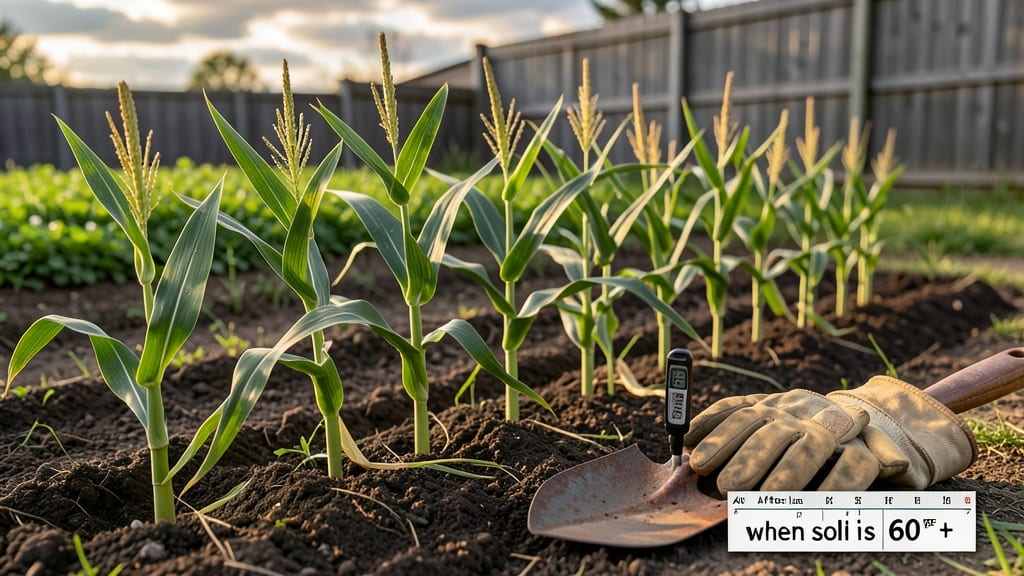
Timing your corn planting in Middle Tennessee isn't just about the calendar—it's about waiting for that perfect soil temperature that guarantees fast germination and strong starts. Skip the guesswork and you could end up with patchy stands or stunted plants, even if you follow the traditional mid-April window.
Most gardeners here plant their 🌽 between mid-April and early May, but without checking soil temps, you might be rushing or waiting too long.
The key is planting when the ground consistently stays above 60°F for at least a week—usually around late April in Zone 7a. This small detail makes all the difference between a bumper crop and a disappointing harvest.
I'll show you exactly how to test your soil temperature, which corn varieties thrive in our short growing season, and how to adjust your planting schedule based on Nashville's unpredictable spring weather. With these tricks, you'll beat the heat and frost risks that trip up even experienced gardeners.
Ready to grow corn that's ready for harvest from late July through October? Let's dive into the soil science that separates good crops from great ones in Middle Tennessee.
Middle Tennessee corn planting calendar based on soil temperature
Middle Tennessee’s spring frost risks and heat spikes make timing critical for corn success. Unlike many crops, corn germination depends on soil temperatures—not just air temperature—so a soil thermometer becomes your best friend.
Plant too early, and cold soil delays germination; too late, and you miss peak harvest windows. The key? Wait until soil stays at 50°F+ for 7+ days at 2-4" depth.
This regional planting calendar adjusts for Middle Tennessee’s microclimates: Nashville’s urban heat islands, Knoxville’s higher elevations, and Chattanooga’s river valley warmth. Sweet corn, field corn, and popcorn all share similar soil temp needs but differ in maturity timelines.
For example, sweet corn (like Silver Queen) needs 75-90 days, while field corn (like Mo17) can stretch to 110 days.
Avoid the common mistake of planting by moon phases or calendar dates—those fail when spring drags on. Instead, use a 5-day soil temperature forecast from tools like the Midwest Regional Climate Center.
For instance, in Nashville (Zone 7a), aim for April 15-30 for early varieties, while Knoxville’s cooler Zone 6b may wait until May 1-15.
Pro Tip: Test soil temp in the morning (before sun heats it) and evening (afternoon warmth). If temps dip below 50°F at night, delay planting. Corn seeds need consistent warmth to avoid uneven sprouting. For popcorn varieties like Golden Bantam, which matures in 90 days, you’ll need to plant by early June for a fall harvest.
For succession planting, add another round of short-season varieties (like Early Sunglow) in early June to extend harvests. This works best in Nashville and Chattanooga, where summer heat arrives earlier.
In Knoxville’s cooler climate, focus on one main planting and prioritize disease-resistant varieties like Peaches & Cream, which tolerates corn smut better than others.
Watch for false springs—those warm spells in March that trick you into planting early. Corn seeds buried in 40°F soil may rot before sprouting. If you’re unsure, use biodegradable seed blankets to protect seedlings until soil warms consistently.
These blankets raise soil temps by 2-3°F and protect against cutworms, a common Middle Tennessee pest.
Adjust for organic matter in your soil: Dark, compost-rich soil warms faster than sandy loam. Test your soil’s moisture retention too—corn needs 1-2 inches of water weekly, but soggy soil can cause root rot.
If your garden holds water poorly, amend with coarse sand or perlite before planting. In Chattanooga’s river valley, where soil drains quickly, mulch with straw to retain moisture.
Remember:
How to test soil temperature for corn germination success
Corn seeds need consistent warmth to germinate quickly, and Middle Tennessee’s Zone 6b/7a climate makes timing critical. Unlike air temperature, soil temperature determines whether your seeds will sprout in 5 days or linger for weeks.
I’ve learned the hard way—planting too early can leave seeds rotting in cold soil, while waiting too long risks summer heat stress.
For reliable results, I use a digital soil thermometer (like the ThermoPro TP60) to check temperatures at the 2-4 inch depth. This depth mirrors where seeds will sit after planting.
Corn seeds typically germinate best when soil stays above 50°F for 7+ days, but 60°F+ speeds up growth dramatically. In my garden, hitting 65°F+ means I’ll see sprouts in just 3-5 days!
⚠️ WARNING: Planting Too Early in Middle Tennessee Middle Tennessee’s last frost date hovers around April 15, but soil warms weeks later due to moisture and clay-heavy soils. Planting corn too soon—even after frost—can lead to:
- Seed rot from cold, wet soil (common in Nashville’s clay)
- Slow germination (3+ weeks instead of 1 week)
- Pest attraction (slugs thrive in damp, cool conditions)
To test soil temperature accurately, I follow these steps: First, water the soil lightly (moist but not soggy) the day before testing. Then, insert the thermometer probe 2-4 inches deep—this mimics seed depth. Take readings in the late morning (after sun warms the soil) for the most reliable data.
In my Zone 7a garden, soil often hits 60°F by late April, but Nashville’s microclimate can lag 1-2 weeks behind Knoxville’s warmer valleys.
Adjusting planting dates based on 5-day forecasts saves me from costly mistakes. If a forecast shows highs in the 70s but lows in the 40s, I delay planting until soil warms consistently.
For example, in 2023, a late frost in early May kept my soil below 55°F for 10 days—I switched to fast-germinating varieties like ‘Silver Queen’ and replanted after the soil stabilized.
Pro tip: Use a soil thermometer with a memory function to track daily trends. I also mark my garden calendar with soil temperature thresholds:
- 50°F: Minimum for germination (but slow)
- 60°F: Ideal for fast sprouts (5-7 days)
- 70°F+: Risk of heat stress (plant early or use shade cloth)
Remember, soil temperature > air temperature for planting decisions. Even if your weather app shows 70°F days, cold nights can keep soil below 50°F. I’ve used black plastic mulch to warm soil 5-10°F faster in past seasons, which helped me plant 2 weeks earlier without risk.
Start testing now—your corn’s success depends on it! 🌽