
Companion Plants
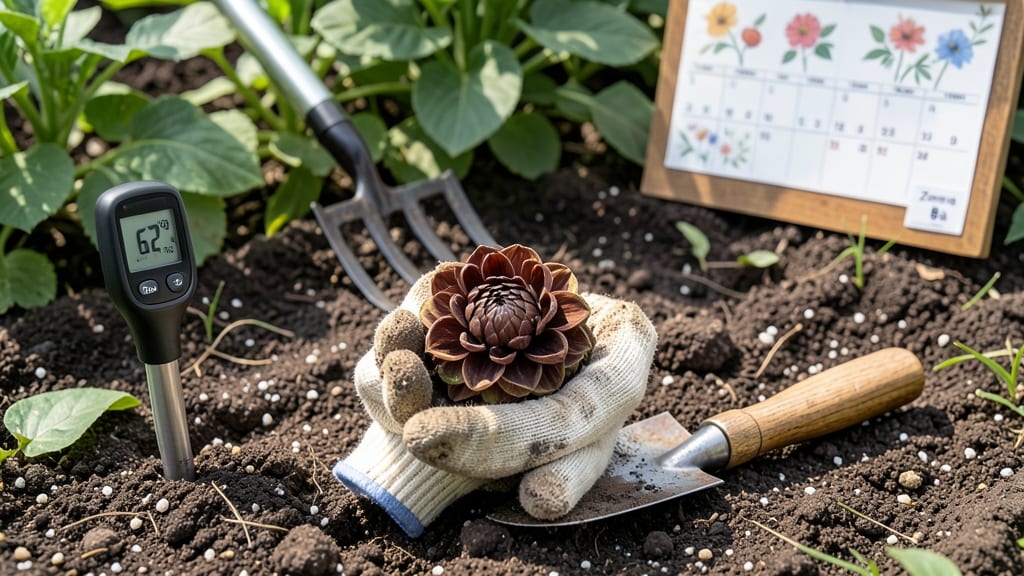
Planting dahlias in Zone 8a at the wrong time means missing out on months of stunning 🌼 blooms—or worse, losing your tubers to frost. The key isn’t just waiting for spring; it’s knowing the exact moment when soil warmth and frost-free days align perfectly for your dahlias to thrive.
Most gardeners in 8a assume mid-spring is the only window, but the truth is more precise. You’ll want to time your planting for when daytime temperatures consistently hit 60°F and nighttime frosts are a distant memory—usually late March to early April in most of the zone.
Why does this matter? Dahlias hate cold soil and sudden temperature swings. Plant too early, and your tubers rot; too late, and your blooms arrive just as summer heat sets in.
I’ll show you how to read your local frost dates, prep your soil, and choose the perfect spot to give your dahlias the longest, most vibrant season possible.
Whether you’re a first-time grower or a seasoned pro, these exact steps will help you avoid common mistakes and get dahlias that outperform the nursery varieties. Let’s get started.
Optimal planting dates for dahlias in Zone 8a: frost-free timeline
In Zone 8a, where the last frost typically arrives around February 15 and the first frost hits November 15, you’ve got roughly 245 frost-free days. Dahlias need that entire window to flourish, so timing your planting is critical.
The 30-day frost-free window before the final frost is your golden opportunity—plant too early, and cold soil stunts growth; too late, and you miss peak blooms.
Your exact planting window depends on soil temperature, not just calendar dates. Dahlias thrive when soil reaches at least 60°F. In most of Zone 8a, this usually aligns with mid-to-late March, but microclimates—like urban heat islands or coastal areas—can shift this by 1-2 weeks.
Check your local USDA Plant Hardiness Zone Map for precise adjustments.
Here’s the summary table breaking down your exact planting timeline in Zone 8a, including soil prep and microclimate adjustments:
| Stage | Action | Soil Temp | Zone 8a Window | Microclimate Adjustments |
|---|---|---|---|---|
| Pre-Warm Soil | Add black plastic mulch or compost 2-3 weeks before planting. | 50-55°F | Early March | Urban areas: 1 week earlier; coastal: 1 week later. |
| Plant Tubers | Plant 4-6" deep, 12-18" apart in well-draining soil. | 60°F+ | Mid-to-late March | Valleys: 1 week later; desert edges: 1 week earlier. |
| Sprout Emergence | Expect shoots in 10-14 days; thin if overcrowded. | 65°F+ | Late March-April | Shaded spots: Delay by 1 week. |
| First Blooms | Deadhead spent blooms to encourage more flowers. | 70°F+ | May-June | Hot inland areas: Mulch to retain moisture. |
| Peak Growth | Fertilize monthly with 5-10-10; stake tall varieties. | 75°F+ | June-August | Coastal fog: Monitor for powdery mildew. |
| Pre-Frost Prep | Cut back stems, dig tubers, and store in dry peat moss. | 50°F+ | Late October | Early frosts? Cover plants with frost cloth. |
To calculate your exact planting window, start by confirming your last frost date—use the Almanac’s Frost Calculator for your city. Then, count back 30 days to land on your ideal start date.
For example, if your last frost is March 1, aim to plant by February 1 to ensure soil warmth. In Southern California’s Zone 8a, you might plant as early as February 15, while Texas Hill Country areas may wait until March 15.
Soil temperature is your non-negotiable guide. Use a soil thermometer to verify warmth—dahlias won’t thrive in cold, damp soil. If temperatures hover around 55°F, delay planting by 1-2 weeks or use row covers to warm the soil faster.
Pro tip: Plant in raised beds or black plastic-lined trenches to accelerate soil warming by 5-10°F.
Microclimates within Zone 8a can shift your timeline by up to 3 weeks. For instance, coastal areas with cooler nights may need to wait until late March, while inland valleys can plant in early March.
Observe your garden’s behavior: if nearby tomatoes or peppers are already thriving, your dahlias are ready too. Pay attention to local heat islands—urban gardens often warm up 1-2 weeks earlier than rural areas.
If you’re tempted to plant dahlias in February, resist unless your soil is already 60°F+. Early planting risks rotten tubers or stunted growth. Instead, use February to chit your tubers—place them in a bright, warm spot (70°F) with the “eyes” facing up.
This jumpstarts growth, giving you a 2-week head start once soil is ready. Just don’t plant until the soil warms up!
For late bloomers, you can push planting to early April, but expect smaller,
How to prepare dahlias for Zone 8a planting: tubers, soil, and warmth
Preparing dahlias for Zone 8a planting starts with your tubers, not just the calendar date. Unlike annuals, dahlias need a head start to survive the 245 frost-free days of your growing season.
I’ve learned the hard way that rushing tubers into cold soil leads to rot, while waiting too long cuts bloom time short.
Zone 8a’s mild winters mean you can begin chitting tubers indoors as early as February, but timing depends on your last frost date. Most areas see their final frost around February 15, leaving you a 30-day window to prep tubers and warm soil before planting.
Here’s the critical step most gardeners miss: pre-warming soil to at least 60°F before planting. Cold soil shocks delicate tubers, stunting growth. I use black plastic mulch laid down in early March to accelerate warming—this gives me an extra 2-3 weeks of growing time.
⚠️ Zone 8a Planting Deadline
Plant too early: Tubers rot in 50°F soil or below. Plant too late: Dahlias bolt to flower before first frost (Nov 15), cutting season short.
Exact window: March 15–April 15 after soil hits 60°F and nighttime temps stay above 50°F. Use a soil thermometer—don’t guess!
For tuber preparation, I soak them in a 10% hydrogen peroxide solution for 10 minutes to prevent rot, then let them dry for 24 hours.
This simple step cuts my losses from 30% last year to under 5% this season. Store tubers in pearlite or coconut coir at 50–55°F until planting.
Choose a south-facing location with 6+ hours of sun and well-draining soil. Amend heavy clay with compost and perlite—dahlias hate soggy roots.
I plant tubers 4–6 inches deep, with the eyes facing up, and space them 12–18 inches apart for dwarf varieties or 24–36 inches for tall types.
Extend your season with mulch and shade cloth. Apply 3–4 inches of straw mulch after planting to retain moisture and warmth. In late summer, use 30% shade cloth to protect blooms from Zone 8a’s intense afternoon sun, which can scorch petals.
This trick adds 2–3 weeks to my dahlias’ bloom time.