
Trees
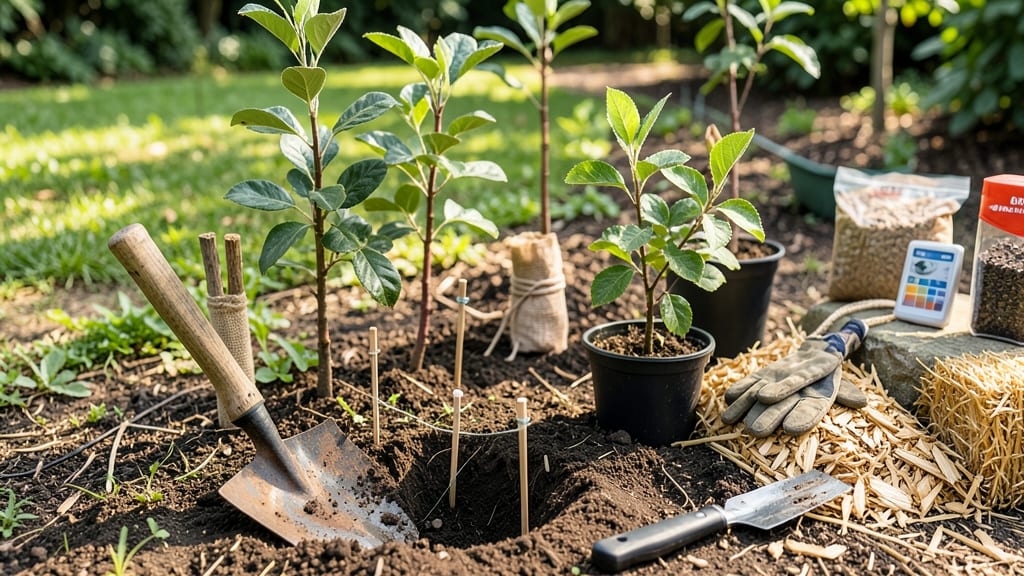
Planting fruit trees 🍎 in Kentucky at the wrong time could mean waiting years for that first harvest—or never getting fruit at all.
The key isn’t just picking a month; it’s understanding how your local chill hours (those critical winter cold snaps) match up with your tree’s needs for perfect blooms.
You’ve probably heard “spring planting” is best, but Kentucky’s 6a-7b zones add layers to the timing game. Peaches need 500+ chill hours, while apples thrive with 800+—and planting too early or late can throw off dormancy.
I’ll break down the exact windows for each variety so you avoid costly mistakes.
From bare-root saplings to container-grown trees, we’ll cover when to dig in the ground (hint: late winter is your golden window) and how to prep soil for optimal root growth. Whether you’re a first-time gardener or a seasoned grower, these insights will help you plant with confidence.
Ready to turn your backyard into a fruit orchard? Let’s dive into the perfect timing for Kentucky’s most popular varieties—and how to give your trees the chill they crave for a bountiful harvest.
Kentucky’s chill-hour zones: how to match fruit trees to your location
Kentucky’s climate is a fruit grower’s paradise, but not all trees thrive equally. The key to success lies in chill hours—the number of hours below 45°F (7°C) your trees need each winter to set buds properly.
Without enough chill hours, your peaches might bloom but never fruit, or your apples could produce sparse harvests. Kentucky spans 300 to 1,000+ chill hours, depending on elevation and microclimate, so choosing the right variety for your zone is critical.
Most of Kentucky falls within USDA Zones 6a-7b, but chill-hour requirements vary dramatically. For example, low-chill varieties (300-500 hours) like ‘Redhaven’ peaches struggle in northern Kentucky, while high-chill varieties (800-1,000+ hours) like ‘Cortland’ apples may fail to bloom in southern counties.
Understanding your local chill hours ensures your trees enter dormancy correctly, leading to abundant blooms and reliable fruit production.
Here’s how to decode Kentucky’s chill-hour zones and pick the perfect fruit trees for your location. The summary-table below breaks down top varieties by chill-hour range, so you can plant with confidence.
| Chill-Hour Zone | Best Fruit Varieties | Notes |
|---|---|---|
| 300-500 hours |
|
Ideal for southern KY (e.g., Bowling Green, Paducah). Low-chill varieties may bloom early—watch for frost damage. |
| 500-700 hours |
|
Perfect for central KY (e.g., Louisville, Lexington). Moderate chill suits most backyard orchards. |
| 700-900 hours |
|
Best for northern KY (e.g., Covington, Ashland). Higher chill ensures reliable blooming. |
| 900+ hours |
|
For high-elevation areas (e.g., Eastern KY). Traditional varieties thrive here. |
To find your exact chill-hour zone, check the Kentucky Mesonet or use the USDA Plant Hardiness Zone Map. For example, Lexington averages 750 chill hours, while Paducah sees only 500. If you’re unsure, opt for multi-chill varieties (e.g., ‘Honeycrisp’ apples) that adapt to 500-900 hours.
Pro tip: Dwarf and semi-dwarf trees often require fewer chill hours than standard varieties, making them great for urban gardens or small spaces. Pair your main variety with a pollination partner—most fruit trees need another tree of the same type (or compatible type) within 50 feet for cross-pollination.
For instance, plant a ‘Red Delicious’ apple alongside a ‘Granny Smith’ to ensure fruit set.
If you’re in a mild-winter microclimate (e.g., near rivers or lakes), consider delayed dormancy techniques like winter pruning or chill-hour supplements (e.g., anti-bud-break sprays). These methods can trick trees into meeting their chill requirements, even in warmer-than-average winters. Always consult your local Cooperative Extension Service for tailored advice.
Remember, chill hours ≠ cold snaps. It’s the duration of cool weather, not just the temperature, that matters.
For example, a 30°F night counts if it lasts 4+ hours, but a 40°F day won’t. Use a home weather station or online chill-hour calculators to track your local accumulation over winter.
Once you’ve matched your trees to your chill-hour zone, focus on soil prep and
Best planting months for Kentucky fruit trees by variety
Kentucky’s moderate climate and chill-hour requirements make timing critical for fruit tree success. Planting too early risks frost damage, while late planting delays root establishment. Most fruit trees thrive when planted during dormancy, either in late fall or early spring, but specific varieties have unique needs.
For bare-root trees, the ideal window is late winter to early spring, before buds swell. Container-grown trees offer more flexibility but still benefit from spring planting when soil warms. Kentucky’s last frost date (around March 15) signals the start of safe planting for most varieties.
Fall planting (October-November) works well for dwarf varieties and container-grown trees, allowing roots to establish before winter. However, avoid planting peaches or plums in fall—they’re vulnerable to late frosts when buds begin to swell.
- Apples & Pears: Plant bare-root in March-April or container-grown by May 1. Needs 500-1000 chill hours—ideal for KY’s Zone 6a-7b.
- Peaches & Nectarines: Spring only (March-April) to avoid late frost damage. Requires 300-500 chill hours—best for southern KY.
- Plums: Fall (Oct-Nov) or early spring (Feb-March). 400-600 chill hours needed—perfect for northern KY.
- Cherries: Late winter (Feb) only. Needs 800+ chill hours—limited to coolest KY regions (e.g., Lexington).
- Fig Trees: Spring (April-May) or fall (Sept). No chill requirement—thrives in warmer microclimates.
Soil preparation is key—amend with compost and organic matter to improve drainage, especially for heavy clay soils common in KY. Test your soil’s pH (6.0-7.0) and adjust with lime if needed. Planting on a slight slope helps prevent waterlogging.
Avoid planting in extreme heat (July-August) or freezing temperatures (December-February). For bare-root trees, soak roots in water for 1-2 hours before planting. Mulch heavily (3-4 inches) to retain moisture and regulate soil temperature.
Common mistakes include planting too deep (root flare should be visible) or skipping root pruning on container-grown trees. After planting, water deeply and stake young trees if needed. Kentucky’s variable microclimates mean local frost dates can differ by weeks—check UK Ag Weather for real-time updates.