
Trees
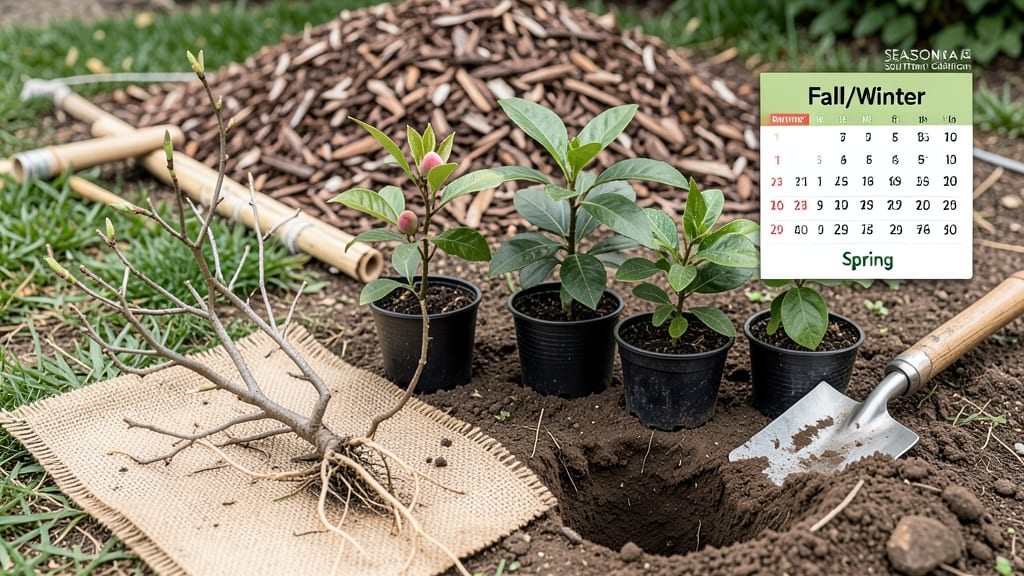
Planting fruit trees in Southern California feels like walking a tightrope—too early, and your tree struggles with heat stress; too late, and it won’t get enough winter chill to bloom.
The key isn’t just picking the right month but matching your tree’s chill-hour needs to your local microclimate, whether you’re in the coastal fog of Santa Barbara or the desert-like warmth of Palm Springs.
Most gardeners assume spring is the only time to plant, but the best window depends on your fruit variety. Citrus and figs, which need little to no chill, thrive when planted in late winter or early spring—as soon as the soil warms.
Meanwhile, peaches and apples, which demand 300-700 chill hours, need a fall planting to establish roots before winter.
I’ve seen firsthand how a misjudged timeline can leave trees stunted or fruitless—so let’s break down the exact planting schedule for your region.
You’ll learn which varieties work best in your zone, how to prep soil for SoCal’s unique challenges, and even whether container planting is a viable option for urban spaces.
Ready to grow fruit trees that actually bear? Let’s dive into the chill-hour strategy that’ll turn your backyard into a harvest goldmine.
Best planting months for fruit trees in Southern California by chill-hour needs
Southern California’s mild winters and hot summers create unique challenges for fruit tree planting. Unlike colder climates, chill hours—the number of hours below 45°F—determine whether fruit trees will bloom and produce fruit.
Coastal areas like Santa Barbara get fewer chill hours than inland regions like Riverside, so variety selection matters.
Low-chill varieties like citrus and figs thrive with 200–400 chill hours, while peaches and nectarines need 400–600 chill hours. High-chill trees like apples and pears require 600–800+ chill hours, making them trickier to grow without proper planning.
Planting at the right time ensures your trees get the cool dormancy period they need to set fruit.
Here’s a comparison table breaking down the best planting months for each chill-hour category, adjusted for coastal vs. inland Southern California:
For coastal areas, like Malibu or San Diego, chill hours are scarce, so I recommend planting dwarf varieties in south-facing spots to maximize sun exposure.
Inland regions, such as Los Angeles’ San Gabriel Valley or Riverside, offer more chill hours, allowing for a wider range of fruit trees. Always check your local chill-hour map—many nurseries provide this data for Southern California zones.
Timing isn’t just about months; it’s also about soil temperature. Wait until the ground warms to 60°F before planting, typically by February in coastal areas and January inland. Colder soil can stunt root growth, so I test with a soil thermometer if unsure.
Amend your soil with compost and organic matter to improve drainage, especially in clay-heavy soils common in inland valleys.
Protect young trees from late frosts, which can damage blossoms. Use frost cloth or a row cover if frost warnings appear in March or April. I’ve seen peach trees in Santa Barbara lose entire blossoms overnight—heartbreaking, but preventable!
Mulch around the base with wood chips to insulate roots and retain moisture during dry spells.
Urban gardeners in Los Angeles or San Diego can grow container-friendly varieties like ‘Improved Meyer’ lemons or ‘Bonanza’ apples in large pots. Just ensure the container has drainage holes and use a well-draining potting mix.
Move containers to shadier spots in summer to prevent heat stress. I’ve had success with 5-gallon containers for dwarf citrus, but larger trees need 15+ gallons.
After planting, focus on watering deeply once a week (more in summer) and fertilizing lightly in spring. Avoid over-fertilizing, which can lead to excessive leaf growth at the expense of fruit.
Prune in late winter to shape the tree and remove dead or crossing branches. This encourages airflow and reduces disease risk.
Remember, patience is key. Fruit trees take 2–5 years to bear fruit, depending on the variety. But with the right chill-hour match and planting timing, you’ll enjoy homegrown peaches, apples, and citrus for decades.
Start small, experiment with varieties, and don’t hesitate to ask your local extension office for soil tests or chill-hour data!
How to match fruit tree varieties to Southern California’s microclimates
Southern California’s diverse microclimates—from the coastal fog of Santa Barbara to the desert heat of Palm Springs—create unique challenges for fruit tree growers. The key to success lies in selecting chill-hour-compatible varieties and adjusting planting schedules to match your local climate.
For example, a ‘Bonanza’ apple thrives in inland valleys with 300-500 chill hours, while ‘Sierra Snow’ peaches need only 200-300 chill hours, making them perfect for coastal areas.
Your first step is understanding your local chill-hour range. Coastal regions like Malibu average 200-300 chill hours, while inland areas like Riverside can reach 500-700 chill hours.
Desert regions like Palm Springs often fall below 200 chill hours, limiting your options to low-chill varieties like figs or loquats. Always check the USDA chill-hour map for your specific area before selecting varieties.
Once you’ve selected the right variety, timing your planting is crucial. In coastal areas, plant bare-root trees in late winter (February-March) to take advantage of cooler temperatures and winter rains. For inland regions, aim for November-December planting to allow roots to establish before spring heat arrives.
Desert areas benefit from fall planting (October-November), when temperatures are milder and soil moisture is higher.
Adjust your planting schedule based on soil temperature. Fruit trees prefer 60-70°F soil for root establishment. Use a soil thermometer to monitor conditions—if soil is too cold (<50°F), wait a few weeks.
In container gardening, which is ideal for urban areas, plant in early spring (March-April) to avoid heat stress. Always water deeply after planting to encourage root growth, and mulch with 3-4 inches of organic mulch to retain moisture.
Don’t overlook pollination needs when selecting varieties. Many fruit trees require cross-pollination from another compatible variety. For example, planting a ‘Bonanza’ apple alongside a ‘Gala’ apple ensures better fruit set.
In low-chill zones, consider self-pollinating varieties like ‘Improved Meyer’ lemon or ‘Desert King’ fig, which produce fruit without a second tree. Always check the variety’s pollination requirements before purchasing.
Finally, prepare for post-planting care by scheduling regular pruning and fertilization. In the first year, focus on structural pruning to encourage a strong framework. Apply a balanced fertilizer (10-10-10) in early spring and again after harvest.
For container-grown trees, use a slow-release fertilizer to avoid overfeeding. With the right variety and timing, your fruit tree will thrive in Southern California’s unique microclimates!