
Trees
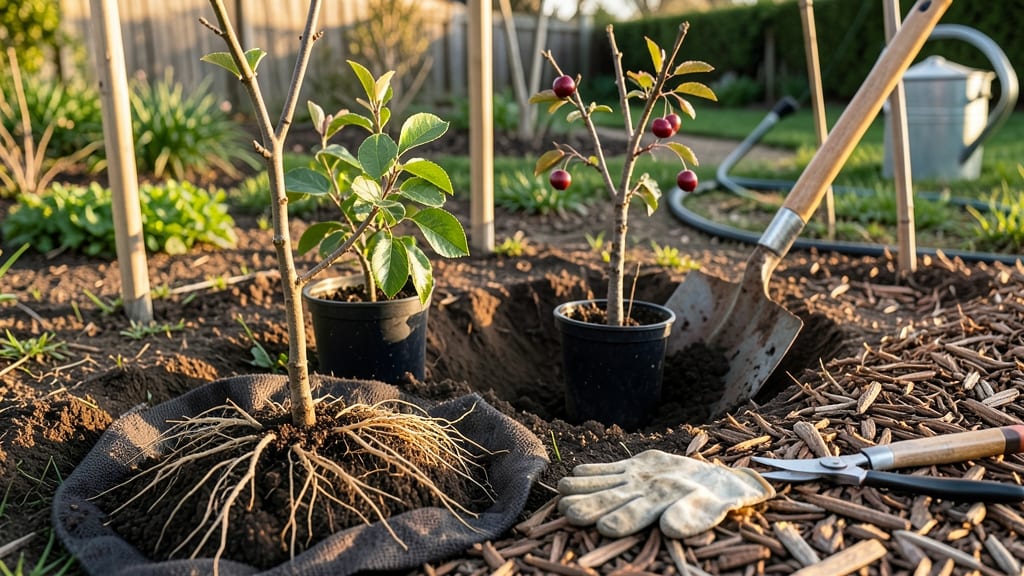
Timing your fruit tree planting in Washington State could mean the difference between a thriving orchard and a sad, stunted 🍎. With chill-hour requirements varying wildly from the rainy West to the drier East, getting it wrong risks frost damage or poor fruit set—so let’s cut to the chase.
Most gardeners know spring is ideal, but did you know fall planting—especially for bare-root trees—gives roots time to establish before winter’s chill? Washington’s 5b-8b zones add another layer, meaning what works in Seattle’s milder climate fails in Spokane’s colder stretches.
I’ll break down the exact windows for apples, cherries, and pears.
You’ll also discover how to match varieties to your microclimate—like choosing ‘Honeycrisp’ apples for Western WA’s 600–1,000 chill hours or ‘Lapins’ cherries for Eastern WA’s 1,000+ hours. Plus, I’ll share pro tips to avoid common mistakes, from soil prep to frost protection.
Ready to plant with confidence? Let’s dive into the perfect timing and care steps to ensure your fruit trees not only survive but thrive in Washington’s diverse growing conditions.
Best planting months for Washington fruit trees by chill-hour zones
Washington State’s diverse chill-hour zones—ranging from 600 hours in Western WA to over 1,000 hours in Eastern WA—dictate the perfect planting window for fruit trees. Apples, pears, and cherries all need specific timing to thrive, and planting outside these windows can stunt growth or reduce fruit production.
For example, Honeycrisp apples need 700+ chill hours, while Lapins cherries require 900+ hours to set fruit properly.
In Western Washington (e.g., Seattle, Bellingham), where winters are milder, fall planting in September-October is ideal for bare-root trees. This gives roots time to establish before winter dormancy.
Meanwhile, Eastern Washington (e.g., Spokane, Wenatchee) with colder winters benefits from late winter/early spring planting (February-April) to avoid early frost damage.
Here’s a quick reference for optimal planting months based on chill-hour zones and fruit types:
For apples and pears, fall planting is often best in Western WA because the trees enter dormancy naturally, reducing transplant shock. In contrast, cherries and plums—which need more chill hours—thrive when planted in late winter in Eastern WA to align with their natural dormancy cycle.
One critical factor is dormancy timing. Trees like ‘Gala apples’ (600–800 hours) should be planted when soil temps are below 60°F to prevent early bud break. Meanwhile, ‘Sweetheart cherries’ (900+ hours) need cooler soil temps to establish roots before spring growth surges.
If you’re planting container-grown trees, timing is more flexible—you can plant year-round except during frost. However, bare-root trees must be planted during their dormant season (fall or late winter) to minimize stress.
For example, a ‘Fuji apple tree in Spokane should go in the ground by April 1 to avoid late frost damage.
Always check local frost dates—Western WA’s last frost is typically March 15, while Eastern WA can see frost until April 15. Planting too early risks frost damage to new growth, while planting too late may delay root establishment.
Use WSU Extension’s chill-hour maps to verify your zone before selecting varieties.
Pro tip: Amend your soil with compost and mycorrhizal fungi before planting to improve root growth. In acidic WA soils, add lime to raise pH to 6.0–7.0 for optimal nutrient uptake. Mulch with wood chips to retain moisture and regulate soil temperature.
Remember, chill hours ≠ frost hardiness. A tree may survive -10°F but still need 900 chill hours to fruit. Always match variety to location—for example, ‘Enterprise apples’ (300 hours) won’t thrive in Eastern WA, but ‘Zestar!’ apples (900+ hours) will.
🍎
How to match fruit tree varieties to Washington’s microclimates
Washington’s diverse climate—from the maritime Pacific Northwest to the drier inland regions—creates unique challenges for fruit tree growers. The key to success lies in selecting chill-hour-appropriate varieties and adjusting planting schedules to match your specific microclimate.
For example, ‘Honeycrisp’ apples thrive in areas with 700+ chill hours, while ‘Lapins’ cherries need 900+ chill hours to produce fruit reliably.
Urban gardens in Seattle or Tacoma often face milder winters with fewer chill hours, requiring varieties like ‘Fuji’ apples or ‘Satsuma’ oranges. Meanwhile, rural areas in Eastern Washington or the Columbia Basin can support high-chill varieties like ‘Bing’ cherries or ‘Granny Smith’ apples.
Elevation also plays a role—trees planted at 2,000+ feet may experience earlier frosts and need cold-hardy varieties.
Adjust your planting schedule based on these factors: bare-root trees should go in late winter (February–March) or early fall (September–October), while container-grown trees can be planted year-round except during frost.
In frost-prone valleys, delay planting until after the last frost date, which can vary from mid-March in Western WA to mid-April in Eastern WA.
| Variety | Chill Hours Needed | Best WA Regions | Planting Window | Frost Risk Note |
|---|---|---|---|---|
| ‘Honeycrisp’ Apple | 700–900 | Western WA, Puget Sound | Feb–Mar or Sep–Oct | Moderate (avoid frost pockets) |
| ‘Lapins’ Cherry | 900–1,200 | Eastern WA, Yakima Valley | Feb–Mar (delay if frost risk) | High (plant after last frost) |
| ‘Bartlett’ Pear | 500–700 | Western WA, Coastal Areas | Sep–Oct (fall planting preferred) | Low (mild winters) |
| ‘Satsuma’ Orange | 300–400 | Urban WA (Seattle, Spokane) | Mar–Apr (container-grown) | None (tender variety) |
| ‘Bing’ Cherry | 1,000–1,200 | Eastern WA, Palouse | Feb–Mar (bare-root only) | Very High (early spring frost risk) |
For urban gardeners, container-grown trees offer flexibility—plant them in late spring (May–June) after frost risk has passed. In rural areas, prioritize bare-root trees planted in late winter to establish roots before summer heat.
Always test your soil’s pH (6.0–7.0 for most fruit trees) and amend with compost or lime if needed, as Washington’s native soils can be acidic or compacted.
Monitor local frost dates using resources like the WSU Extension or USDA Plant Hardiness Zone Map. In frost pockets (e.g., low-lying areas), opt for early-blooming varieties or use row covers during late frosts.
With the right variety and timing, your fruit trees will thrive in Washington’s varied climates—yielding bountiful harvests for years to come.
🌱