
Plants
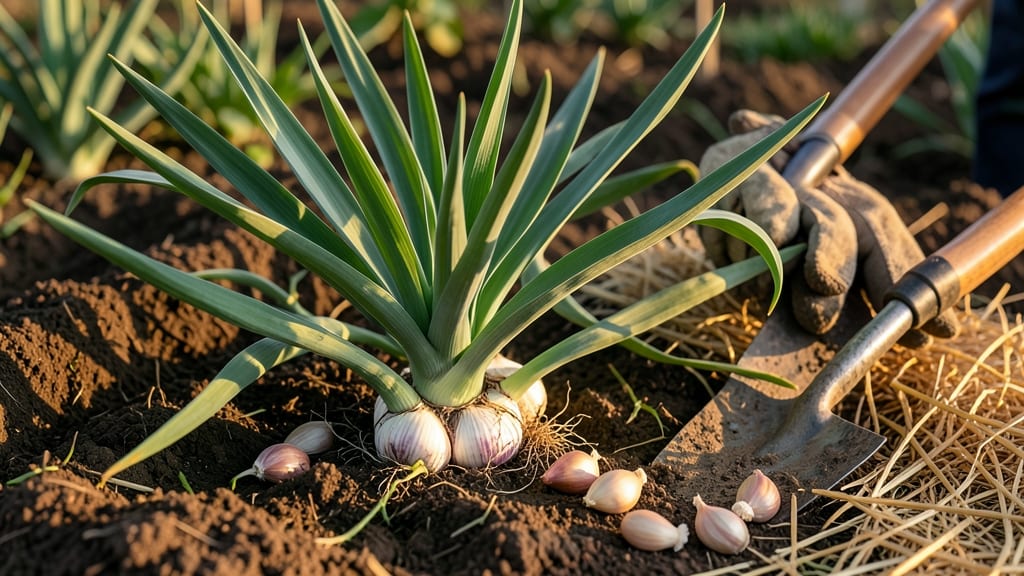
Planting garlic in Delaware at the right time can mean the difference between a bountiful harvest of flavorful bulbs and a disappointing flop. With USDA Zone 7a-7b winters and humid summers, timing isn't just about the calendar—it's about understanding how hardneck and softneck varieties respond to Delaware's frost dates.
If you've ever wondered why some gardeners swear by fall planting while others try spring, the answer lies in Delaware's climate quirks. The key window runs from October to November, but even a few weeks off can send your 🧄 garlic into bolting or rot.
Let me break down exactly when to plant each type for maximum success.
You'll learn how to read Delaware's frost patterns to time your planting perfectly, whether you're growing hardnecks for their sturdy stems or softnecks for milder winters. We'll cover soil prep, spacing tricks, and how to protect your crop from Delaware's unpredictable spring rains.
By the end, you'll know exactly when to get those cloves in the ground—and how to give them the best shot at becoming next summer's prize bulbs. Let's get started!
Delaware’s ideal garlic planting window: hardneck vs softneck timing
Delaware’s Zone 7-8 climate creates a perfect balance for growing garlic, but timing is everything. The state’s cold winters and humid summers mean hardneck and softneck varieties need different approaches.
Plant too early, and you risk rot; too late, and bulbs won’t mature. Let’s break down the ideal planting windows for each type, including soil temperatures and frost adjustments.
Hardneck garlic thrives in Delaware because it requires cold vernalization—a period of 4-6 weeks below 40°F—to form bulbs. Softneck varieties, while less common in Delaware, tolerate milder winters and can be planted slightly later.
The key is aligning your planting with Delaware’s average first frost date (mid-November) and soil temperatures (below 50°F).
Here’s the critical window: Aim to plant garlic 4-6 weeks before the ground freezes, typically between mid-October and mid-November. For Delaware’s Zone 7a (northern areas), plant by October 15; for Zone 7b-8a (southern areas), extend to November 1. Use soil thermometers to confirm temperatures are consistently below 50°F at planting time.
Hardneck garlic, like ‘German Red’ or ‘Rocambole’, needs that cold snap to trigger bulb formation. Plant these 6-8 weeks before Delaware’s first frost, ideally by October 15.
If you’re in New Castle County (cooler microclimate), push planting to early October. In Sussex County (warmer), you might extend to late October.
Softneck varieties, such as ‘Silverskin’ or ‘Artichoke’, are more forgiving. They can handle milder winters and even urban heat islands in cities like Wilmington. Plant these 4-6 weeks before frost, or as late as November 15.
However, bulbs will be smaller if planted late, so prioritize hardnecks for flavor and size.
Delaware’s humid summers can stress garlic if planted too early. If you notice yellowing leaves in spring, it’s often a sign of overwintering rot from excessive moisture.
To prevent this, raise beds 6 inches or plant on sloped ground for better drainage. Mulch with straw (not leaves) to insulate roots without trapping moisture.
For urban gardeners in Dover or Wilmington, microclimates matter. Coastal areas near Rehoboth Beach stay warmer longer, so plant hardnecks by October 1. Inland areas like Georgetown can wait until mid-October. Always check local frost dates using the Delaware State Climate Office for precision.
If you’re late to plant, don’t panic. Softneck garlic can still go in December, though bulbs will be smaller and less flavorful. For hardnecks, late planting is a gamble—cover with row fabric to simulate cold if temperatures stay mild.
Alternatively, start cloves indoors in January for a spring harvest (though flavor won’t be as robust).
Pro tip: Break apart garlic bulbs into individual cloves and plant them pointed end up, 2 inches deep. Space cloves 4-6 inches apart in rows 12 inches apart to prevent crowding. In Delaware’s clay-heavy soils, amend with
5 Critical factors that determine your Delaware garlic planting success
Getting your Delaware garlic planting right starts with understanding the 5 non-negotiable factors that separate a thriving crop from a failed attempt. Whether you're in urban Wilmington or rural Kent County, these principles apply—with slight adjustments for your local microclimate.
Let’s break down what truly matters for hardneck and softneck varieties alike.
First, soil preparation is your foundation. Delaware’s sandy loam soils (common in the Piedmont region) drain too quickly, while clay-heavy soils near the coast retain too much moisture. Aim for a pH between 6.0 and 7.0—garlic hates acidic soil.
Amend with compost or aged manure to improve structure, and mix in sand or perlite if drainage is poor.
- 1 Soil pH & Drainage: Test your soil’s pH (aim for 6.0–7.0). Delaware’s coastal areas often need sand amendments, while inland regions may require organic matter to prevent compaction.
- 2 Spacing & Depth: Plant cloves 4–6 inches deep, 4–6 inches apart. Urban gardens may need closer spacing (3 inches), but rural plots can stretch to 8 inches for larger bulbs.
- 3 Mulching for Frost: Apply 4–6 inches of straw after planting to insulate bulbs. In coastal Delaware, mulch earlier (late September) to protect from early frosts near the ocean.
- 4 Frost Protection: Hardnecks need 40–60 days below 40°F. If winters are mild (like in New Castle Countysoftnecks in December for a spring harvest.
- 5 Timing Adjustments: Plant too early? Cloves may rot. Too late? Bulbs stay small. Delaware’s first frost (Nov 15) is your deadline—aim for 6 weeks before.
Next, proper spacing ensures each bulb has room to grow. In urban gardens, where space is limited, plant cloves 3–4 inches apart in rows 6 inches apart.
For rural plots, stretch spacing to 6–8 inches for larger bulbs. Always plant with the pointed end up—this isn’t optional!
Mulching isn’t just for insulation—it’s a Delaware garlic lifesaver. Use straw or shredded leaves (4–6 inches thick) to regulate soil temperature and retain moisture. In coastal areas, where winters are milder, mulch earlier (late September) to prevent soil heaving from freeze-thaw cycles.
Remove mulch in early spring to avoid fungal issues.
Frost is your friend—but only in the right amounts. Hardneck varieties require 40–60 days below 40°F to form bulbs. If you’re in New Castle County, where winters are shorter, consider softneck varieties or plant in December for a spring harvest.
Monitor your local Almanac frost dates and adjust timing accordingly.
Finally, watch for planting timing red flags. If your garlic sprouts before winter, it’s planted too early—cloves will rot. If leaves stay tiny and yellow come spring, you planted too late.
Delaware’s microclimates (coastal vs. inland) can shift ideal timing by 2–3 weeks, so observe your garden’s patterns.