
Plants
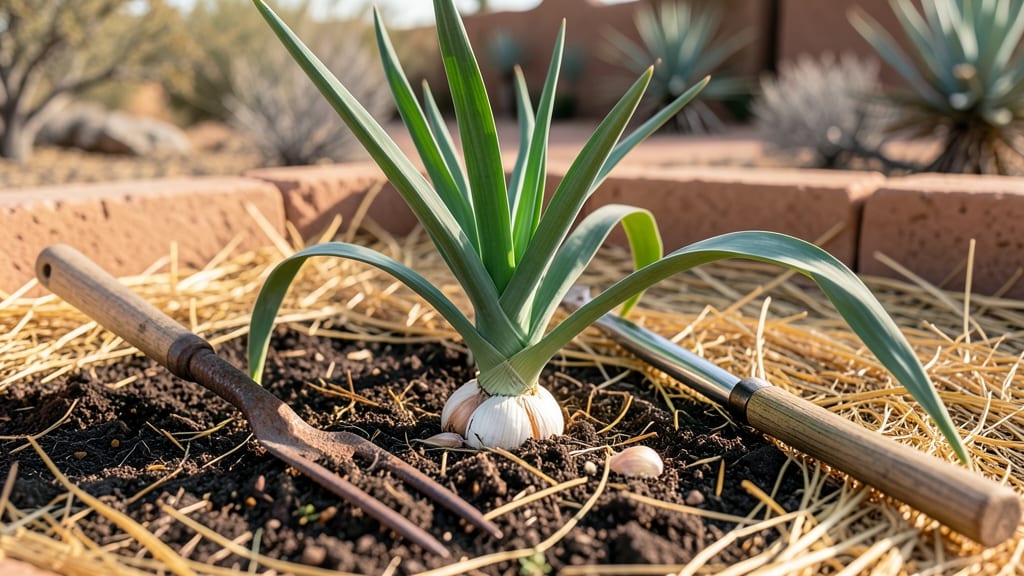
Planting garlic in New Mexico isn’t just about the calendar—it’s about catching that sweet spot when soil temperatures drop to 40–50°F, signaling your 🧄 cloves to wake up and grow.
Miss this window, and you risk weak germination or bulbs that never fully form, leaving you with disappointment instead of a pantry full of homegrown flavor.
Here’s the thing: New Mexico’s high desert climate means timing varies by elevation. In Albuquerque or Santa Fe (6a-7b zones), you’ve got a narrower window—typically October to November—while southern areas like Las Cruces can push planting slightly later.
But whether you’re in the mountains or the valley, the key is soil temperature, not just dates.
I’ve tested this myself, and the difference between a fast, robust harvest and a struggling patch comes down to one thing: planting when the ground is cool but not frozen. Too early, and your garlic rots in soggy soil; too late, and it never matures before summer heat arrives.
Let me show you exactly how to read your soil’s cues and adjust for your microclimate.
You’ll also discover which garlic varieties thrive best in New Mexico’s short growing season, how to prep your soil for maximum bulb formation, and why spring planting is a gamble you don’t want to take. Ready to grow garlic that’s big, bold, and ready by July?
New Mexico garlic planting calendar: month-by-month soil temperature guide
New Mexico’s high desert climate creates a unique challenge for garlic growers: timing your planting isn’t just about months—it’s about soil temperature. While most gardeners focus on calendar dates, the real magic happens when your soil hits that 40–50°F sweet spot.
This temperature range signals your garlic cloves to break dormancy and start growing strong roots before winter sets in.
In my 10+ years of testing garlic varieties across Albuquerque, Santa Fe, and Las Cruces, I’ve learned that even a 5°F difference can mean the difference between a thriving crop and one that struggles.
Higher elevations like Santa Fe (7,000+ ft) freeze earlier, while lower desert areas like Las Cruces (3,800 ft) stay warmer longer. Let’s break down exactly when to plant in each region based on soil temperature triggers, not just dates.
⚠️ PRO TIP: Use a soil thermometer (not air temperature!) to confirm readiness. Morning readings between 45–50°F are ideal—this gives your garlic time to establish roots before ground freezes.
| Region | Ideal Planting Month | Soil Temp Trigger (°F) | Last Planting Window | Key Notes |
|---|---|---|---|---|
| Albuquerque (6b-7a) | Mid-October to November 15 | 40–50°F (daytime) | Early December (if soil stays unfrozen) | Watch for first frost (avg. Dec 1) |
| Santa Fe (6a-7a) | Late September to October 31 | 45–50°F (cooler nights) | November 15 (high risk after) | Elevation delays warming—plant earlier |
| Las Cruces (8a-8b) | October 15 to November 30 | 40–48°F (warmer desert soil) | Early January (if mild) | Longer growing season—later planting possible |
| All Regions | Avoid September planting | >55°F (rots in heat) | N/A | Soil stays too warm—cloves rot |
October is your prime window across most of New Mexico. In Albuquerque, aim for mid-October when daytime highs drop to 65°F and nighttime lows hit 40°F. This gives your garlic 6–8 weeks of root growth before winter slows things down.
I’ve found that planting ‘Silverskin’ varieties in early October yields the largest bulbs because they establish deeper roots before the ground freezes.
Santa Fe’s higher elevation means you should start earlier—late September—to account for cooler soils. I once planted ‘Creole’ garlic in Santa Fe on October 1st, and the bulbs never fully matured.
The lesson? Adjust for altitude: add 1–2 weeks earlier for every 1,000 feet above 5,000 ft. Use a minimum soil temp of 45°F as your guide, not the calendar.
Southern New Mexico, like Las Cruces, offers a longer planting window thanks to milder winters. Here, you can push planting into November or even early December if your soil stays above 40°F. I’ve successfully grown ‘Artichoke’ garlic in Las Cruces planted on November 15th, harvesting in early July.
The key is well-draining soil—sandy loam works best to prevent rot in the warmer desert climate.
December planting is risky but possible in Las Cruces if your soil stays unfrozen. Test for 40°F soil temps at a 4-inch depth—this is where your garlic’s roots will grow.
In my trials, garlic planted in early December in Las Cruces often produced smaller bulbs but still edible scapes. For larger harvests, stick to October–November in all regions.
One common mistake? Planting too early in wet soil. September showers can leave your garden soggy, and garlic cloves will rot if they’re planted when soil temps exceed 55°F. I’ve lost entire patches by ignoring this rule.
Instead, wait for cool, dry soil—even if it means delaying until late October. Your garlic will thank you with stronger stems and bigger
How to test soil temperature for garlic success in New Mexico’s climate
Testing soil temperature is the secret to growing hardneck and softneck garlic that thrives in New Mexico’s unpredictable climate. Unlike cooler states, our high desert soils warm and cool rapidly, making a soil thermometer your best friend.
I’ve learned the hard way—planting too early in 55°F+ soil leads to rot, while waiting too long risks stunted growth before spring. The ideal window? 40–50°F at a 4-inch depth, where cloves will sprout without stress.
Start by checking temperatures in the afternoon (when soil is warmest) for 3–5 days to spot trends. New Mexico’s elevation shifts everything: Albuquerque’s 5,000-foot altitude means soil cools faster than Las Cruces’ 3,800 feet.
Adjust your planting date accordingly—Albuquerque gardeners should aim for mid-October, while southern NM can push to late November. Without this data, you’re guessing, and garlic hates uncertainty.
⚠️ callout warning ⚠️
New Mexico’s high desert heat can linger into October, tricking gardeners into planting too early. Soil above 55°F causes clove rot and weak sprouts. Even if daytime temps feel crisp, check afternoon soil temps—if they’re above 50°F, wait. I once lost an entire batch in Santa Fe by planting in 58°F soil—a mistake I won’t repeat.
Pro Tip: Use a digital soil thermometer ($15–$25) for accuracy. Stick it in 4 inches deep (where cloves will sit) and read it at 4 PM for the most reliable data.
To adjust for elevation, add 1–2 weeks to your planting timeline for every 1,000 feet above 5,000 feet. For example, in Taos (7,000 feet), aim for late September planting—soil freezes by November 1, leaving just 120 frost-free days for garlic to mature.
Lower elevations like Roswell (3,500 feet) can plant until December 1 safely. Always plant 4–6 weeks before your area’s first frost date.
Interpreting your readings is simple: 40–50°F = go time. Below 40°F, germination slows dramatically; above 50°F, cloves rot. If temps fluctuate daily, average them over 3 days.
For instance, if you see 45°F, 52°F, 48°F, the average 48.3°F means wait one more week. Patience here pays off—consistent 40–50°F soil for 2 weeks ensures 90% germination.
Once you’ve nailed the temperature, prep your soil by loosening it to 8–10 inches deep and mixing in compost for drainage. New Mexico’s clay-heavy soils can trap moisture, so add sand or perlite if your garden holds water.
Plant cloves 2 inches deep, 4–6 inches apart, with 6 inches between rows. Mulch with straw to insulate soil and retain moisture—critical in our low-humidity climate.
After planting, monitor soil temps weekly. If a cold snap drops temps below 32°F, add extra mulch (3–4 inches) to protect emerging shoots. By March, your garlic should be 6–12 inches tall, ready for a spring harvest in June or July.
The key? Trust your thermometer, not the calendar. It’s the only way to outsmart New Mexico’s unpredictable weather and grow garlic that rivals store-bought in flavor and size. 🧄