
Plants
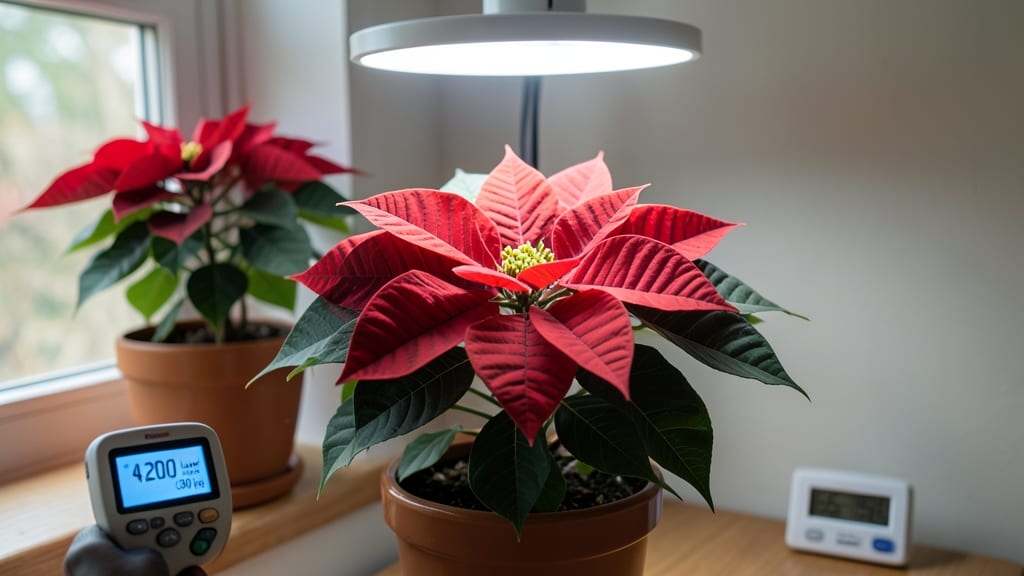
To keep your 🎄 poinsettia thriving with those signature red bracts, you might be surprised by how much light this plant needs—too much or too little can turn your holiday star into a sad, leggy shadow.
Most gardeners assume these plants love bright sun, but direct rays can actually scorch those delicate leaves. The key is finding that sweet spot of bright indirect light for at least 6 hours daily, which mimics their natural understory habitat.
I’ve seen firsthand how a simple window adjustment can transform a struggling poinsettia into a showstopper. Whether you’re dealing with a south-facing glare or dim corner, I’ll show you exactly where to place it—and what to do when your plant starts sending you SOS signals.
From east-facing windows to grow light setups, you’ll discover the easiest ways to give your poinsettia the perfect light bath, no green thumb required. Let’s make sure your plant stays as vibrant as the season it celebrates.

Ideal light requirements for poinsettia growth and blooming
Poinsettias thrive under bright indirect light, but too much or too little can ruin their showstopping bracts. Unlike sun-loving succulents, these tropical plants need gentle light to prevent leaf scorch and leggy growth.
Understanding their light needs is key to year-round success—especially during the critical fall blooming phase when daylight shortens.
The golden rule? Place your poinsettia within 2-3 feet of an east or west-facing window. South-facing windows work too, but only if you filter the light with sheer curtains.
North-facing windows are too dim and will stretch your plant out, weakening its structure. Think of it like mimicking their natural understory habitat in Central America.
| Light Requirement | Specification | Best Practices |
|---|---|---|
| Daily Light Duration | 6-8 hours | Use east/west windows or grow lights |
| Light Intensity | Bright indirect (70% sunlight) | Sheer curtains for south windows |
| Direct Sun Exposure | 0 hours (dangerous) | Move away from west windows by noon |
| Seasonal Adjustments | Fall: 12+ hours dark | Cover plant at 5 PM for blooming |
| Winter Care | 6+ hours bright light | Rotate plant weekly for even growth |
Direct sunlight is the silent killer of poinsettias. Even 1 hour of midday sun can cause leaf burn, turning vibrant bracts into crispy brown edges.
I once had a Christmas Eve disaster when I forgot to move my plant from the south window—my beautiful red bracts turned into a sad, sun-bleached mess. The fix? Rotate your plant quarter-turn daily to ensure even light exposure and prevent lopsided growth.
For fall blooming success, poinsettias need 12+ hours of darkness starting in October. This isn't about light deprivation—it's about mimicking their natural short-day photoperiod. Cover your plant with a black plastic bag or move it to a closet from 5 PM to 8 AM for 6-8 weeks before Thanksgiving.
Skip this step, and you'll get fewer, smaller blooms—or none at all.
In winter, when natural light dims, supplement with a grow light if your home lacks bright windows. LED bulbs (6400K color temperature) work best—place them 6-12 inches above the plant for 12-14 hours daily.
I use a simple $20 clip-on bulb near my kitchen window, and it keeps my poinsettia thriving through January. Pro tip: Avoid incandescent bulbs—they generate too much heat and can stress the plant.
Watch for leggy growth, a classic sign of insufficient light. When stems stretch toward the window, your poinsettia is starving for brightness. Prune back the leggy stems to encourage bushier growth, then move the plant closer to a light source.
If you're in a low-light apartment, consider a dwarf variety like 'Winter Rose'—they tolerate 4-6 hours of light better than standard types.
Ever wondered why store-bought poinsettias look perfect but yours doesn't? Commercial growers use artificial light cycles and precise temperature control. You can replicate this at home with a timer-controlled grow light and a thermostat set to 65-70°F.
For most gardeners, though, a sunny windowsill and consistent care will yield stunning results without the high-tech setup.
Remember: Poinsettias are light-sensitive, not light-hungry. Think of them like a shade-loving orchid—they need bright conditions but will suffer in harsh sunlight. With the right light balance, your poinsettia will reward you with vibrant bracts and lush foliage for months. 🎄
Signs your poinsettia isn’t getting enough (or too much) light
Your poinsettia might be silently screaming for help if its light conditions are off. Too little light leads to weak growth, while too much causes leaf scorch. Watch for these visual cues that reveal your plant’s true needs.
First, check the leaves. If they’re turning yellow or pale, your poinsettia isn’t getting enough bright indirect light. This is a classic sign of light deficiency, where the plant stretches toward any available light, creating long, leggy stems.
⚠️ callout warning ⚠️
Poinsettias thrive with 6+ hours of bright indirect light daily. Too little light causes pale leaves and weak stems, while direct sunlight burns leaves, creating brown patches. Place your plant 2-3 feet from an east or west-facing window for ideal conditions.
💡 Pro Tip: Rotate your plant quarter-turn weekly to ensure even growth and prevent lopsided development.
On the flip side, brown or crispy leaf edges signal too much direct sunlight. These sunburnt spots appear as dry, papery patches and often start on leaves facing the window. If ignored, the damage spreads, weakening the entire plant.
Another red flag is bud failure. If your poinsettia isn’t producing its signature colorful bracts, it’s likely due to inconsistent light exposure. Poinsettias need 12-14 hours of darkness daily for 6-8 weeks to trigger blooming. Without proper light, buds simply won’t form.
For stunted growth, the issue is usually low light combined with overwatering. The plant’s roots struggle to absorb nutrients, leading to slow development. Move your poinsettia to a brighter spot and let the top inch of soil dry out between waterings to encourage healthier growth.
Fix these issues by adjusting your plant’s location or supplementing with a grow light. With the right balance of bright indirect light, your poinsettia will reward you with vibrant bracts and lush foliage all season long. 🎄