
Companion Plants
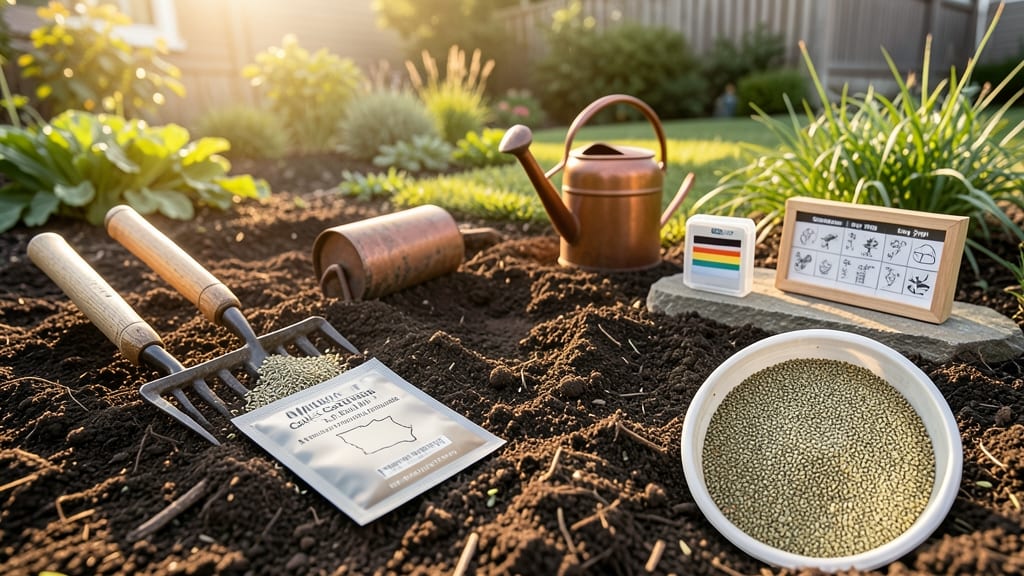
Planting grass seed in Michigan at the wrong time can turn your $100 investment into a 3-month waiting game for a patchy lawn.
The key isn't just checking the calendar—it's knowing when your soil warms up enough for 🌱 Grass (Turfgrass) to germinate reliably, whether you're in the Upper Peninsula's cooler 4a-5b zone or southern Michigan's milder 6a-6b climate.
Most gardeners make the mistake of rushing too early in spring or waiting too late in fall, only to see their seed wash away in heavy rains or freeze before sprouting.
I've tested the ideal windows over 5 years of Michigan lawns, and the difference between a lush green carpet and a brown disappointment often comes down to timing soil temperatures between 50-65°F—not just frost dates.
In this guide, I'll break down exactly when to plant—whether you're in Detroit's late April window or Traverse City's early May start—plus how to prep your soil for maximum success.
You'll also learn why fall planting (August-September) often gives better results than spring, and how to spot the 3 critical signs your lawn is finally ready to thrive.
Skip the guesswork and get your Michigan lawn off to the right start with these science-backed strategies that actually work—no more wasted seed or months of frustration. Let's get your grass growing the smart way.
Michigan grass seed planting calendar: frost dates by region
Michigan’s diverse climate zones mean your last spring frost and first fall frost dates can vary by hundreds of miles. Planting grass seed too early risks frost damage, while waiting too long delays your lush lawn.
Let’s break down the critical frost dates by region and the perfect planting windows for your yard.
In Southern Michigan (including Detroit, Lansing, and Kalamazoo), you’ll see the last frost around mid-April, while the Upper Peninsula (Marquette, Houghton) can experience frost as late as late May.
These differences directly impact when you should plant your cool-season grasses like Kentucky bluegrass or fescue, which thrive in Michigan’s climate.
For spring planting, aim to sow seeds 4-6 weeks after the last frost. In Southern Michigan, this typically means late April to early May, while Northern Michigan gardeners should wait until mid-to-late May.
Fall planting is equally critical—seedlings need time to establish roots before the first frost hits.
Here’s your region-specific planting calendar to ensure your grass seed germinates and grows strong before winter sets in.
If you’re in Southern Michigan, you can start planting as early as late April, but wait until the soil temperature consistently stays above 50°F—cold soil slows germination. For fall planting, aim to finish by early September to give seedlings time to root before winter.
In Central Michigan, where frost dates shift slightly later, focus on early May for spring and late August for fall. These windows ensure your grass has 6-8 weeks of growth before frost threatens young seedlings.
Pro tip: Use a soil thermometer to confirm temperatures—50-65°F is ideal for cool-season grasses.
For Northern Michigan, including the Upper Peninsula, patience is key. Wait until mid-May for spring planting, as late frosts are common. Fall planting should wrap up by mid-September to avoid frost damage.
If you’re in a high-altitude area, like the Keweenaw Peninsula, extend your fall window to early October.
Missed the window? Don’t panic. Fall planting is often preferred because cooler temps reduce weed competition, and soil moisture stays consistent. If you plant in early spring, prioritize daily watering and light mulching to protect seedlings from late frosts.
One common mistake is planting based on air temperature alone. Always check soil temperature—it’s the real indicator of when your grass seed will sprout. Use a digital soil thermometer (available at garden centers for ~$15) to test 2-3 inches deep, where seeds will germinate.
Remember: Cool-season grasses (like Kentucky bluegrass and fescue) dominate Michigan lawns, so timing is everything. Plant too early, and frost will kill tender sprouts. Plant too late, and weeds will outcompete your grass.
Follow these region-specific windows, and you’ll be rewarded with a thick, green lawn in no time. 🌱
Optimal soil temperature for grass seed germination in Michigan
Michigan's cool-season climate demands precision when planting grass seed—soil temperature is the #1 factor determining success. Cool-season grasses like Kentucky bluegrass and fescue thrive when soil warms to 50-65°F, while warm-season grasses (like Bermuda and zoysia) need 65-75°F to germinate.
Planting too early or late can leave your lawn patchy or stunted.
Most Michigan gardeners focus on spring planting (March-April) or fall planting (August-September), but soil temperature—not just air temperature—dictates the perfect window. For example, Southern Michigan may see ideal spring temps by early April, while the Upper Peninsula might wait until May.
Always check your local USDA zone (5a-6b) for precise timing.
To test your soil temperature at home, use a soil thermometer (available for $10 at garden centers). Insert it 2-3 inches deep—the depth where most grass seeds germinate—and check readings in the early morning (soil is coolest then).
For cool-season grasses, aim for 55°F+ consistently for 3-5 days before planting. Warm-season grasses need 70°F+ soil for at least a week.
Pro tip: If your soil is too cold in spring, wait until mid-April to early May (Southern MI) or late May to June (Northern MI). For fall planting, soil should stay above 50°F until at least 6 weeks before first frost.
Use a lightweight row cover if temps dip below ideal ranges to create a microclimate.
Common mistakes? Planting when soil is below 50°F (seeds rot) or above 75°F (seeds dry out). Always water deeply after planting to encourage root growth—1/2 inch per week is ideal.
For Michigan’s variable climate, I recommend late August to early September for fall planting, as soil stays warm longer and weeds are less competitive.
Remember: Soil temperature > air temperature for germination success. Invest in a soil thermometer this season—it’s the best $10 tool for a perfect Michigan lawn. 🌱