
Plants
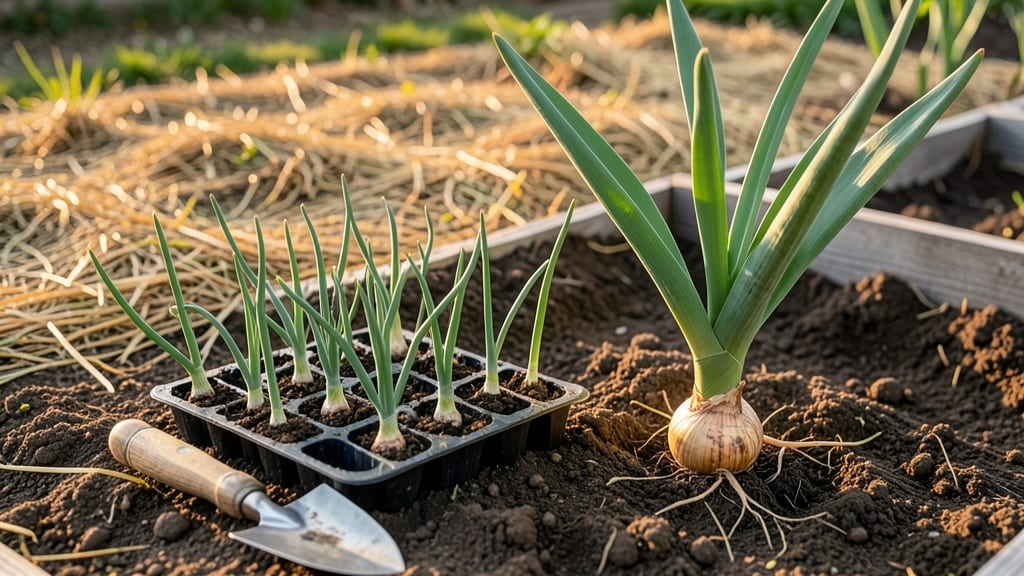
Planting onions in Georgia at the wrong time can mean the difference between a bountiful harvest and a sad, withered 🧅 pile. The key isn't just about when to plant—it's about syncing your calendar with Georgia's 7b-8b climate, where warm winters and unpredictable frosts demand precision.
Most gardeners in the Peach State get it wrong by focusing only on spring planting, but fall is actually the sweet spot for many varieties.
I’ve learned that September and October offer the perfect window to get onions established before winter sets in—avoiding both the heat of summer and the chill of early frost.
Why does timing matter so much? Onions are sensitive to temperature shifts, and planting too early can trigger bolting (flowering instead of bulb formation), while waiting too long risks frost damage.
I’ll show you exactly how to read Georgia’s frost-free window and adjust for your specific zone—whether you’re in the Piedmont or along the coast.
Ready to grow onions that rival the ones at your local farmers' market? Let’s break down the exact months to plant, soil prep secrets, and variety choices that thrive in Georgia’s heat and humidity—so you can enjoy homegrown onions from spring through fall.
Georgia’s ideal onion planting window by month (frost-free guide)
Georgia’s mild winters and extended growing season create perfect conditions for onions, but precise timing prevents bolting or frost damage. Unlike northern states, Georgia’s USDA Zones 7b-8b allow both fall and spring planting opportunities.
The key is understanding your last frost date (typically mid-March) and first frost (mid-November) to align with onion varieties that thrive in Georgia’s climate.
Onions in Georgia fall into three categories: short-day (best for fall planting), intermediate-day (versatile for both seasons), and long-day (ideal for spring). Each requires different timing to avoid premature flowering.
For example, short-day varieties like ‘Texas Early White’ need cooler fall temperatures to form bulbs, while long-day onions like ‘Sweet Sandwich’ require Georgia’s longer daylight hours of spring.
Here’s how to match your planting schedule to Georgia’s climate zones and onion types for maximum success:
| Planting Window | Best Months | Onion Type | Soil Temp | Key Notes |
|---|---|---|---|---|
| Fall Planting | September-October | Short-day | 50-60°F | Harvest before first frost (Nov). Best for storage onions. |
| Fall Planting | Late October | Intermediate | 55-65°F | Use mulch to protect from early frosts. Harvest in Dec-Jan. |
| Spring Planting | February-March | Long-day | 45-55°F | Plant 6-8 weeks before last frost. Best for fresh eating. |
| Spring Planting | March-April | Intermediate | 50-60°F | Flexible timing. Harvest May-June for peak flavor. |
| Late Spring | April-May | Short-day | 60-70°F | Risk of bolting. Best for green onions or scallions. |
For fall planting, aim to get onions in the ground by late September in northern Georgia or early October in southern regions. This gives bulbs enough time to mature before first frost while taking advantage of cooler temperatures that prevent bolting.
Use short-day varieties like ‘Candy’ or ‘Texas Early White’ for storage onions that keep well through winter.
Spring planting offers a second chance for gardeners who missed the fall window. Start in February for long-day onions like ‘Sweet Sandwich’ or ‘Yellow Granex’, which need Georgia’s increasing daylight to form bulbs.
For intermediate varieties, wait until March when soil temperatures consistently stay above 50°F. This timing ensures bulbs develop before Georgia’s summer heat causes stress.
Adjust your schedule if you experience early or late frosts. In Zone 7b (northern Georgia), use row covers to extend fall planting into early November.
For Zone 8b (southern Georgia), you can plant short-day onions as late as mid-October without frost concerns. Always check your local Almanac frost dates for precise adjustments.
Pro tip: Plant green onions or scallions in late spring or summer (May-July) for continuous harvests. These varieties tolerate Georgia’s heat better and can be harvested multiple times by cutting leaves just above the soil line. They’re perfect for adding to salads or garnishing dishes year-round.
Remember that soil temperature matters just as much as air temperature. Onions need soil that’s at least 50°F to germinate properly. Use a soil thermometer to verify conditions before planting. If soil is too cold, wait until temperatures stabilize to avoid slow growth or rot.
Once you’ve planted, maintain consistent moisture (about 1 inch per week) and mulch heavily to keep soil temperatures stable. In Georgia’s heat, mulch also helps prevent weeds that compete with your onions for nutrients. With the right timing and care, you’ll enjoy homegrown onions from fall through spring!
How to prepare Georgia soil for onion planting (step-by-step)
Georgia’s clay-heavy or sandy soils can make or break your onion harvest. Onions thrive in loose, fertile soil with a pH between 6.0 and 7.0, but Georgia’s native soils often need amendments to meet these standards.
Without proper prep, you risk poor bulb formation, disease susceptibility, or even total crop failure. Let’s fix that with a step-by-step soil prep guide tailored to Georgia’s unique conditions.
First, test your soil’s pH and drainage using a simple kit from your local cooperative extension office. Onions are pH-sensitive, and Georgia’s acidic soils (common in the Piedmont) can stunt growth. If your soil tests below 6.0, you’ll need to raise the pH with lime.
For sandy soils in coastal areas, focus on improving water retention with organic matter. Don’t skip this step—healthy soil equals healthy onions.
-
Step 1: Test Soil pH
Use a test kit to check pH. Aim for 6.0–7.0. Adjust with pelletized lime if too acidic. -
Step 2: Improve Drainage
Amend clay soils with compost or sand. For sandy soils, add peat moss or aged compost. -
Step 3: Add Organic Matter
Mix in 3–4 inches of compost or well-rotted manure 4–6 weeks before planting. -
Step 4: Rotate Crops
Avoid planting onions where alliums (garlic, leeks) grew last year to prevent soil-borne diseases. -
Step 5: Choose Companion Plants
Plant carrots, lettuce, or tomatoes nearby to deter pests like onion flies.
Once your soil is amended, focus on disease prevention. Georgia’s humid climate fosters purple blotch and downy mildew, two common onion diseases.
To combat these, apply a copper fungicide at planting and again 4–6 weeks later. Crop rotation is your best defense—avoid planting onions in the same spot for 3+ years.
If you’re reusing a bed, solarize the soil in late summer by covering it with clear plastic for 4–6 weeks to kill pathogens.
For extra insurance, plant onion sets (young bulbs) instead of seeds. Sets are less susceptible to soil-borne diseases and mature faster, giving you a head start in Georgia’s short cool-season window.
Space them 4–6 inches apart in rows 12–18 inches apart to allow for airflow and reduce humidity around the plants. Mulch with straw after planting to retain moisture and suppress weeds—both critical in Georgia’s hot, dry summers.
Finally, don’t overlook fertilizer timing. Onions need balanced nutrition but hate excess nitrogen, which causes leafy growth at the expense of bulbs. Use a low-nitrogen fertilizer (5-10-10) at planting, then side-dress with compost tea every 4–6 weeks.
In Georgia’s fall-planted crops, apply a final feeding in early September to boost bulb development before winter. With these steps, your soil will be onion-ready and set for a bountiful harvest.
Your onions will thank you with plump, sweet bulbs instead of scraggly greens. Happy planting! 🌱