
Plants
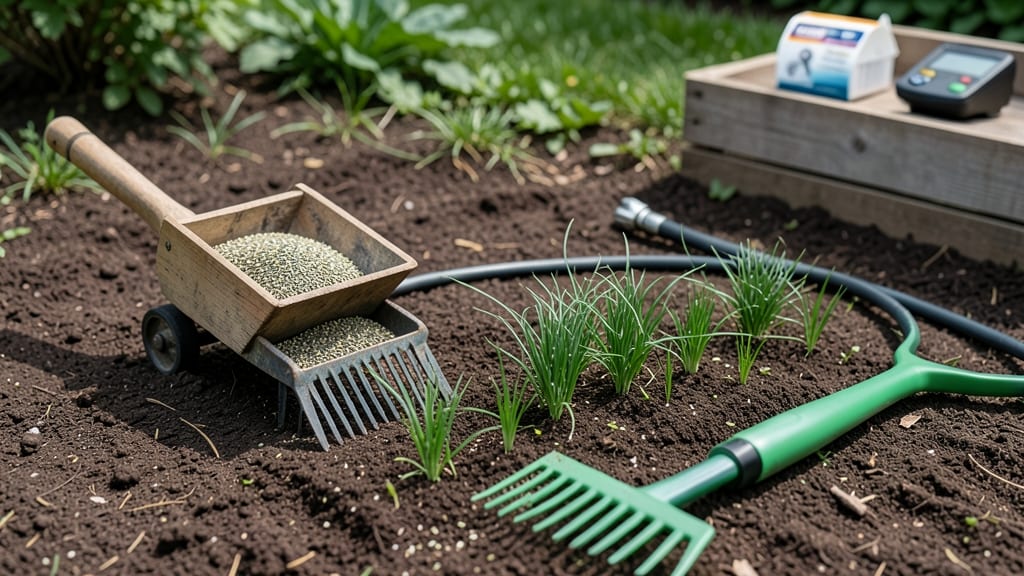
Planting grass seed in Iowa at the wrong time can turn your dream of a lush lawn into a frustrating gamble—especially when unpredictable frost or soil temperatures throw off your timing.
The best time to plant isn’t just about avoiding frost; it’s about catching that sweet spot when the ground is warm enough (50-65°F) but still has enough moisture to help those tiny seeds take root.
Iowa’s USDA Zone 5a-5b climate means you’ve got two prime windows: early spring (March-April) or early fall (September-October). But here’s the catch—planting too early risks frost damage, while waiting too late can leave your lawn vulnerable to summer heat stress.
Let me break down the exact conditions and steps to ensure your grass seed 🌱 thrives, no matter which season you choose.
Whether you’re tackling a bare patch or seeding an entire yard, the key is preparation. We’ll cover soil testing, frost-free rules, and how to adjust for Iowa’s clay-heavy dirt.
Skip the guesswork and learn the proven methods that actually work for Iowa gardeners—so you can enjoy that green carpet sooner than you think.
Ready to transform your lawn? Let’s dive into the timing secrets that’ll have your grass seed sprouting strong, no matter if you’re in Des Moines or the northern 5a zones. Your future lawn is waiting.
Iowa’s ideal grass planting window: soil temperature & frost-free rules
Iowa’s USDA Zones 4-5 create unique challenges for grass seed planting—getting the timing wrong can mean wasted seed and patchy lawns. Unlike warmer climates, Iowa’s cold snaps and clay-heavy soil demand precision.
The sweet spot? When soil temps hit 50-65°F and frost risk drops below 20%. This window ensures strong root establishment before summer heat or winter freeze sets in.
Most gardeners focus on spring planting, but early fall (September-October) often yields better results in Iowa. Why? Cooler temps reduce weed competition, and 6-8 weeks of growth before frost lets roots anchor deeply.
However, northern Iowa (Zone 4) has stricter deadlines than southern Iowa (Zone 5)—we’ll break down the exact dates you need.
Iowa’s frost-free window typically runs from mid-April to mid-October, but soil temperature is the real game-changer. Grass seed needs consistent warmth to germinate—cold, damp soil in early spring can smother seeds before they sprout. Use a soil thermometer (not air temp!) to confirm readiness. Aim for 55°F+ at 4-inch depth for spring planting.
| Planting Window | Soil Temp Requirement | Frost Risk | Iowa-Specific Notes |
|---|---|---|---|
| Early Spring (March-April) | 50-65°F (4-inch depth) | Low (<20% chance) | Northern Iowa: Wait until after April 15. Southern Iowa: Safe by mid-March. |
| Early Fall (September-October) | 55-65°F (4-inch depth) | Moderate (<30% chance) | Plant 6-8 weeks before first frost (typically by October 1). |
| Avoid Late Spring/Summer | Above 75°F | None | High weed competition and drought stress reduce success rates. |
| Soil Prep Timing | 40-50°F (for tilling) | N/A | Prepare soil 2-4 weeks before planting to allow settling. |
Iowa’s clay soil stays cold longer than sandy soils in other regions. A 2020 Iowa State University study found that northern Iowa soils (Zone 4) often need 2-3 extra weeks of warming compared to southern Iowa (Zone 5).
For example, Des Moines (Zone 5b) can plant by March 20, while Duluth (Zone 4a) should wait until after April 10.
Fall planting in Iowa has a higher success rate than spring for two key reasons: cooler temps reduce water evaporation, and fewer weeds compete with young grass. However, timing is critical.
Seed needs 4-6 weeks to establish roots before frost. In northern Iowa, aim for late August to mid-September; in southern Iowa, early September to October 1 works best.
One common mistake Iowa gardeners make is planting too early in spring when soil is still damp and cold. Seeds can rot before germinating if temps stay below 50°F. Always check with a soil thermometer—air temperature is a poor indicator.
For fall planting, late September is often too late in Zone 4 because frost can arrive by October 15.
Iowa’s microclimates also play a role. Urban areas like Cedar Rapids may warm up 1-2 weeks earlier than rural farms due to heat island effect.
If you’re unsure, test a small patch of soil in a sunny spot—if it’s warm enough for your hand to stay comfortable for 5 seconds at 4-inch depth, it’s likely ready. Pair this with local frost date data from the National Weather Service.
For cool-season grasses (like Kentucky bluegrass and tall fescue, Iowa’s top choices), late summer/early fall is ideal because these grasses enter dormancy as temps drop. Planting in September gives them time to develop deep roots before winter.
In contrast, warm-season grasses (like Bermuda) aren’t suitable for Iowa’s climate and won’t thrive in USDA Zones 4-5.
Pro tip: Use a seed starter fertilizer (high in phosphorus) when planting in fall to boost root growth before dormancy. In spring, a light nitrogen feed after germination helps green-up faster.
Always water deeply after planting—Iowa’s clay soil can dry out quickly in spring winds or summer heat, even if it feels moist.
Remember, Iowa’s
Step-by-step guide: preparing Iowa soil & planting grass seed like a pro
Iowa’s clay-heavy soils and variable climate demand special attention when planting grass seed. The key to success lies in proper soil prep and understanding how northern vs. southern Iowa microclimates affect timing. Let’s break down the steps to transform your patchy lawn into a lush carpet of green.
First, you’ll need to test your soil’s pH—ideal levels for grass range between 6.0 and 7.0. Iowa’s natural clay tends to compact easily, so aeration and tilling are non-negotiable.
Don’t skip this step, or your seed will struggle to establish roots in dense soil. Once you’ve prepped the ground, timing becomes critical for germination success.
- Step 1: Test soil pH (aim for 6.0-7.0) using a home test kit or send a sample to Iowa State University Extension for professional analysis.
- Step 2: Adjust pH if needed—add lime for acidic soil or sulfur for alkaline. Wait 2-4 weeks before planting to let amendments work.
- Step 3: Till the soil to a depth of 3-4 inches to break up clay compaction. Use a rototiller for large areas or a hand cultivator for small patches.
- Step 4: Rake the area to create a fine, level seedbed. Remove rocks and debris larger than 1/4 inch to prevent seed displacement.
- Step 5: Apply starter fertilizer (high in phosphorus) at 1/2 lb per 1,000 sq ft. This promotes root development during germination.
- Step 6: Plant seed using a broadcast spreader for even distribution. Aim for 8-12 lbs per 1,000 sq ft for cool-season grasses like Kentucky bluegrass or tall fescue.
- Step 7: Lightly rake to press seed into soil (1/4 inch deep max) and water immediately with a fine mist to avoid washing seed away.
- Step 8: Maintain moisture—keep soil consistently damp (not soggy) for 3-4 weeks or until germination occurs. Water early morning to reduce evaporation.
For northern Iowa (USDA Zone 4a), focus on early May planting when soil temperatures consistently reach 55°F. Southern Iowa (Zone 5b) can start 2-3 weeks earlier in late April.
Always check the Iowa State Climate Summary for local frost dates—planting too early risks seed washout from spring rains, while late planting may lead to weak fall establishment.
After planting, avoid heavy foot traffic for at least 4-6 weeks to prevent seed displacement. Use a lightweight straw mulch (not hay) to retain moisture and protect new seedlings from bird damage.
Mow only when grass reaches 3-4 inches tall, using a sharp blade set to 3 inches to encourage deep root growth.
Remember, Iowa’s clay soil holds moisture well, but it can also become waterlogged. If your lawn sits in a low spot, consider amending with compost to improve drainage. With these steps, you’ll be well on your way to a thick, resilient lawn that thrives in Iowa’s challenging conditions. 🌱