
Plants
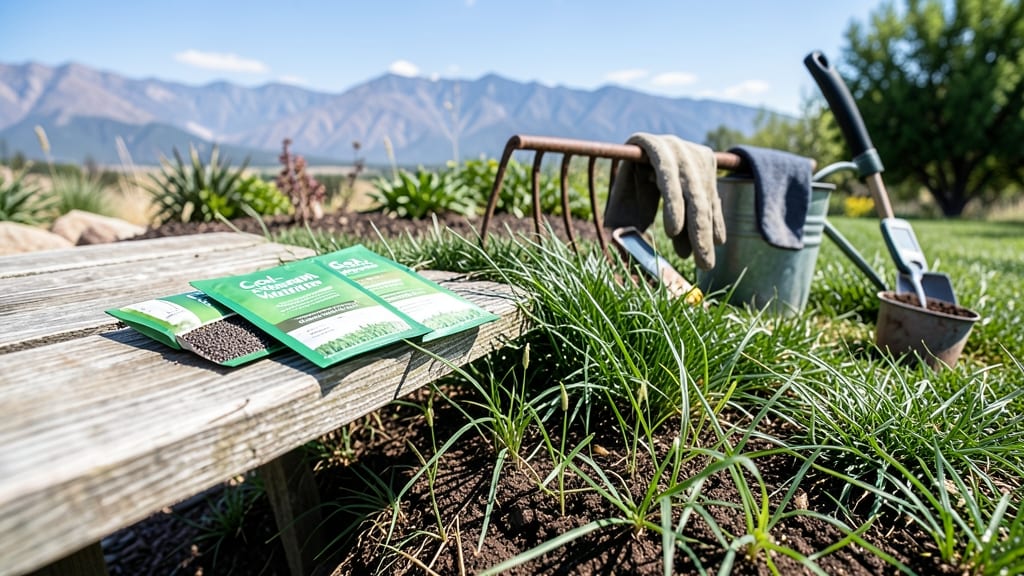
Timing your grass seed planting in Utah could mean the difference between a lush, green lawn and months of frustration. The best time to plant grass seed in Utah isn't just about the calendar—it's about avoiding those sudden spring frosts or scorching summer heat that can derail your efforts.
If you've ever watched your new grass seeds wash away or wither under Utah's unpredictable weather, you know how critical getting it right can be. The key is planting when soil temperatures are just right—between 50°F and 65°F—and choosing the right window to outsmart Mother Nature's surprises.
Most Utah gardeners swear by early spring (March to April) or late summer to early fall (September to October) as the ideal seasons for planting.
But here's the catch: your exact timing depends on whether you're in the Wasatch Front or a high-desert area, where microclimates can shift planting windows by weeks.
I've put together a step-by-step guide to help you pinpoint the perfect moment for your Utah lawn, including soil prep tips and post-planting care that actually works. Let's make sure your grass seed gets the best possible start—no more guesswork, just green success.
Utah’s ideal grass planting window: soil temperature & frost-free dates
Timing is everything when planting grass seed in Utah, where spring frosts can linger into May and summer heat dries out soil quickly. The best windows are early spring (March-April) or late summer (September-October), when soil temperatures stay between 50-65°F—perfect for germination.
Missing these windows risks weak growth or total failure.
Utah’s diverse elevation zones (4,000–10,000 ft) complicate timing. Higher elevations (like Park City) have later frost dates, while desert areas (like St. George) may see earlier spring warmth.
Always check your local frost-free date—most Utahans plant 4-6 weeks before the first frost for fall success or after the last frost in spring.
Soil temperature is your best guide. Use a soil thermometer ($10-$15) to confirm 50°F+ at 4-inch depth. In Utah, this typically aligns with late April to early May in valleys and May to June in mountains. Cool-season grasses (like Tall Fescue) germinate faster in 55-65°F soil, while warm-season types (like Buffalo Grass) need 65-75°F.
Don’t rely solely on calendar dates—microclimates matter. A south-facing slope warms 2-3 weeks earlier than a north-facing yard. Shady spots stay cooler longer. For precision, track your area’s 30-year frost averages via the Utah Climate Center or Almanac tools.
Pro tip: Plant cool-season grasses in September to avoid summer drought stress.
USDA Zone adjustments are critical in Utah. Zone 5 (northern Utah) has longer frost seasons (plant by May 15), while Zone 8 (southern Utah) can plant as early as March 1. Check your zone with the USDA Plant Hardiness Map and add 1-2 weeks to frost dates for high-elevation areas.
Elevation impacts can shift planting by 30+ days. For example:
- Salt Lake City (4,200 ft): Plant April 15-May 15
- Park City (6,800 ft): Plant May 15-June 15
- St. George (2,800 ft): Plant March 1-April 15
For spring planting, aim for March-April when soil warms to 55°F+. In Utah’s high-desert regions, this may mean waiting until late April to avoid late frosts. Monitor 7-day forecasts—if nights dip below 40°F, delay planting or use frost blankets for the first 2 weeks.
Fall planting (September-October) offers cooler temps and fewer weeds, but act fast. Seed must germinate before first frost (Oct 15 in most zones). In Zone 5, plant by September 15; in Zone 8, you have until October 15.
Use a seed germination calculator to estimate your local window.
Pro tip: Test your soil’s moisture retention before planting. Utah’s clay soils (common in valleys) dry out 3x faster than loamy soils. Amend with compost or peat moss to improve water retention. After sowing, keep soil consistently moist (not soggy) for 3-4 weeks—this is critical for even germination
How to prepare your Utah lawn for grass seed success
Preparing your Utah lawn for grass seed requires attention to soil conditions, weather patterns, and local microclimates. Utah’s high desert and mountainous regions create unique challenges, like rapid temperature shifts and dry winds.
Proper prep ensures your seed germinates evenly and establishes strong roots before summer heat or winter frost hits.
Start by testing your soil pH—aim for a range of 6.0 to 7.0. Utah’s alkaline soils often need amendments like sulfur or peat moss to balance pH. Ignoring this step can lead to poor nutrient uptake, stunting your grass growth from the start.
Use a soil test kit from your local Utah Cooperative Extension office for accurate results.
Use a soil test kit to check pH. Amend with lime (for acidic soil) or sulfur (for alkaline soil) to reach 6.0-7.0. Wait 2-4 weeks before planting.
Remove weeds using a broadleaf herbicide (like 2,4-D) 2 weeks before planting. Rake away dead grass and debris to expose bare soil for seed contact.
Loosen soil to a depth of 3-4 inches using a tiller or garden fork. Break up compacted layers to improve water absorption and root penetration.
Use a rake to smooth the soil, filling low spots with topsoil. A level surface ensures even seed distribution and uniform growth.
Spread straw mulch (not wood chips) at a ¼-inch layer to retain moisture and prevent erosion. Utah’s dry winds can blow seed away if unprotected.
After prepping, focus on watering consistency. Utah’s low humidity and intense sun demand daily watering—apply ¼ inch of water per day for the first 2-3 weeks. Use a rain gauge or tuna can to measure accurately. Overwatering can wash away seed, while underwatering causes dry, patchy growth.
Choose the right mulch type for Utah’s climate. Straw mulch is ideal—it breaks down slowly, retains moisture, and won’t smother seedlings like thick mulch layers. Avoid wood chips, which can rob nitrogen from the soil as they decompose.
Apply mulch lightly, just enough to cover the seed without burying it.
Finally, monitor your lawn for early signs of stress, like yellowing patches or slow germination. Utah’s unpredictable weather can bring late frosts or heatwaves. If frost threatens, cover seedlings with a lightweight frost cloth until temperatures stabilize.
With these steps, your grass seed will establish a lush, resilient lawn ready for Utah’s challenges. 🌱