
Trees
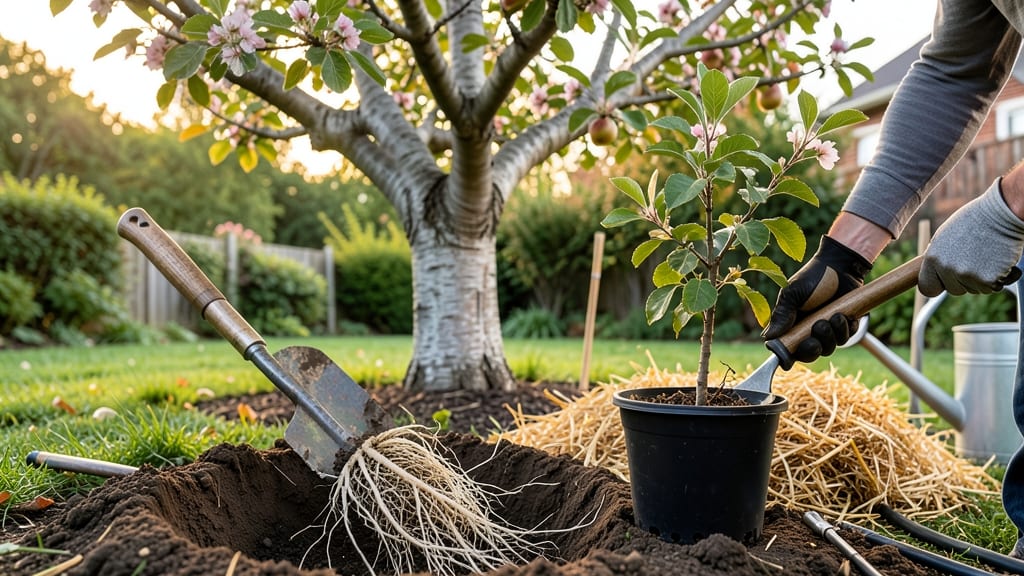
Planting an apple tree 🍎 in New Jersey at the wrong time can mean struggling with weak roots, delayed fruiting, or even losing your investment before it ever bears fruit.
The key to success lies in understanding your specific USDA zone—whether you're in cooler northern NJ (6a) or warmer southern areas (7b)—and matching the planting window to your local frost patterns.
Most gardeners in NJ know spring is ideal, but did you realize fall planting actually gives your tree a head start? When you plant in late October to early November, the roots establish before winter dormancy, setting up stronger growth by spring.
This is especially true for bare-root trees, which need that extra time to harden off.
Timing isn't just about months—it's about soil conditions too. The ground should be workable but not frozen, and air temperatures should stay above 40°F for at least a week after planting.
For container-grown trees, you've got a slightly longer window, but even they benefit from getting into the ground before the first hard frost hits.
Let me walk you through the exact planting calendar for NJ, including how to adjust for your specific microclimate and what to watch for when the last frost date sneaks up earlier than expected. You'll learn how to give your apple tree the best possible start—no guesswork involved.
Best planting months for apple trees in NJ by USDA zone
New Jersey’s USDA zones 5b through 7a create distinct planting windows for apple trees, where timing directly impacts root establishment and winter survival. Fall planting dominates in NJ because cooler soil temperatures reduce stress on newly planted trees, while early spring offers a secondary window for container-grown varieties.
Coastal areas like Cape May (zone 7a) have a longer growing season, while inland zones like Sussex County (zone 6a) face earlier frosts.
Soil temperature is the critical factor—ideal planting occurs when soil reaches 40-50°F but before ground freezes. In NJ, this typically means October through November for fall planting or February through April for spring.
Bare-root trees thrive in these conditions, while container-grown trees offer more flexibility but require soil moisture monitoring during dry spells.
🌱
| USDA Zone | Best Planting Window | Soil Temp Threshold | Key Consideration |
|---|---|---|---|
| 5b (Northwest NJ) | Late September - Early November | 40-50°F (4-10°C) | Early frost risk; prioritize cold-hardy varieties like 'Liberty' |
| 6a (Central NJ) | Mid-October - Mid-November | 45-55°F (7-13°C) | Balanced climate; ideal for most varieties |
| 6b (Southern NJ) | Late October - Early December | 50-60°F (10-16°C) | Longer window; coastal areas can plant later |
| 7a (Coastal NJ) | November - Early December | 55-65°F (13-18°C) | Milder winters; extend window to early December |
For zone 5b (northwest NJ), the planting window closes earliest due to sooner frosts. I recommend planting by early November to ensure roots establish before winter dormancy. In zone 6a (central NJ), you have until mid-November, making it the most forgiving zone for fall planting.
Coastal areas in zone 7a can push planting to early December, but monitor soil temperatures closely.
Spring planting in NJ works best from February through April, with March being ideal. This window aligns with dormant season but before bud break.
Container-grown trees can be planted slightly later, even into May, but bare-root trees planted after April 15th risk poor root establishment before summer heat arrives.
🌿
Regional microclimates create coastal vs. inland differences. Coastal areas like Cape May and Atlantic City (zone 7a) have warmer winters and can plant up to two weeks later than inland zones.
Inland areas like Sussex County (zone 6a) experience colder nights, so fall planting must occur 4-6 weeks before first frost (typically November 1st).
Dormancy is another key factor—apple trees planted in fall enter dormancy with established roots, giving them a head start in spring. Spring-planted trees must acclimate quickly to avoid transplant shock.
I’ve found that fall-planted trees in NJ often outperform spring-planted ones by 20-30% in first-year growth due to this advantage.
🪴
If you’re planting in early spring, choose cold-hardy varieties like 'Honeycrisp' or 'McIntosh' that tolerate NJ’s late frosts. For fall planting, opt for dwarf or semi-dwarf varieties like 'Gala' or 'Fuji', which establish roots faster in cooler soil.
Always water deeply after planting—15-20 gallons for young trees—to encourage root spread before winter.
Pro tip: In zone 6b and 7a, you can extend fall planting into early December by using root protection like mulch or burlap wraps. This buys extra time for root establishment before ground freezes, especially in coastal microclimates where winters are milder.
☀️
Critical factors that determine apple tree planting success in NJ
While planting months matter, NJ’s clay-heavy soils and variable microclimates mean non-seasonal factors often decide success or failure. Your apple tree’s first year hinges on soil pH, drainage, and how you prepare bare-root vs. container-grown trees—elements that override calendar dates entirely.
Skipping these steps can lead to root rot or winter dieback, even with perfect timing.
New Jersey’s USDA zones 5b–7a create a 100+ day frost-free window that varies by region. Coastal areas like Cape May enjoy longer growing seasons, while inland zones near Delaware Water Gap face earlier frosts.
These differences mean your frost-free period analysis should start with local weather data—not just a generic planting chart.
⚠️ WARNING: NJ’s Clay Soil Trap ⚠️
Your apple tree’s soil pH must sit between 6.0–6.5 for optimal nutrient uptake. NJ’s native soils often test alkaline (7.0+), locking out essential micronutrients like iron and zinc.
Use a soil test kit ($20 at garden centers) and adjust with elemental sulfur (for pH >6.5) or peat moss (for pH <6.0) before planting.
Bare-root trees need immediate watering upon planting to eliminate air pockets, while container-grown trees require root pruning to encourage outward growth. In NJ’s clay soils, container trees often suffer from root circling—use a serrated knife to gently tease roots before backfilling.
This step alone can double root establishment in the first critical season.
Don’t assume fall planting is a one-size-fits-all solution. While late October works for USDA Zone 7a, Zone 5b gardeners should delay until mid-November to avoid early frosts.
For spring planting, wait until soil temps reach 45°F (use a soil thermometer)—cold soil slows root growth and invites fungal diseases like Phytophthora.
Pro tip: Mulch with 6 inches of wood chips (not fresh sawdust) to stabilize soil temps and retain moisture. In NJ’s humid summers, keep mulch 3 inches away from the trunk to prevent rot.
Pair this with a drip irrigation system set to 15 gallons per week for the first year—consistency beats occasional deep watering.