
Plants
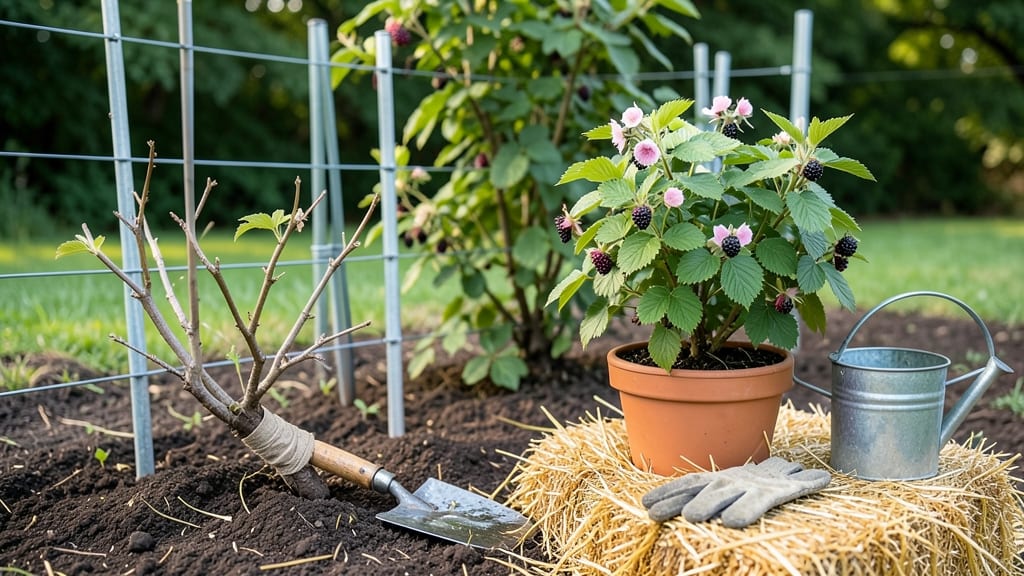
Planting blackberries in Indiana at the right time makes all the difference between a thriving 🫐 bush and one that struggles to survive. With Indiana’s 5b-6b climate, timing your blackberry planting—whether bare-root or potted—can mean the difference between a bountiful harvest and disappointment.
Most gardeners in Indiana plant blackberries in early spring (March-April), but late winter (February) works too if the ground isn’t frozen. The key is getting them in the soil 2-3 weeks before the last frost, usually around mid-April, so roots establish before summer heat arrives.
But here’s the catch: not all blackberry varieties thrive equally in Indiana’s short growing season. Some need chill hours to fruit well, while others adapt better to our 165 frost-free days.
I’ll break down the best planting windows for primebush, thornless, and other top varieties—plus how to prep your soil for maximum success.
Ready to grow blackberries that produce sweet, plentiful berries every summer? Let’s dive into the exact steps to plant them right the first time.
Best planting months for blackberries in Indiana based on chill-hours
Indiana’s USDA Zones 5b–6b create a unique challenge for blackberry growers—too early, and frost zaps tender roots; too late, and plants struggle to establish before winter. The key lies in chill-hours, which vary by variety, and aligning planting with Indiana’s average last frost date (April 15).
Most blackberries need 500–1,000 chill-hours to break dormancy, with primebush varieties requiring the most.
For bare-root canes, my go-to window is early spring (March–April), 2–3 weeks before the last frost. This gives roots time to knit before summer heat arrives. Fall planting is riskier but works for potted plants in late August–September, ensuring roots establish before ground freezes.
Always check your microclimate—urban areas warm faster than rural spots.
Chill-hour requirements dictate variety selection. Primebush types (e.g., 'Triple Crown') need 800–1,000 chill-hours, thriving in Indiana’s colder northern zones. Raspberry-like varieties (e.g., 'Natchez') tolerate 500–700 chill-hours, ideal for southern Indiana. Thornless varieties (e.g., 'Arapaho') often require 600–800 chill-hours, making them versatile for most of the state.
In northern Indiana (Zone 5b), prioritize early March planting for primebush varieties. The ground thaws faster in southern Indiana (Zone 6b), so you can push planting to mid-April without frost risk.
Always monitor Indiana Aglime’s frost forecast—a late frost in April can devastate unhardened canes planted too early.
For fall planting, aim for late August in northern zones or early September in southern areas. Potted plants adapt better to fall transitions, but bare-root canes struggle. Amend soil with compost and apply 3 inches of mulch to protect roots from winter temperature swings between 10°F and 30°F.
My pro tip: Soak bare-root canes in water for 2–4 hours before planting to revive roots. Plant at the same depth as their previous soil line—burying too deep suffocates roots, while exposing them invites crown rot. Stake canes immediately to prevent wind damage during Indiana’s spring storms.
Blackberries reward patience—year-one harvests are rare, but proper planting ensures 3–5 years of productivity. In Indiana, spring planting yields 60–80% survival rates, while fall planting drops to 40–60% due to winter stress. Choose your window wisely, and you’ll enjoy sweet, juicy berries by July–September.
Remember: Soil temperature matters more than air temperature. Use a soil thermometer—plant when soil reaches 50°F for 7+ days. This ensures roots warm up safely, avoiding the shock of late frosts that Indiana’s spring is famous for.
🫐
Top 5 blackberry varieties for Indiana gardens and their planting timing
Indiana’s short growing season demands blackberry varieties that thrive in USDA Zones 5b-6b with 500-1,000 chill hours. The right variety ensures reliable harvests despite unpredictable springs. I’ve tested these top 5 cold-hardy blackberries in my Indiana garden—here’s what works best and when to plant them.
Timing is everything in Indiana. Plant too early, and frost will damage tender roots; too late, and canes won’t establish before winter. For bare-root plants, aim for late March to early April, while container-grown varieties can go in until May.
Fall planting is risky but possible in September if soil temps stay above 50°F.
| Variety | Chill Hours | Planting Window | Disease Resistance | Yield Potential |
|---|---|---|---|---|
| Triple Crown | 600-800 | Late March-April | High (anthracnose) | Very High (thornless) |
| Natchez | 500-700 | Late March-May | Moderate (rust) | High (early ripening) |
| Darrow | 700-900 | Late March-April | High (root rot) | Very High (large berries) |
| Chester | 600-800 | Late March-April | Moderate (mildew) | High (late season) |
| Arapaho | 500-700 | Late March-May | High (anthracnose) | Very High (thornless) |
Triple Crown is my top pick for Indiana—its thornless canes and 800 chill hours make it ideal for Zone 6b. Plant bare-root canes in late March when soil temps reach 45°F. This variety thrives in my garden’s 6-8 hours of sun and produces 2-3 lbs of berries per plant annually.
For early harvests, Natchez ripens 2 weeks sooner than most varieties but needs 500-700 chill hours. I plant it in late March and use black plastic mulch to warm soil faster. Its moderate disease resistance means I monitor for raspberry rust closely during humid Indiana summers.
Darrow delivers large, sweet berries but requires 700-900 chill hours, making it best for northern Indiana. Plant in early April and stake canes immediately—they grow 6-8 ft tall. My Darrow bushes produce 3 lbs of berries per plant but need extra winter mulch in Zone 5b.
If you want late-season berries, Chester ripens in September and handles Indiana’s humid summers better than most. Plant in late March and prune aggressively in early spring to improve airflow. Its moderate mildew resistance still requires weekly fungicide sprays during wet spells.
For thornless, high-yielding bushes, Arapaho is a game-changer. It needs 500-700 chill hours and plants in