
Plants
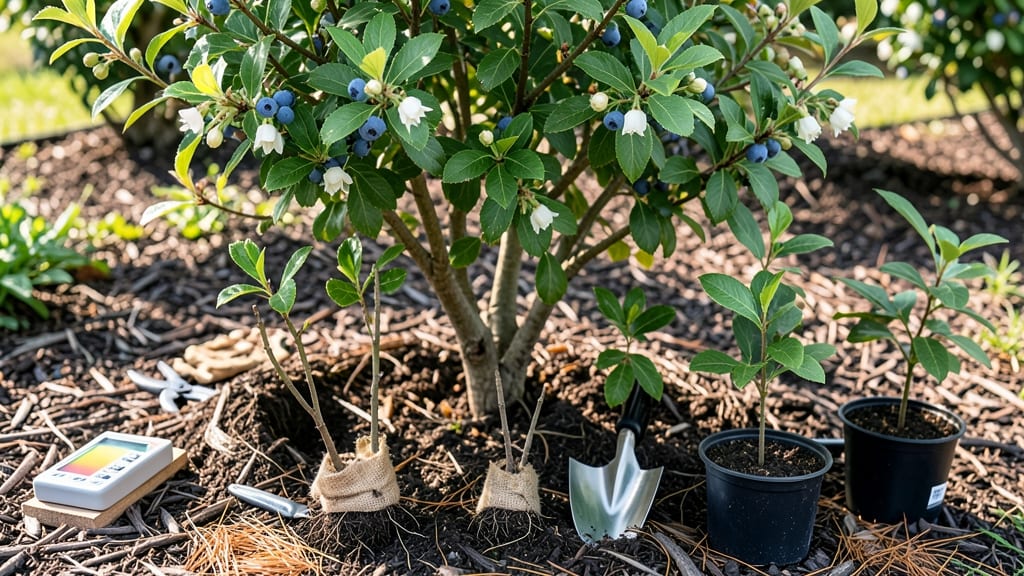
Planting blueberries in Massachusetts at the wrong time means frost-killed saplings or weak roots that struggle to survive winter—but get it right, and you’ll enjoy years of juicy harvests with minimal effort.
The key lies in understanding your local frost dates and soil conditions, since USDA Zones 5b-6b create unique challenges for growers.
Most gardeners in Massachusetts assume spring is the only option, but fall planting often yields stronger survival rates when done correctly. Whether you’re planting bare-root saplings in early spring or container-grown bushes in September, timing directly impacts how quickly your 🫐 bushes establish and thrive.
Let’s break down the best windows and what to watch for in your specific microclimate.
From coastal areas with milder winters to inland zones where frost lingers later, Massachusetts offers diverse growing conditions. I’ll show you exactly when to plant—whether you prefer the fresh start of spring or the cooler stability of fall—and how to prepare your soil for maximum success.
Ready to grow blueberries that produce like crazy?
You’ll also discover which varieties handle Massachusetts’ climate best, how to protect young plants from late frosts, and why some gardeners swear by fall planting. By the end, you’ll know exactly when to dig in for the healthiest, most productive blueberry bushes in your yard.
Best planting seasons for blueberries in Massachusetts: spring vs fall breakdown
Massachusetts gardeners face a critical decision when planting blueberries: should you plant in spring or fall? The answer depends on your local microclimate, soil conditions, and frost timing. Inland areas like Worcester often have earlier frosts than coastal regions like Cape Cod, making timing even more crucial.
Let’s break down the pros and cons of each season so you can choose the best time for your blueberry bushes.
Spring planting (April–May) gives your blueberries a full growing season before winter, but it comes with frost risks if planted too early. Fall planting (September–October), however, allows roots to establish before winter dormancy, often resulting in stronger survival rates.
For Massachusetts, where USDA zones 5b-6b dominate, fall planting is generally preferred—but spring can work if you follow specific timing rules.
Here’s a detailed comparison to help you decide which season aligns best with your garden’s conditions and your blueberry variety:
For coastal Massachusetts, like Barnstable or Provincetown, the last frost date often arrives 2–3 weeks later than inland areas. This means you can push spring planting into late May without frost risks.
In contrast, inland regions like Pittsfield or Springfield should aim for early April planting to avoid late-season frosts that can damage tender new growth.
Fall planting, however, is the gold standard for Massachusetts gardeners. By planting in September or early October, your blueberry bushes have 6–8 weeks to establish roots before winter dormancy.
This translates to faster growth and higher survival rates the following spring. Just ensure your soil temperature stays above 50°F (10°C) to prevent root shock.
If you choose spring planting, opt for container-grown blueberries instead of bare-root plants. Containers allow you to delay planting until after the last frost (typically mid-April in most of MA). Water deeply after planting and mulch heavily to retain moisture during the drier spring months.
One critical mistake Massachusetts gardeners make is planting too late in spring or too early in fall. If you miss the optimal window, your blueberries may struggle to establish before winter.
For example, planting in late May gives your bushes only 3–4 months of growing time before frost, while fall planting in November risks exposing roots to freezing temperatures.
Pro tip: Test your soil pH before planting—blueberries thrive in acidic soil (pH 4.5–5.5). If your soil is too alkaline, amend it with peat moss or sulfur at least 2 months before planting.
This prep work is just as important as timing, especially in Massachusetts’ glacial till soils, which are often too alkaline for blueberries.
Whether you choose spring or fall, mulching is non-negotiable. Apply 3–4 inches of pine needles or wood chips around your blueberry bushes to retain moisture, regulate soil temperature, and suppress weeds.
In fall, mulch especially helps insulate roots during winter freezes, while in spring, it prevents soil from drying out too quickly.
Ready to plant? Mark your calendar: September 15–October 15 for fall planting or April 15–May 15 for spring. With the right timing and soil prep, your blueberry bushes will reward you with years of sweet harvests—and maybe even a few extra berries to share with neighbors! 🫐
How to prepare your Massachusetts soil for blueberry planting (pH, fertilizer, mulch)
Blueberries thrive in acidic soil with a pH between 4.5 and 5.5. Massachusetts’ native soils often lean alkaline, so preparing your garden bed is the first critical step. Without the right soil conditions, your blueberry bushes will struggle to absorb nutrients, leading to poor growth and minimal fruit production.
Start by testing your soil’s current pH using a home testing kit or sending a sample to your local UMass Extension office. If your pH reads above 6.0, you’ll need to lower it significantly—this isn’t a quick fix but essential for long-term success.
The key is patience and the right amendments.
Organic amendments like peat moss or pine needles are your best friends. These materials naturally acidify the soil while improving drainage. Mix in 2-3 inches of peat moss into the top 12 inches of soil before planting.
For an even more acidic boost, add sulfur granules at a rate of 1 pound per 100 square feet.
🌱 Seasonal Soil Prep Checklist for Blueberries in Massachusetts
- 📅 Spring (March-April): Test soil pH, amend with peat moss/sulfur, and till in compost.
- 📅 Early Spring (April-May): Plant bare-root bushes after last frost; water deeply.
- 📅 Fall (September-October): Apply compost and pine needles; mulch heavily for winter.
- 📅 Late Fall (November): Add extra mulch (4-6 inches) to insulate roots from frost.
Once your soil is properly amended, focus on mulching to protect roots and maintain acidity. Use pine straw or wood chips—avoid cedar, which can inhibit growth. Apply a 4-inch layer around each bush, keeping it 2-3 inches away from the stem to prevent rot.
Fertilizer is another critical component. Blueberries need acid-loving, slow-release fertilizer like cottonseed meal or a 12-4-8 NPK blend. Apply 1/4 cup per plant in spring and 1/2 cup in fall, always working it into the soil rather than leaving it on the surface.
After planting, monitor your soil’s pH annually and re-amend if needed. Blueberries are heavy feeders, so regular organic matter additions will keep your bushes productive for decades. With the right prep, your Massachusetts blueberry patch will yield sweet, juicy berries for years to come. 🫐