
Plants
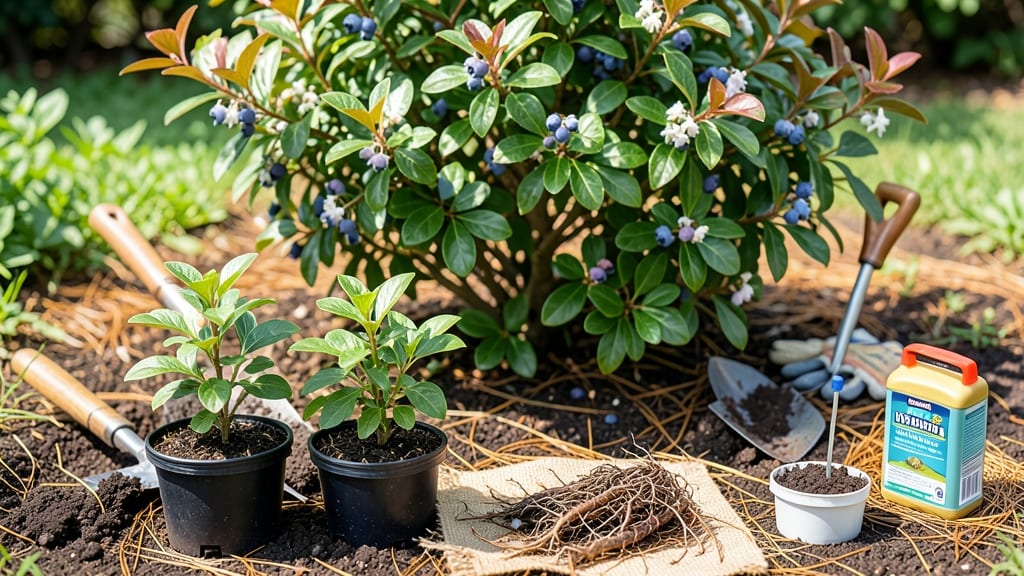
Planting blueberries in Mississippi might seem tricky with its hot summers and mild winters, but timing is everything for a thriving 🫐 harvest. The key isn't just waiting for spring—it's matching varieties to the state's unique chill-hour zones, where 300-900 hours of winter cold determine which bushes will fruit reliably.
Most Mississippi gardeners make the mistake of planting too late, missing the late winter to early spring window when soil is workable but summer heat hasn't arrived.
I'll show you exactly when to order bare-root plants, prep acidic soil, and transplant for maximum root establishment before the growing season kicks off.
Whether you're in North Mississippi's cooler 8a zone or South Mississippi's warmer 9a, the right blueberry varieties—like 'Climax' or 'Premier'—can handle the heat while still producing sweet berries.
We'll cover container planting for small spaces and in-ground methods for larger yards, plus how to protect young plants from late frosts.
By the end, you'll know not just when to plant, but how to set your blueberries up for years of bountiful harvests—no guesswork required. Let's get started.
Mississippi chill-hour zones: which blueberry varieties thrive in southern heat?
Mississippi’s chill-hour zones range from 300-900 hours, meaning traditional northern blueberry varieties often fail to produce fruit. The key to success? Selecting low-chill varieties that thrive in USDA Zones 8a-9a while still meeting their cold dormancy needs.
Northern Mississippi (e.g., Tupelo) typically sees 600-900 chill hours, while southern regions (e.g., Biloxi) may only hit 300-500 hours.
For reliable fruit set, prioritize varieties like 'Climax' (400-500 hours), 'Premier' (500-600 hours), or 'Peach Sorbet' (300-400 hours). These southern-adapted types balance heat tolerance with just enough cold exposure to break dormancy. Skipping this step often leads to poor flowering or no harvest at all.
🌱
| Variety | Chill Hours | Heat Tolerance | Fruit Maturity | Best For |
|---|---|---|---|---|
| Climax | 400-500 | Excellent | Mid-season | Southern MS (300-500 hrs) |
| Premier | 500-600 | Very Good | Late-season | Central MS (500-700 hrs) |
| Peach Sorbet | 300-400 | High | Early-season | Coastal MS (<400 hrs) |
| O’Neal | 600-700 | Good | Mid-season | Northern MS (600+ hrs) |
| Southern Highbush (e.g., 'Aureole') | 200-400 | Excellent | Early to mid | All zones (container-friendly) |
Mississippi’s southern regions (e.g., Gulf Coast) often struggle with insufficient chill hours for traditional varieties like 'Bluecrop' (800+ hours). Instead, opt for Southern Highbush types, which are heat-adapted and produce fruit with minimal dormancy. These varieties also handle humidity better, reducing fungal risks like botrytis.
If you’re in northern Mississippi, you have slightly more flexibility with varieties like 'O’Neal' or 'Duke', which tolerate 600-700 chill hours. However, even these may need winter protection during unusually warm winters to ensure proper dormancy. Use row covers or mulch to simulate colder conditions if needed.
🌿
For container growing—ideal for urban gardeners or areas with poor soil—choose dwarf varieties like 'Peach Sorbet' or 'Top Hat'. These thrive in 5-gallon pots with acidic potting mix (pH 4.5-5.5) and can be moved to shadier spots during peak summer heat.
Containers also let you control soil conditions, which is critical in Mississippi’s clay-heavy soils.
One common mistake is assuming all blueberries need full sun. While they do require 6+ hours of sunlight, afternoon shade (especially in Zone 9a) prevents heat stress. Plant bushes near trees or structures to filter intense afternoon rays while maintaining morning sun exposure.
✂️
To maximize fruit production, prune in late winter (February) before new growth begins. Remove dead wood and crossing branches, then thin out older canes to improve airflow. This is especially important in <
Step-by-step planting timeline for Mississippi blueberries: when to buy, prepare, and transplant
Mississippi’s blueberry bushes thrive when planted during the dormant season, avoiding the brutal summer heat. For bare-root plants, order them between November and February—this ensures they arrive ready for your ideal transplant window of late fall to early spring.
Timing is critical: planting too early risks frost damage, while late planting delays root establishment before summer.
Your first step is soil preparation. Blueberries demand acidic soil (pH 4.5–5.5). Test your soil in October or November and amend with peat moss, sulfur, or pine needles if needed.
Poor drainage? Raise beds or mix in compost to improve aeration. This prep work sets the stage for healthy root growth before transplanting.
📅 Mississippi Blueberry Planting Timeline
- 1 November–December: Order bare-root blueberries (mail-order or local nurseries). Store them in a cool, moist place (like a fridge) until planting.
- 2 Late November–February: Plant bare-root bushes in well-draining, acidic soil. Dig a hole twice as wide as the root ball but no deeper. Space plants 4–6 feet apart for standard varieties.
- 3 January–February: Mulch heavily with pine straw or wood chips (3–4 inches deep) to retain moisture and suppress weeds. Avoid mulching too close to the stem.
- 4 March–April: Apply a balanced acidic fertilizer (e.g., 8-3-9) when new growth appears. Water deeply once weekly to encourage root development before summer heat arrives.
- 5 May–June: Monitor for water stress during peak heat. Drip irrigation is ideal to keep roots consistently moist. Prune dead or crossing branches in late winter (next year) to improve airflow.
After transplanting, watering consistency is key. New blueberry bushes need 1–1.5 inches of water weekly, especially in Mississippi’s hot, dry summers. Use drip irrigation or soaker hoses to deliver water directly to the root zone, reducing evaporation. Avoid overhead watering, which can spread fungal diseases like botrytis.
Protect young plants from late frosts (common in Mississippi’s March) by covering them with frost cloth on cold nights. Once established, blueberries are surprisingly heat-tolerant, but they’ll reward you with sweeter berries if you give them the right start.
With this timeline, your bushes will be ready to fruit in 2–3 years!
For container growing, follow the same timeline but use acidic potting mix and larger pots (15+ gallons). Container blueberries need frequent watering and winter protection in colder Mississippi zones. 🌱