
Plants
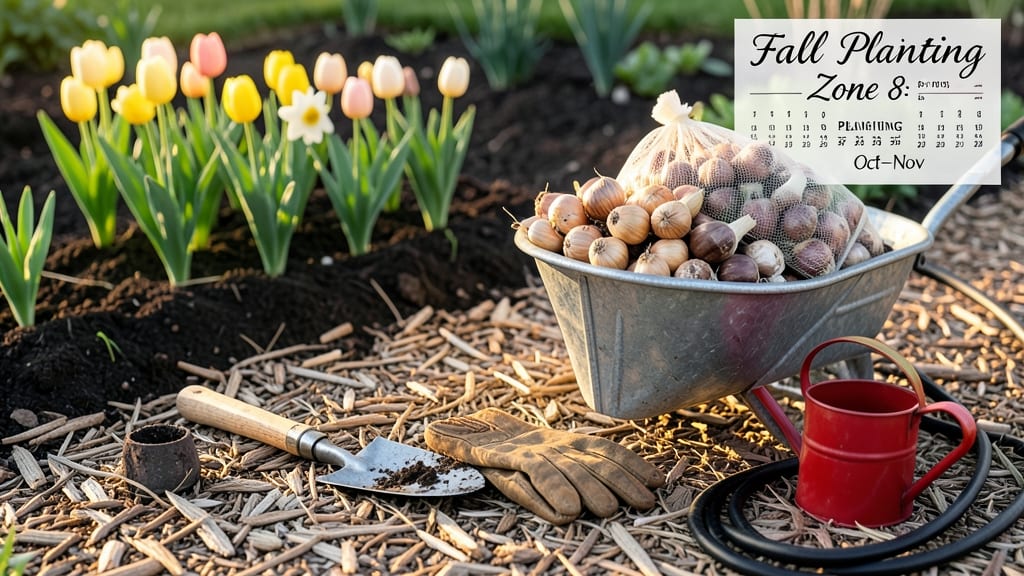
Planting bulbs in Zone 8 at the wrong time can mean the difference between vibrant spring blooms and a missed opportunity—especially when mild winters throw off traditional schedules. The key isn’t just picking the right month, but understanding how chill hours shape each variety’s success.
Fall planting (October–December) is your best bet for most 🌷 Bulbs (General), but timing depends on whether they need 10 chill hours or more. Early spring (February–March) works for heat-sensitive types, though you’ll need to act fast before the soil warms.
Let’s break down the exact windows—and why rushing (or waiting too long) can ruin your blooms.
Zone 8’s microclimates add another layer: coastal areas stay milder longer, while inland spots may freeze earlier. We’ll cover how to adjust for your specific corner of 8a–8b, plus soil prep tricks to give your bulbs the head start they need. Ready to stop guessing and start planting with confidence?
From daffodils that thrive with minimal chill to tulips demanding deeper dormancy, this guide ensures you’ll know exactly when to tuck those bulbs into the soil—so next spring, your garden wakes up in full color. No more second-guessing, just reliable blooms.
Zone 8 bulb planting timeline by chill-hour requirements
Understanding chill-hour requirements is the key to successful bulb planting in Zone 8. Unlike colder climates, Zone 8’s mild winters mean many traditional bulbs need strategic timing to accumulate enough chill hours—temperatures between 32-45°F—for robust blooms.
Bulbs fall into three categories: 0-10 chill hours, 10-20 chill hours, and 20+ chill hours, each demanding a unique planting window.
For bulbs requiring 0-10 chill hours, like rain lilies or spider lilies, you have flexibility. These varieties thrive with minimal cold exposure and can even be planted in late fall or early spring.
However, bulbs needing 10-20 chill hours, such as daffodils or hyacinths, must be planted in fall (October-November) to ensure they get enough winter chill. Meanwhile, 20+ chill-hour bulbs, like tulips, need early fall planting (September-October) to avoid missing critical cold periods.
In Zone 8a, where winters are slightly cooler, you can push fall planting a bit later—up to mid-November for bulbs needing 10-20 chill hours. For Zone 8b, with milder winters, focus on planting by late October to avoid missed chill periods.
If you’re in a coastal microclimate, where winters are even milder, consider planting low-chill bulbs in containers and moving them to a cooler spot during winter.
For spring planting, aim for February-March after the last frost date. This works best for bulbs like rain lilies or spider lilies, which don’t require much chill.
However, spring-planted bulbs may bloom later or less vigorously compared to their fall-planted counterparts. To boost success, amend the soil with compost and ensure well-draining conditions to prevent rot.
One common mistake in Zone 8 is planting bulbs too late in fall, assuming the mild winters will suffice. But bulbs need consistent cold exposure to break dormancy. For example, tulips (20+ chill hours) planted in December may not bloom well because they missed critical cold snaps.
Similarly, hyacinths (10-20 chill hours) planted in November are safer than those planted in December.
If you’re unsure about your microclimate, monitor local frost dates and soil temperatures. Use a soil thermometer to track when temperatures consistently drop below 50°F—this is your cue to plant chill-dependent bulbs.
For low-chill varieties, like crinum lilies, you can even plant them in early spring (February) for summer blooms. Just ensure the soil is workable and not waterlogged.
Pro tip: Mulch after planting to insulate bulbs and regulate soil temperature. Use 2-3 inches of organic mulch, like straw or shredded leaves, to protect roots from extreme temperature swings.
This is especially helpful in Zone 8b, where winters can be unpredictable. Avoid heavy mulch, though, as it can cause rot if the soil stays too wet.
Finally, don’t forget to water bulbs after planting to encourage root growth. A deep watering (1-2 inches) right after planting helps establish roots before dormancy.
For spring-planted bulbs, keep the soil consistently moist until shoots emerge. Once blooms appear, reduce watering slightly to let foliage mature fully before fading.
With this chill-hour timeline, your Zone 8 garden will burst with color come spring, whether you’re growing tulips, daffodils, or low-chill lilies. Happy planting! 🌷
Best fall vs. early spring planting strategies for Zone 8 bulbs
In Zone 8, where winters are mild but still require some chill hours for blooming, timing your bulb planting is critical. Most traditional bulbs like tulips and daffodils thrive when planted in fall, but heat-sensitive varieties benefit from early spring planting.
The key is understanding your microclimate—coastal areas may need adjustments compared to inland zones.
Fall planting (typically October–December) gives bulbs time to establish roots before winter, while early spring planting (after last frost, usually February–March) suits bulbs needing minimal chill or heat tolerance.
Let’s break down the pros and cons of each approach to help you decide what works best for your garden.
Fall Planting (October–December)
✅ Pros
- Root establishment: Bulbs grow roots before winter.
- Chill hours: Ideal for traditional bulbs needing 10–20+ chill hours.
- Less competition: Fewer weeds in early spring.
❌ Cons
- Timing risk: Plant too late, and bulbs may rot.
- Drought stress: Dry fall soil can stress newly planted bulbs.
- Limited varieties: Heat-sensitive bulbs may not thrive.
Early Spring Planting (February–March)
✅ Pros
- Heat tolerance: Perfect for bulbs like rain lilies or spider lilies.
- Flexible timing: Avoids fall planting deadlines.
- Extended blooms: Some bulbs flower sooner in warm climates.
❌ Cons
- Missed chill hours: Bulbs needing 20+ chill hours may not bloom.
- Weed competition: Early spring weeds can outcompete young shoots.
- Slower root growth: Less time to establish before summer heat.
For fall planting, focus on bulbs like tulips, daffodils, and hyacinths, which need 6–8 weeks to root before frost. Prepare the soil by amending it with compost and ensuring well-draining conditions.
In Zone 8a, aim to plant by mid-November, while Zone 8b can extend to early December.
If you’re planting in early spring, opt for bulbs like crinum lilies or rain lilies, which tolerate heat and require minimal chill. Plant after the last frost date (typically February 1–March 15 in Zone 8) and water deeply to encourage root growth.
Mulch around the base to retain moisture and protect from spring heat waves.
Adjust for your microclimate: Coastal areas may plant later in fall due to milder temperatures, while inland zones should prioritize earlier planting. Always check chill-hour requirements on bulb packaging—this determines whether fall or spring planting is best for your variety.
Pro tip: Use a soil thermometer to ensure planting occurs when soil temps are 60–70°F for fall or 50–60°F for spring. This balance maximizes root development and sets the stage for vibrant blooms next season.