
Trees
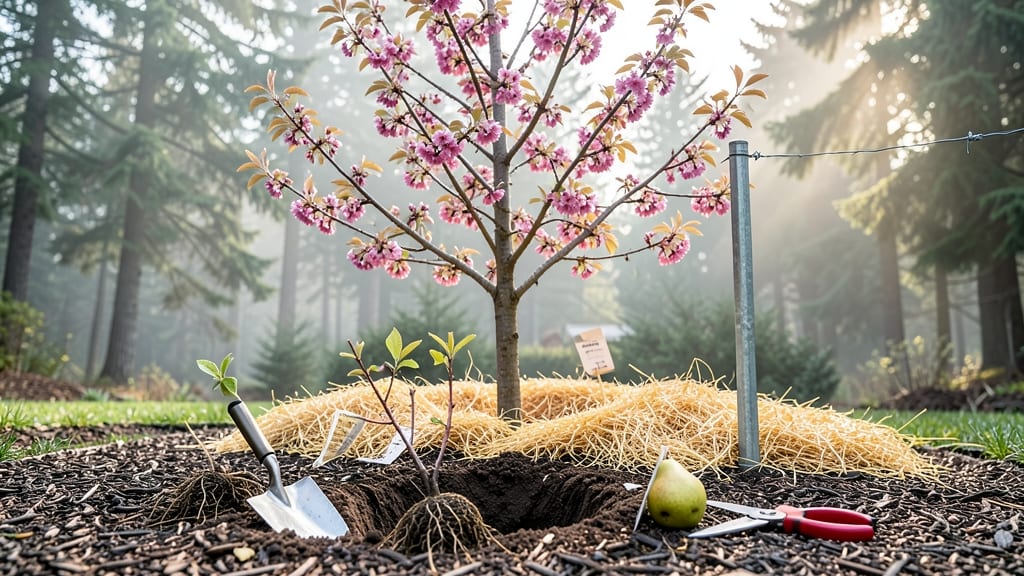
Planting fruit trees in Washington isn't just about grabbing a shovel in spring—it's about matching the right variety to your region's chill-hour needs for a bountiful harvest.
Whether you're in the cooler Eastern WA or milder Western WA, timing matters more than you might think, and choosing the wrong tree could mean years of disappointment.
I've seen firsthand how a single miscalculation can turn a promising orchard into a sad row of 🍎 trees that never bear fruit. The key? Understanding when to plant based on your local frost dates and which varieties thrive in your specific climate zone.
For example, Western WA's 5b-8b zones demand different prep than Eastern WA's cooler microclimates.
In this guide, I'll walk you through the exact planting windows for Washington's most popular fruit trees—from apples that need 800+ chill hours to low-chill peaches that do well in warmer pockets.
You'll learn when to plant bare-root trees versus container-grown ones, how to prep your soil for maximum success, and even how to spot common mistakes before they happen.
Ready to grow fruit trees that actually produce? Let's get started with the planting schedule that'll have you enjoying homegrown apples, cherries, and more in just a few years—without the guesswork.
Washington’s chill-hour zones: how to match fruit trees for maximum success
Washington’s diverse climate creates unique challenges—and opportunities—for fruit tree growers. The state spans USDA Zones 4-9, but the real game-changer is chill hours, the number of hours below 45°F a tree needs to produce fruit.
In Western WA, milder winters mean low-chill varieties thrive, while Eastern WA’s colder zones demand high-chill trees. Without matching your tree to your region’s chill hours, you might end up with beautiful blossoms but no fruit—ever.
I’ve helped countless gardeners in Spokane, Yakima, and even Seattle avoid this pitfall by selecting the right varieties.
For example, a Honeycrisp apple (requiring 800+ chill hours) will struggle in Zone 8b Puget Sound, while a Lapins cherry (only needing 300-400 chill hours) might fail in Zone 5 Wenatchee. Let’s break down the chill-hour zones and the best fruit trees for each.
🌱 Key Insight: Western WA (Zones 7-9) typically gets 300-600 chill hours, while Eastern WA (Zones 4-6) often exceeds 800-1,200 chill hours. Microclimates—like sheltered valleys or urban heat islands—can shift these numbers by 100-200 hours.
For Zone 4-5 growers in Eastern WA, high-chill varieties like Jonathan apples or Montmorency cherries are non-negotiable. These trees thrive in the 900+ chill hours typical of Spokane and Pullman, where winters are long and cold.
In contrast, Zone 8-9 gardeners in Seattle or the San Juans should avoid traditional apples and instead opt for low-chill peaches or cherries like Lapins, which need as few as 300 chill hours.
Even within a zone, microclimates matter. A sheltered south-facing slope in Zone 6 Yakima might accumulate 100 fewer chill hours than a north-facing valley. That’s why I always recommend checking local chill-hour data from sources like the WA State University Extension before buying trees.
A 500-chill-hour peach might bloom too early in a warm microclimate, leading to frost damage.
Stone fruits like peaches and plums are particularly sensitive to chill-hour mismatches. In Zone 7, varieties like Sanguine peaches (requiring 500-600 chill hours) perform well, while Zone 9 gardeners need Early Red peaches with 200-300 chill hours.
Pears are slightly more forgiving, but even they need the right match—Bartlett pears in Zone 4 will fruit reliably, while Seckel pears in Zone 9 might struggle.
Pro tip: If you’re in a borderline zone (e.g., Zone 6-7 transition), consider intermediate varieties like Jazz apples (requiring 600-700 chill hours) or Stella cherries (400-500 chill hours). These bridges can work in both regions with proper care, like winter protection in milder areas.
Don’t overlook container-grown trees for urban gardeners in Zone 8-9
Best planting months for Washington fruit trees by variety and region
Timing is everything when planting fruit trees in Washington, and the best months depend on whether you're in Eastern WA (cooler, longer winters) or Western WA (milder, shorter winters).
For bare-root trees, I recommend planting in late fall or early spring, while container-grown trees can go in the ground almost year-round—except during extreme heat or frost.
In Western WA, where last frost dates range from March 15 to April 1, you have a slightly longer window to plant. But in Eastern WA, with later frosts (often April 15 or later), you’ll want to plant earlier to avoid spring freezes.
Soil prep is critical—amend with compost to improve drainage, especially in Western WA’s wetter climates.
🌱 Key Planting Windows for Washington Fruit Trees
For stone fruits like peaches and cherries, which need 400-800 chill hours, I always plant in early spring to avoid late frosts that can damage blossoms. In Western WA, varieties like Lapins cherry (low-chill) thrive, while Eastern WA supports high-chill Bing cherries.
After planting, stake young trees if needed (especially in windy areas like Eastern WA) and prune to remove damaged branches. In Western WA, watch for fungal diseases like apple scab—use organic sprays preventatively. Regular watering is key, especially during summer droughts that hit both regions.
Remember, the goal is to give your fruit trees a strong start so they’ll bear fruit in 3-5 years. By following these planting windows and regional tips, you’ll avoid common mistakes and set yourself up for a successful harvest—whether you’re growing apples in Spokane or peaches in Yakima.
Happy planting! 🍒