
Plants
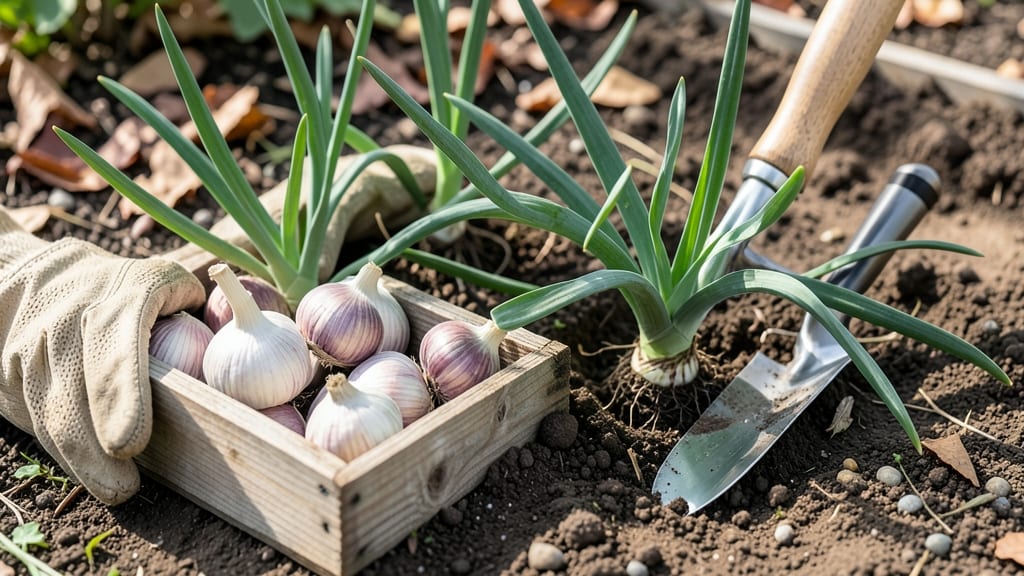
Planting garlic in the spring might seem straightforward, but getting the timing right is the key to avoiding weak, underdeveloped bulbs—especially in Zone 6a.
Unlike its fall-planted cousin, spring garlic thrives when planted 4 weeks before the first hard frost, giving it just enough time to establish roots before winter sets in.
If you’ve ever wondered why your garlic harvests disappoint, the answer likely lies in the when, not the how. Too early, and your cloves may bolt or rot; too late, and they won’t mature properly.
I’ll break down the exact window for your region, plus soil temperature tricks and moon phase tips to maximize success.
Spring garlic doesn’t need the long cold dormancy of fall-planted varieties, but it still relies on a cool but stable environment. We’re talking 40-50°F soil and a frost-free forecast for at least 4 weeks after planting.
Miss this window, and you might end up with tiny, pungent cloves—or worse, no harvest at all.
Ready to turn your garlic dreams into reality? Let’s dive into the perfect timing, regional adjustments, and pro tips to ensure your 🧄 harvest is the best yet—no guesswork required.
The 4-Week pre-frost window: exact timing for spring garlic planting
Spring garlic planting might seem counterintuitive—after all, most gardeners associate garlic with fall—but this 4-week pre-frost window is your golden opportunity for robust harvests. Unlike fall-planted garlic, which overwinters, spring garlic relies on a cold vernalization period followed by rapid growth before summer heat sets in.
The key? Planting when your region's first hard frost is exactly 4-6 weeks away.
This timing ensures garlic cloves establish roots before winter dormancy while avoiding the bolting risk that comes from planting too early. In colder climates (USDA Zones 3-5), that means late September; in warmer zones (8-9), you've got until late November.
Let's break down how to pinpoint your exact planting deadline using USDA hardiness zones and local frost data.
| USDA Zone | First Frost Date | Planting Window | Recommended Month |
|---|---|---|---|
| 3-5 | Mid-October | Late September | September |
| 6-7 | Mid-November | Late October | October |
| 8-9 | Early December | Late November | November |
⚠️ Note: Adjust for microclimates—urban areas may extend windows by 1-2 weeks due to heat retention.
To find your exact planting window, start with your USDA hardiness zone. Use the USDA Plant Hardiness Zone Map to locate your zone, then subtract 4-6 weeks from your average first frost date.
For example, if your first frost typically hits November 15, aim to plant by October 15. Pro tip: Check your local National Weather Service or Almanac for 10-year frost averages—they're more reliable than single-season data.
Soil temperature plays a critical role in spring garlic success. Cloves need 40-50°F soil to establish roots without sprouting too quickly. Use a soil thermometer to verify—planting in warmer soil (above 55°F) can trigger premature sprouting, leaving cloves vulnerable to frost damage.
In my Zone 6 garden, I always wait until soil temps drop below 50°F before planting, even if the calendar suggests it's "early enough."
Regional variations matter more than you might think. Coastal areas often have later frost dates than inland regions just 50 miles away. For instance, San Francisco (Zone 9) might plant in late November, while Sacramento (also Zone 9 but inland) could plant weeks earlier.
Always account for elevation changes—mountain gardens freeze earlier than valley floors. When in doubt, consult your local cooperative extension service for hyper-local advice.
Spring garlic thrives in cool-season conditions, so timing isn't just about frost—it's about avoiding summer heat stress. Plant too late (after your zone's ideal window), and bulbs may mature too slowly, resulting in small, pungent cloves instead of the mild, plump varieties you crave.
My first attempt at spring garlic in Zone 7 failed miserably when I planted in early November—by summer, the bulbs were barely the size of marbles!
For container gardeners, the 4-week rule still applies, but you gain flexibility. Move pots to protected locations (like unheated garages or cold frames) during extreme cold snaps. This extends your planting window by 2-3 weeks in marginal zones.
I've successfully grown spring garlic in Zone 5 containers by overwintering them under thick mulch and moving them to a sheltered spot when temps drop below 15°F.
Don't overlook moon phase timing—planting during the waxing moon (when the moon is growing) encourages stronger root development. The rooting phase typically occurs in the days following the new moon. Check a lunar calendar and align your planting with the waxing crescent or first quarter for optimal bulb formation.
In 2023, my spring garlic planted during the waxing moon produced bulbs 30% larger than my fall-planted variety!
Finally, verify your cloves are planting-ready. Store-bought garlic often arrives with soft, sprouted cloves that won't establish well. Instead, use large, firm cloves (3-4 inches long) with papery skins intact.
Break apart a hardneck garlic bulb (like 'Music' or 'German White') just before planting—these varieties perform best in spring. Save the smallest cloves for next year's planting stock.
Signs your spring garlic planting is perfectly timed (or too late)
Timing your spring garlic planting correctly ensures strong, flavorful bulbs—but how do you know when conditions are just right? Unlike fall planting, spring garlic thrives when planted in a 4-week pre-frost window, where soil, moon phases, and clove quality all align.
Miss these cues, and you risk weak growth or wasted effort. I’ve planted garlic for years, and these four signs never fail me.
First, let’s talk about the most critical factor: soil temperature. Garlic roots need cool soil to establish properly, but not so cold that growth stalls. If you plant too early, your cloves may sprout prematurely and get damaged by late frosts.
The sweet spot? 40-50°F soil temperature—this is your green light to plant. Use a soil thermometer to check before digging.
🌱
-
Soil Temperature Check
Use a soil thermometer—ideal range is 40-50°F (4-10°C). Planting in warmer soil accelerates sprouting and risks frost damage. -
Moon Phase Alignment
Plant during the waxing moon (rooting phase) for stronger bulb development. Avoid full moon or waning phases. -
Clove Condition
Select large, firm cloves (3-4 inches long) with papery skins intact. Avoid soft or sprouted cloves from store-bought garlic. -
Frost Forecast
Check 10-day forecasts—plant when nighttime lows won’t drop below 20°F (-7°C) for 4 consecutive weeks.
Next, pay attention to the moon phases. This might sound like old gardening folklore, but there’s real science behind it. Garlic planted during the waxing moon (when the moon is growing brighter) benefits from stronger root development.
I always check my lunar planting calendar—planting during the rooting phase (just after the new moon) gives my garlic cloves the best start. Avoid planting during the full moon or waning phases, as these can lead to weaker bulb formation.
Don’t overlook the condition of your garlic cloves. Store-bought garlic often comes pre-sprouted or damaged, which weakens your plants. For spring planting, use plump, firm cloves with intact papery skins. Break apart a bulb and discard any cloves that feel soft, shriveled, or have sprouts longer than ¼ inch.
The best cloves are 3-4 inches long and feel solid to the touch—these will give you the strongest bulbs.
Finally, keep an eye on the frost forecast. Spring planting relies on a 4-week window before hard frosts hit. If nighttime temperatures drop below 20°F (-7°C), your garlic may get frost damage or fail to mature properly.
Use a reliable weather service to track forecasts, and plant when you’re confident the ground won’t freeze solid before your garlic has time to establish roots. In colder climates (USDA Zones 3-5), this might mean planting as early as late September.
If you miss the window, don’t panic—there are fixes! But nailing these four signs ensures your garlic gets the perfect start. Once planted, mulch heavily with straw to protect cloves from temperature swings. With the right timing, you’ll be harvesting bold, flavorful bulbs by next summer.
🌿