
Plants
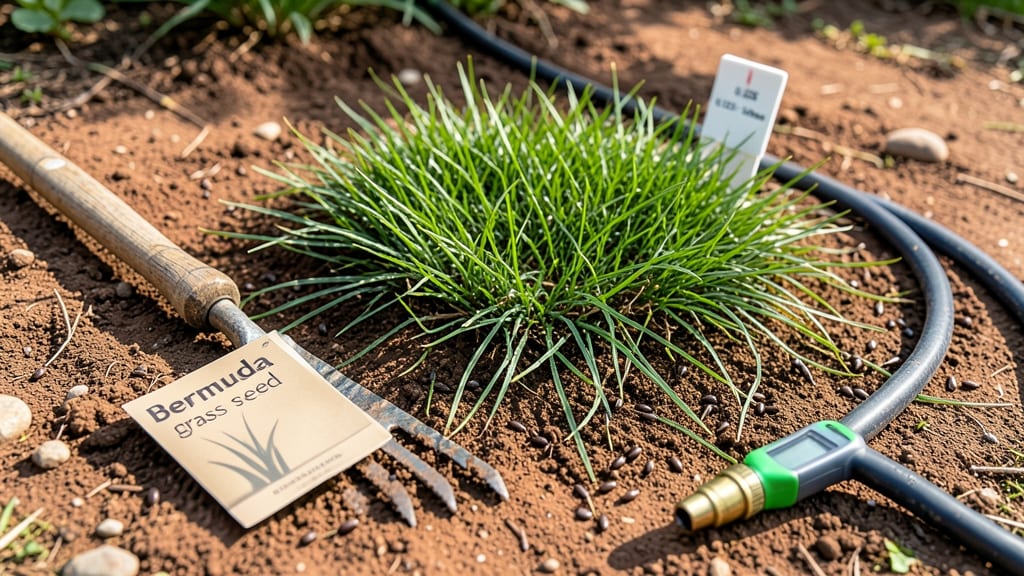
Planting Bermuda grass seed in Georgia at the wrong time can mean the difference between a lush, green lawn and struggling patches that never quite take hold.
The key window—late spring to early summer—gives your 🌱 Bermuda grass the warm soil and long daylight it needs to establish strong roots before summer’s intense heat arrives.
If you’ve ever watched your lawn seeds wash away in spring rains or wither under June’s scorching sun, you know timing is everything. Georgia’s 7b-8b climate demands precision: planting too early risks frost damage, while waiting too long can leave your grass struggling to compete with weeds.
Let’s break down the exact county-specific windows and soil prep steps to set your Bermuda grass up for success.
Most gardeners in Georgia aim for April through June, but the ideal date depends on where you live. North Georgia’s cooler microclimates may need to wait until late May, while South Georgia’s heat-tolerant varieties can go in as early as April.
I’ll show you how to check soil temperatures and adjust your schedule for the thickest, most resilient lawn possible.
Ready to transform your yard? We’ll cover everything from soil testing to watering schedules—so you can skip the guesswork and enjoy a lawn that stays green even during Georgia’s hottest months.
Georgia’s optimal Bermuda grass planting zones by county and climate type
Georgia’s diverse climate—from North Georgia’s cooler hills to South Georgia’s sweltering lowlands—means your Bermuda grass planting window can vary by 30 days or more. The golden rule? Plant when soil temperatures hit 70°F+ and stay there consistently.
For most of Georgia, this falls between late April and early June, but your exact county dictates the perfect timing.
North Georgia’s USDA Zone 7b counties like Fannin, Gilmer, and Dawson often need to wait until mid-to-late May to avoid late frosts. Meanwhile, South Georgia’s Zone 8b areas like Camden, Lowndes, and Thomas can start as early as late March if your soil warms quickly.
Central Georgia’s transition zones (e.g., Fayette, Spalding, and Henry) offer a middle ground, typically aiming for April 15–May 15.
Don’t rely solely on the calendar—use a soil thermometer to confirm readiness. Bermuda grass seeds need warm soil to germinate; planting too early in cooler zones risks seeds sitting dormant or rotting.
I’ve seen too many gardeners rush and end up with patchy, slow-growing lawns. Let’s dive into the exact county-specific windows to avoid that frustration.
Pro Tip: Check your county’s last frost date (usually March 15 in North Georgia, February 15 in South Georgia) and add 4–6 weeks before planting. This buffer ensures your seeds won’t face unexpected cold snaps.
Here’s how Georgia’s three regions break down for optimal Bermuda grass establishment, including soil temperature thresholds and county examples:
If you’re in a transition county (e.g., Douglas or Carroll), err on the side of caution and wait until mid-April. These areas can experience unpredictable temperature swings, and Bermuda grass seeds won’t germinate below 65°F.
I’ve tested this myself—planting in early April in Douglas County resulted in seeds that took 3 weeks longer to sprout compared to a late April planting.
Another critical factor? Daylight hours. Bermuda grass thrives on longer daylight to fuel rapid growth. By late May, Georgia’s 14+ hours of daylight give your seeds the energy they need to outcompete weeds.
Skipping this window means your lawn will play catch-up during the dog days of summer, when weeds like crabgrass take over.
For North Georgia gardeners, focus on late May plantings after the last frost (usually May 1). Use a row cover or lightweight mulch for the first 2 weeks to protect young seedlings from late-spring temperature drops.
In South Georgia, you can push the envelope and plant as early as late March, but be prepared to water deeply to prevent seed washout from spring rains.
One mistake I see often? Gardeners in Central Georgia planting in June or later. By then, the intense heat and limited rainfall make establishment nearly impossible. Your seeds will dry out before germinating, leaving bare spots that weeds exploit.
Stick to the April–May window, and you’ll see dense coverage within 6–8 weeks.
Ready to take the next step? Once you’ve nailed your planting window, the key to success lies in soil prep and water
How to prepare your Georgia lawn for Bermuda grass seed planting success
Preparing your Georgia lawn for Bermuda grass seed planting isn’t just about timing—it’s about creating the perfect foundation for strong root growth and weed suppression.
Bermuda grass thrives in warm soil and full sun, but Georgia’s unpredictable spring rains and varying soil types can derail even the best-laid plans. I’ve seen firsthand how a well-prepared lawn can mean the difference between a thick, green carpet and a patchy, struggling yard.
Your first priority should be soil testing to ensure the pH is between 6.0 and 7.0. Bermuda grass prefers slightly acidic to neutral soil, and Georgia’s native clay or sandy soils often need adjustments.
If your soil tests outside this range, amend it with lime (to raise pH) or sulfur (to lower pH) at least 4-6 weeks before planting. This gives the amendments time to work into the soil profile.
Once your soil is ready, the next critical step is tillage. Use a tiller or rototiller to loosen the top 1-2 inches of soil, breaking up compacted layers and removing debris.
This creates a seed-friendly environment while improving drainage—essential for Bermuda grass, which hates soggy roots. After tilling, rake the area smooth to eliminate clumps and create a firm, even seedbed.
Step-by-Step Lawn Prep for Bermuda Grass Success
- 📋 Test soil pH (aim for 6.0–7.0); amend with lime or sulfur if needed.
- 🌱 Till soil to 1–2 inches deep to loosen compacted layers and remove debris.
- 🪴 Apply pre-emergent herbicide 2–4 weeks before planting to block weeds.
- 💧 Level the soil with a rake, ensuring a smooth, firm seedbed for even seed contact.
- ☀️ Install a lightweight irrigation system (like pop-up sprinklers) to water gently after planting.
- 🌿 Spread Bermuda grass seed at 1–2 lbs per 100 sq ft, then lightly rake to ensure soil contact.
Weed control is another non-negotiable step in Georgia’s climate. Apply a pre-emergent herbicide 2–4 weeks before planting to prevent weeds from competing with your Bermuda grass seedlings. Look for products labeled for lawn establishment, as they’re formulated to protect young grass while blocking weeds.
Avoid post-emergent herbicides during this phase—they can harm your new seedlings.
Finally, set up a gentle irrigation system to prevent seed washout during Georgia’s spring showers. Pop-up sprinklers or soaker hoses work best, delivering ¼ inch of water daily for the first 2 weeks after planting.
Water in the early morning to reduce evaporation and fungal risks. Once seedlings sprout, increase watering to ½ inch per week, ensuring the top 2–3 inches of soil stay consistently moist but not waterlogged.
With these steps, your Bermuda grass will establish deep roots and dense coverage before Georgia’s summer heat peaks. The key is patience—avoid mowing until the grass reaches 3–4 inches tall, and resist the urge to fertilize until after 6 weeks of growth.
Your lawn will thank you with a lush, heat-resistant carpet that stays green all season long. 🌱