
Plants
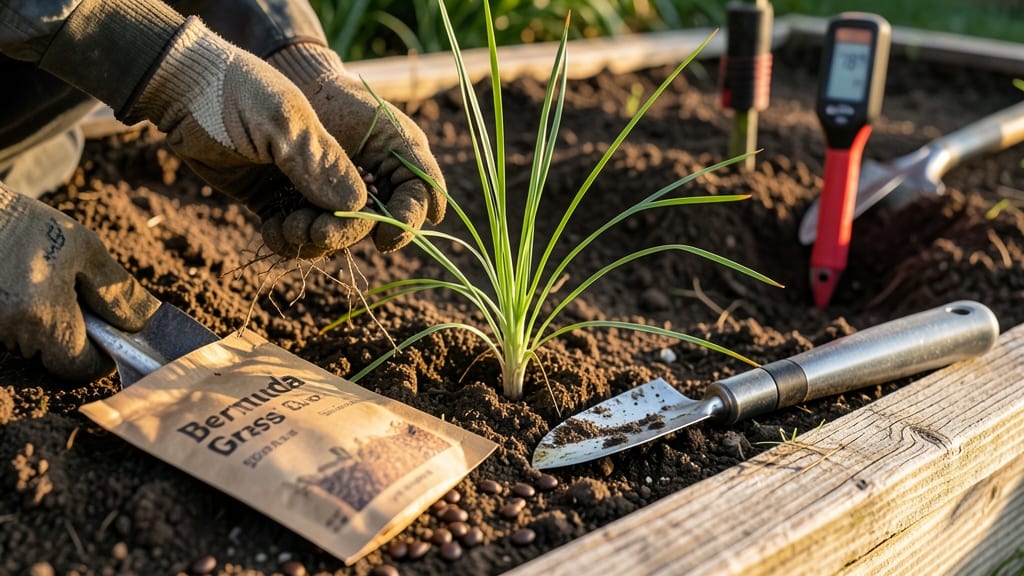
Planting Bermuda seed in North Texas at the wrong time means wasting money on seed that won’t survive—either frozen out by late frosts or struggling under summer’s scorching heat.
The perfect window hinges on two key factors: soil warmth and consistent rainfall, both of which align with late April to early June in USDA Zone 8a.
Most gardeners here make the mistake of rushing too early, only to watch their new 🌱 Bermuda Grass seeds fail when temperatures dip below 65°F. But wait too long, and your lawn won’t establish strong roots before the brutal summer sun takes over.
I’ll show you exactly how to time it right for a thick, drought-resistant lawn.
This isn’t just about picking a month—it’s about reading your soil’s signals and matching them to North Texas’s unpredictable weather.
Whether you’re in Dallas or Waco, the 30-day window between late April and early June offers the best balance of warmth, moisture, and growing days to get your Bermuda Grass off to a flying start.
Ready to avoid the common pitfalls? Let’s break down the exact steps to prepare your soil, choose the right seed variety, and keep your new grass thriving through the first critical months—so you’re not left with bare spots by July.
Optimal soil temperature & weather conditions for planting Bermuda seed in North Texas
Bermuda grass thrives in North Texas’ hot summers and drought conditions, but its germination window is narrow. Planting too early risks frost damage, while late planting leaves your lawn vulnerable to summer heat stress.
The key? Waiting until soil temperatures consistently reach 65°F+ and aligning with local last frost dates (March 15-April 15). This ensures strong root establishment before the 100°F+ heat waves hit.
In cities like Dallas-Fort Worth, Waco, and Abilene, Bermuda seed needs full sun exposure (6+ hours daily) and well-draining soil to prevent fungal issues. The USDA Zone 8a climate means you’ll face 210 frost-free days, but the critical window for planting is late April through early June.
Missing this window can delay your lawn’s full establishment until fall, leaving it weak during peak summer use.
Here’s the non-negotiable checklist for success: soil temp ≥65°F, no frost risk, and 1-1.5 inches of rainfall post-planting. Skipping any of these steps risks patchy germination, slow growth, or even total failure. Let’s break down the exact conditions your North Texas lawn needs to thrive.
North Texas’ variable spring weather makes timing critical. Use a soil thermometer (available at local nurseries like Home Depot or Lowe’s) to confirm 65°F+ soil temps before planting.
In Dallas-Fort Worth, this typically aligns with late April, while Waco and Abilene may wait until early May due to slightly later frost dates. Pro tip: Morning soil temps are often cooler than afternoon readings—plant when afternoon temps hit 65°F consistently.
Rainfall is another make-or-break factor. Bermuda seed needs 1-1.5 inches of moisture within the first 7-10 days of planting to germinate properly. If natural rainfall is scarce, use a gentle sprinkler system to avoid displacing seeds. Overwatering can suffocate seeds, while underwatering leads to weak, patchy growth.
Aim for deep, infrequent watering (1-1.5 inches per week) once germination begins.
Watch for unpredictable weather shifts common in North Texas. A late frost in April can wipe out newly planted seed, while sudden summer heat can stress young seedlings. Use frost cloth if planting near the March-April window, and mulch lightly (¼ inch) to retain moisture and regulate soil temperature.
These small adjustments can mean the difference between a thick, green lawn and a struggling, sparse one.
Local microclimates also play a role. Urban areas like Dallas may experience heat islands, warming soil faster than rural Waco or Abilene. If you’re unsure about your exact last frost date, check the National Weather Service or ask at your local Cooperative Extension office for hyper-local advice.
Their data is tailored to your specific zip code, ensuring you plant at the optimal moment.
Don’t overlook soil preparation—Bermuda grass demands well-aerated, sandy loam to thrive. Before planting, test your soil’s pH (ideal range: 6.0-7.5) and amend with compost or sand if needed.
Compacted soil = poor drainage = fungal risks like brown patch disease. A quick core aeration (rent a machine or hire a
Step-by-step planting timeline: when to sow vs. when to overseed Bermuda in North Texas
Timing your Bermuda grass planting is critical in North Texas—wait too long, and summer’s heat will stress young seedlings. My 7-step monthly timeline covers everything from soil prep to overseeding for fall color, tailored to East Texas (humid) vs. West Texas (dry) conditions.
Let’s dive into the exact windows that work.
First, confirm your last frost date: March 15 in East Texas (Dallas) vs. April 1 in West Texas (Abilene). Bermuda seed needs soil temps of 65°F+ to germinate—waiting until after these dates ensures survival.
For East Texas, start prepping in late March; for West Texas, hold off until mid-April.
Test soil pH (aim for 6.0-7.0). Rake existing lawn to loosen top 1/4 inch of soil. Add compost if soil is sandy (common in West Texas).
Scarify lawn with a lawn rake to remove debris. Apply starter fertilizer (16-4-8 NPK). Water lightly to moisten soil 1-2 days before seeding.
Sow Bermuda seed at 1/4 lb per 100 sqft. Use a drop spreader for even coverage. Lightly rake seeds into soil (1/8 inch deep).
Water daily for 10-15 mins (early morning) until germination (7-14 days). Reduce to 3x weekly deep watering once grass reaches 2 inches tall.
Mow existing Bermuda to 1 inch. Apply light fertilizer (30-0-4 NPK) to boost density. Aerate if soil is compacted (common in East Texas clay).
Sow overseed mix (ryegrass + Bermuda) for fall color. Water twice daily for 2 weeks to establish. Reduce to weekly deep watering afterward.
Mow overseeded areas to 2.5 inches as growth slows. Apply winterizer fertilizer in November (East Texas only) to harden off grass.
For West Texas, delay overseeding until mid-August—hotter temps mean faster germination. In East Texas, aim for early August to capture cooler fall rains. Pro tip: Use a soil thermometer to confirm 70°F+ soil temps before overseeding.
Remember, Bermuda thrives on heat and drought, but seedlings need consistent moisture to root. Skipping watering for even 2 days during germination can kill your entire lawn. Stick to the timeline, and you’ll have a thick, green lawn by Labor Day—no matter where you are in North Texas.
🌱