
Plants
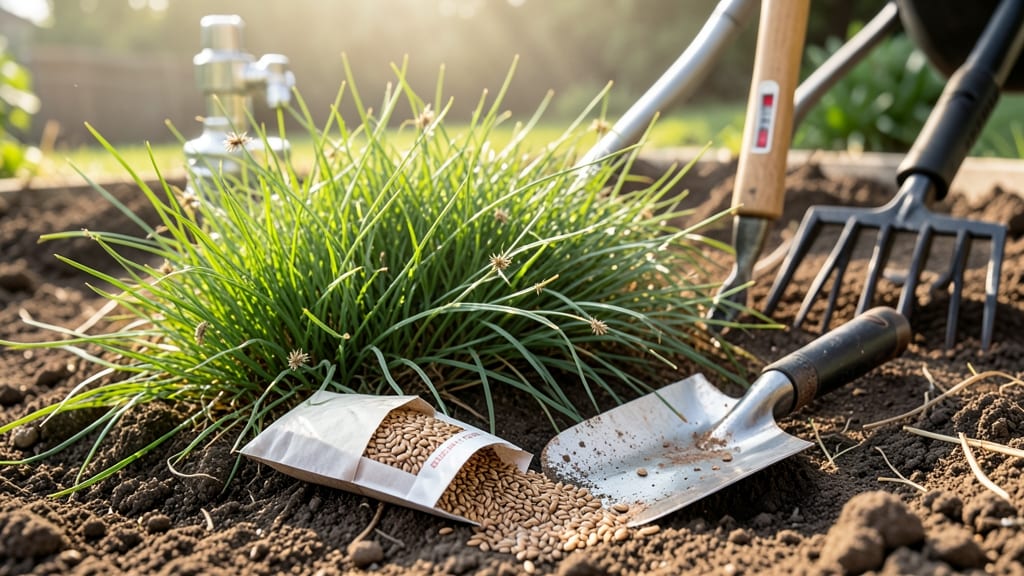
Planting Bermuda grass seeds in Texas at the wrong time can turn your dream green lawn into a patchy, struggling mess—especially when the heat hits too soon. The key isn’t just avoiding frost; it’s syncing with your region’s 65°F soil temperature and heat zone deadlines to ensure fast, resilient growth.
If you’ve ever watched your grass seeds sprout only to wilt under Texas’s brutal sun, you know timing matters. Late April through mid-May is your sweet spot in most of the state, but North Texas (like Dallas) and South Texas (like Houston) have slightly different windows.
I’ll break down the exact dates and soil prep tricks to give your 🌱 Bermuda grass the best start possible.
You’ll also discover how to avoid common mistakes—like planting too early in cooler zones—that can leave your lawn thin and weak. With the right approach, you’ll have a lush, drought-resistant yard in no time. Let’s get those seeds in the ground the smart way.
Ready to transform your lawn? I’ll walk you through every step, from soil prep to watering schedules, so your Bermuda grass thrives all summer long.
Texas heat Zone deadlines for planting Bermuda grass seeds
Bermuda grass is the golden standard for Texas lawns—fast-growing, drought-resistant, and built for the heat. But timing your planting window is everything. Unlike cool-season grasses, Bermuda needs warm soil temperatures to germinate, and Texas’s three distinct heat zones (North, Central, and South) create critical regional differences in when to plant.
Miss the window, and you’ll battle weak seedlings or slow establishment.
Texas’s USDA Zones 8a-10b might suggest a uniform approach, but the real magic happens in the soil thermometer. Bermuda grass seeds won’t sprout until the ground reaches 65°F or higher, and waiting for that temperature ensures strong root development.
In North Texas (like Dallas), this might mean waiting until late April or early May, while South Texas (Houston, San Antonio) can start as early as mid-March in ideal conditions.
Here’s the game-changer: El Paso’s high desert climate (Zone 8a) demands patience—soil warms slower, so aim for mid-May to avoid early-season heat stress. Meanwhile, coastal areas like Corpus Christi (Zone 9a) can plant as late as June, thanks to their milder winters and longer growing season.
The key? Soil temperature, not calendar dates.
Why does this matter? Bermuda grass is a warm-season grass, meaning it goes dormant in cooler months. Planting too early in North Texas (before 65°F soil temps) risks seed rot or slow germination.
Conversely, waiting until July or August in South Texas exposes seedlings to intense heat stress and fungal diseases like brown patch. The 60-day window after your zone’s ideal planting time is when Bermuda establishes its root system—critical for drought resistance.
Pro tip: Use a soil thermometer (available at garden centers for ~$10) to confirm readiness. Stick it 2 inches deep in the soil—this is where seeds will germinate. If your readings are below 65°F, wait.
Patience here saves hours of frustration later. I’ve seen homeowners in Dallas rush planting in early April only to watch their seeds mold in the cool, damp soil.
Regional microclimates add another layer. For example, East Texas (like Tyler) has more humidity, so aim for early May to avoid fungal issues. Meanwhile, West Texas (like Lubbock) benefits from planting in late May to align with natural rainfall patterns.
Always check the Texas A&M AgriLife Extension for localized frost data—their frost-free date maps are gold for planning.
One common mistake? Assuming air temperature equals soil temperature. A 90°F day in June might feel perfect, but if the soil hasn’t warmed to 65°F, your seeds will sit idle.
Shade from trees or recent rains can also delay soil warming by weeks. Test, don’t guess—your lawn’s future depends on it.
For those in transitional zones (like Central Texas), consider spring vs. summer planting trade-offs. Spring planting gives Bermuda a head start before summer heat, but summer planting (June) can work if you water deeply every 2-3
How to prepare soil and seed for optimal germination in Texas heat
Bermuda grass thrives in Texas’s brutal heat—but only if you prep the soil and seeds correctly. The key is creating conditions that mimic its natural habitat: well-draining, nutrient-rich soil with consistent moisture and warm temperatures.
Skipping these steps means slow germination or seedling failure, especially in USDA zones 8a-10b where heat spikes are common.
Start by testing your soil’s pH level—Bermuda grass prefers 6.0 to 7.5. If your soil is too acidic or alkaline, amend it with lime (to raise pH) or sulfur (to lower pH) at least 4-6 weeks before planting.
This gives microbes time to adjust and improves nutrient availability for your seeds.
Next, focus on drainage. Bermuda grass hates soggy roots, so till the top 6-8 inches of soil to loosen compacted layers. Mix in 2-3 inches of compost or aged manure to boost organic matter, which helps retain moisture while preventing waterlogging.
For clay-heavy soils, add coarse sand or perlite to improve aeration.
Step-by-Step Prep for Texas Heat
-
Step 1: Test Soil pH – Aim for 6.0-7.5. Use a soil test kit from Texas A&M Extension for accuracy. Adjust with lime or sulfur if needed.
Step 2: Loosen Soil – Till to 6-8 inches deep to break up compaction. Add compost or aged manure for nutrients and moisture retention.
Step 3: Choose Seeds Wisely – Opt for coated Bermuda seeds (like Tifway 419) for faster germination in heat. Non-coated seeds need extra moisture to sprout.
Step 4: Pre-Soak Seeds – Soak non-coated seeds in lukewarm water for 24 hours before planting. This kickstarts germination in dry Texas soil.
Step 5: Plant at Depth – Sow seeds ¼ inch deep in rows 6-12 inches apart. Cover lightly with soil to protect from wind and birds.
Step 6: Mulch & Water – Apply straw mulch (½ inch thick) to retain moisture. Water deeply 2x daily until seeds sprout (usually 7-14 days).
For seeds, coated varieties (like Tifway 419 or Midiron) are your best bet in Texas heat. They’re treated to resist disease and germinate faster, even when soil temps hover around 70-75°F.
If you’re using non-coated seeds, pre-soak them for 24 hours in lukewarm water to jumpstart germination in dry conditions.
After planting, mulch lightly with straw to lock in moisture and shield seeds from intense Texas sun. Water deeply twice daily—early morning and late afternoon—to keep the top 2 inches of soil consistently moist.
Avoid overhead sprinklers, which can wash seeds away or encourage fungal growth. Once sprouts appear (7-14 days), taper watering to 1 inch per week to encourage deep root growth.
Pro tip: Use a soil thermometer to monitor temps. Bermuda grass seeds need soil to stay above 65°F for germination. If temps dip below 55°F, cover the area with a lightweight row cover until conditions warm up again.
With the right prep, your Bermuda grass will establish a dense, heat-resistant lawn in no time.